





- Elite athletes harbor distinct gut microbiome signatures compared to sedentary adults — and that difference may directly affect how well they recover and perform.
- Intense exercise can temporarily disrupt the gut barrier, elevating permeability markers like zonulin and LPS — a phenomenon linked to inflammation, fatigue, and even mood disturbances in athletes (PMID 42404979).
- Gut microbiota from physically active individuals can directly enhance endurance capacity — even when transferred via fecal transplant to sedentary mice (PMID 42384640).
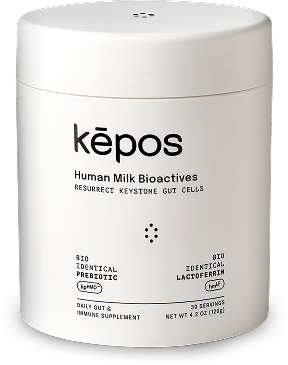
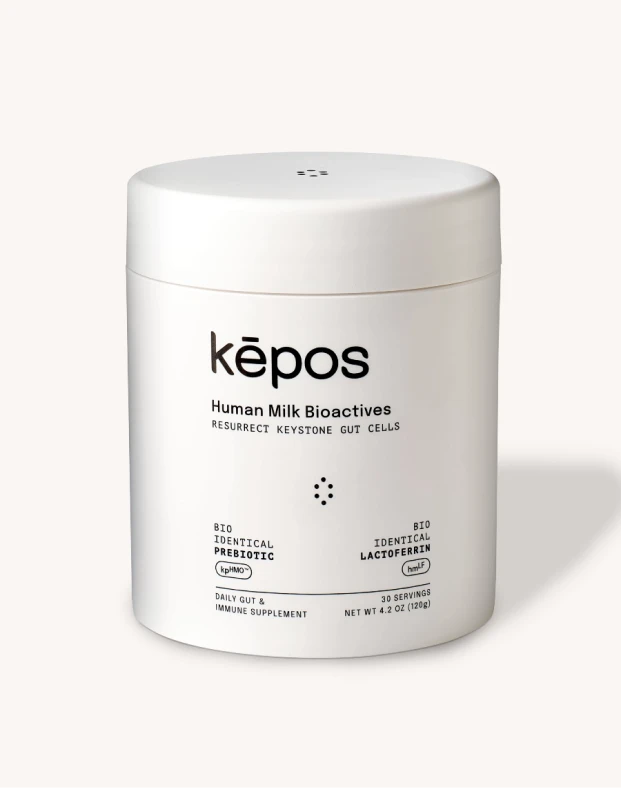
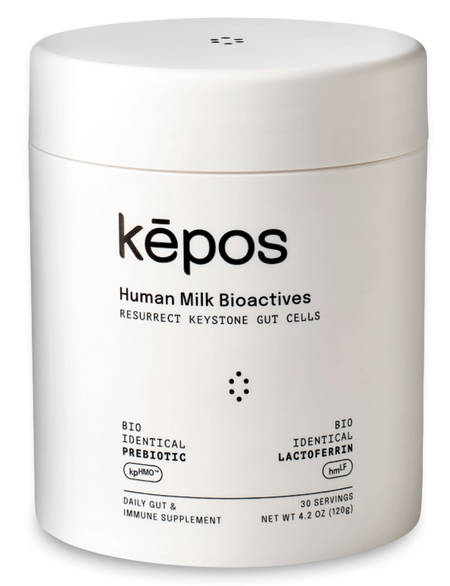
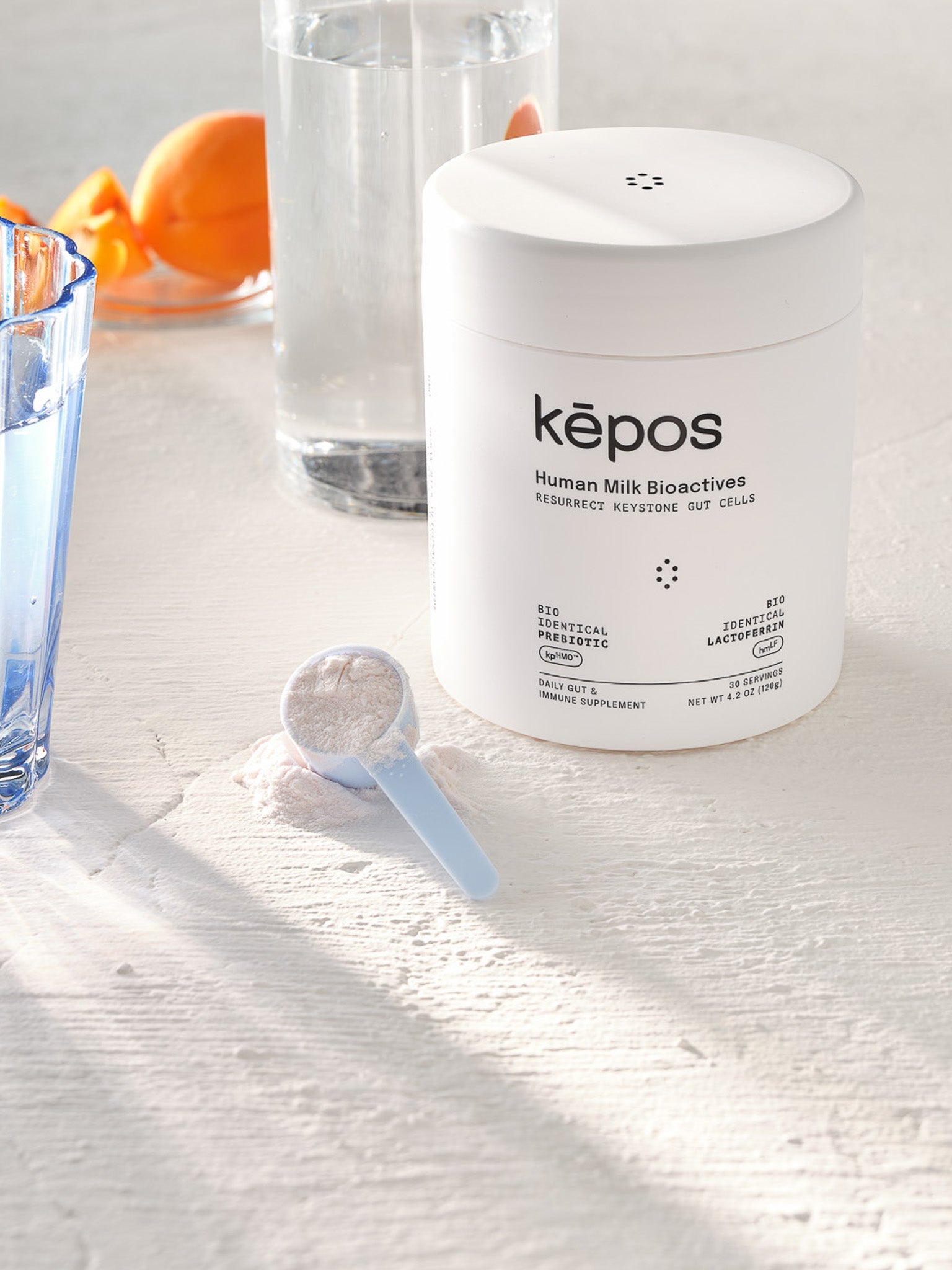
- Human milk oligosaccharides (HMOs) function as selective prebiotics for beneficial gut bacteria — and kpHMO™, the proprietary HMO ingredient designed and owned exclusively by kēpos, provides the full spectrum of HMO types to nourish microbial diversity.
- kēpos pairs kpHMO™ with effera™ recombinant human lactoferrin, supporting both the microbiome and gut barrier integrity that athletic performance depends on.
For years, athletic performance was measured by what happened above the waist — muscle strength, VO2 max, training load, sleep quality. But a growing body of research is pointing to a different system as a critical determinant of how athletes train, recover, and perform: the gut microbiome.
The trillions of microorganisms living in your digestive tract aren't passive bystanders. They produce metabolites that fuel your muscles, regulate inflammation after hard training sessions, influence your brain's mood chemistry, and help maintain the gut barrier that keeps bacteria from leaking into your bloodstream. In elite athletes, the gut microbiome isn't just a health metric — it's a performance variable.
Here's what the latest science shows about the gut-performance connection, and what you can do to support it.
What Makes the Athlete Microbiome Different?
The gut microbiome of a trained athlete doesn't just look different from a sedentary person's — it functions differently in measurable ways.
A 2026 study published in mSystems compared the gut microbiomes of 148 German junior and senior elite athletes with those of 108 healthy adults. The researchers found significant taxonomic differences between athlete and non-athlete gut microbiomes, even after controlling for age, sex, BMI, and dietary patterns (PMID 42377028). Elite athletic status appeared to leave a distinct microbial fingerprint — suggesting that consistent, high-intensity training actively shapes who lives in your gut.
What's driving those differences? A 2026 review in Nutrients offers a compelling answer: athletes tend to harbor a more enriched microbial biosynthetic potential — microbiomes capable of producing greater quantities of vitamins, amino acids, and bioactive metabolites that support recovery (PMID 42514472). The authors propose that the gut microbiota modulates athletic recovery through anti-inflammatory mechanisms, oxidative stress management, and sleep regulation — functions that go well beyond simple digestion.
Perhaps the most striking evidence comes from a 2026 human-mice study published in PLoS One. Researchers compared the gut microbiota of young adults with exercise vs. sedentary lifestyles, then performed fecal microbiota transplants (FMT) into mice. Mice receiving gut bacteria from the exercise group showed significantly enhanced endurance performance — demonstrating that the microbiome itself, not just training, can directly drive exercise capacity (PMID 42384640).
How Intense Exercise Stresses the Gut
Exercise is a gut stressor. During intense training, blood is redirected away from the digestive tract and toward working muscles — a process called splanchnic hypoperfusion. Combined with elevated core temperature, this creates conditions that can temporarily disrupt the tight junctions between intestinal cells, increasing gut permeability.
A 2026 viewpoint published in BMJ Open Sport & Exercise Medicine lays out the downstream consequences clearly: elevated permeability allows bacterial products like lipopolysaccharide (LPS) to enter the bloodstream, triggering systemic inflammation and elevating biomarkers — including zonulin and intestinal fatty acid-binding protein (IFABP) — that are associated with anxiety, depression, and neuroinflammation in psychiatric populations (PMID 42404979). The authors describe a bidirectional model linking exercise-induced gut barrier disruption to athlete mental health — a connection that's only beginning to be understood.
Heat amplifies this stress significantly. A 2026 study in Frontiers in Microbiology found that combined heat and exercise stress disrupted gut microbiota composition and actively promoted microbial translocation from the gut into the bloodstream in animal models — a process that would drive systemic immune activation and impair recovery (PMID 42267103). For athletes training in summer conditions or making weight cuts, this is a direct threat to both health and performance.
A 2026 RCT in Frontiers in Nutrition put numbers on this problem in combat athletes undergoing pre-competition weight loss. Supplementation that reduced gut permeability markers (zonulin, IFABP, D-lactate) also increased secretory IgA and attenuated systemic inflammation compared to placebo (PMID 42529294). The gut barrier is not a passive structure — it's an active defense system that can be supported or depleted.
The Gut-Fatigue Loop: Why Your Microbiome Affects How You Feel After Training
Fatigue after intense exercise isn't just about depleted glycogen or lactic acid buildup — the gut microbiome has emerged as a significant contributor to exercise-induced fatigue through multiple pathways.
A 2026 narrative review in Nutrients examined how gut microbiota modulates fatigue through metabolic, immune, barrier, and neurobehavioral pathways (PMID 41683324). The mechanisms include:
- Short-chain fatty acid (SCFA) production — Beneficial gut bacteria ferment fiber into SCFAs like butyrate, which fuel colonocytes, reduce gut inflammation, and support energy metabolism
- Neurotransmitter precursors — Gut bacteria influence tryptophan metabolism and the production of serotonin precursors, which affect mood, motivation, and sleep quality during recovery
- Immune modulation — A healthy microbiome keeps the immune system calibrated; dysbiosis after intense training can tip the balance toward prolonged inflammation
- Gut barrier maintenance — A more diverse, robust microbiome supports tighter intestinal junctions, reducing the LPS leakage that drives systemic inflammatory fatigue
This is why athletes with healthier, more diverse gut microbiomes consistently show faster recovery, better mood stability, and lower systemic inflammation between training sessions. The gut isn't a spectator in athletic recovery — it's a primary participant.
How HMOs Support the Athlete Microbiome
Human milk oligosaccharides (HMOs) are complex prebiotic carbohydrates that function as a selective food source for beneficial gut bacteria. They pass through the small intestine undigested and arrive intact in the colon, where the microbiome ferments them — producing SCFAs and other metabolites while selectively feeding bacterial populations associated with gut health.
A 2025 in vitro study published in Gut Microbiome examined how multiple HMO types — across neutral, fucosylated, and sialylated classes — were fermented by adult human faecal microbiota. The results showed that different HMO types selectively stimulated distinct beneficial bacterial populations, with significant effects on Bifidobacterium and other health-associated genera (PMID 40297306). The diversity of HMO types available matters — different structures feed different beneficial bacteria.
This is where kpHMO™ — the proprietary human milk bioactive ingredient designed and owned exclusively by kēpos — provides a meaningful advantage. Unlike single-HMO supplements that provide just one or two structures, kpHMO™ is formulated to mirror the full oligosaccharide composition found in breast milk, covering all neutral, fucosylated, and sialylated bases. That breadth of coverage supports the microbial diversity that athletes need to maintain a robust gut ecosystem — even under the stress of hard training.
Athletes who train intensely are repeatedly cycling their microbiome through stress and recovery. Providing a diverse, sustained source of HMO prebiotics may support the microbiome's ability to bounce back faster, maintain barrier function, and sustain SCFA production — all of which feed directly into recovery quality.
You can learn more about what HMOs actually are and how they compare to conventional prebiotics on the kēpos blog.
The Lactoferrin Advantage: Gut Barrier Support for Hard-Training Athletes
HMOs address the microbiome side of gut health — but what about the gut barrier itself? This is where effera™, the recombinant human lactoferrin in kēpos, plays a complementary role.
Lactoferrin is a naturally occurring glycoprotein found in human milk that serves multiple gut-protective functions: it has direct antimicrobial activity against pathogens, modulates immune signaling in the gut, and may support the integrity of the intestinal barrier under stress. In high-intensity training environments — where splanchnic hypoperfusion and thermal stress repeatedly challenge tight junctions — a protein that helps fortify the gut barrier and modulate the inflammatory response may support faster recovery between sessions.
What makes effera™ uniquely valuable is its source: it's recombinant human lactoferrin, structurally identical to the lactoferrin in breast milk. Bovine lactoferrin, the type found in most supplements, has a different amino acid sequence and glycosylation pattern — which affects how it interacts with human receptors and immune pathways. You can read more about the difference between human and bovine lactoferrin on the kēpos blog.
Together, kpHMO™ and effera™ address the two core vulnerabilities in the athlete gut: microbiome diversity and gut barrier integrity. Both are essential for optimal performance and recovery, and both are systematically stressed by intense training.
Supporting Your Gut Like an Elite Athlete
The research is clear that gut health is not separate from athletic performance — it's embedded in it. The microbiome affects energy production, inflammation management, neurotransmitter balance, immune resilience, and recovery speed. Athletes who neglect gut health are leaving a performance variable unaddressed.
Practically, supporting your athlete gut means:
- Prioritizing dietary diversity to feed a broad range of beneficial bacteria
- Managing training load and heat exposure to limit gut barrier stress
- Recovering nutrition — including prebiotic support — seriously after hard sessions
- Supplementing with bioactives that have a documented mechanism of action in the gut
kēpos was formulated specifically to address the gut biology that conventional supplements overlook. By combining kpHMO™ and effera™ human lactoferrin, it provides both prebiotic support for the microbiome and targeted bioactive support for gut barrier function — the two systems that elite performance research now recognizes as central to how you train and recover.
Explore kēpos and see how the science of human milk bioactives applies to your training.
Frequently Asked Questions
How does the gut microbiome affect athletic performance?
The gut microbiome affects performance through multiple pathways: producing short-chain fatty acids (SCFAs) that fuel colon cells and modulate energy metabolism, synthesizing vitamins and amino acids that support recovery, regulating inflammation levels after training, influencing neurotransmitter precursors that affect mood and motivation, and maintaining the gut barrier that prevents bacterial products from leaking into the bloodstream and triggering systemic fatigue.
Why does intense exercise sometimes cause gut problems?
During intense exercise, blood flow is redirected from the gut to working muscles — a process called splanchnic hypoperfusion. Combined with elevated core temperature, this temporarily loosens the tight junctions between intestinal cells, increasing gut permeability. Bacterial products can then enter the bloodstream, triggering systemic inflammation and contributing to post-exercise fatigue, GI symptoms, and in some cases mood disturbances.
What are HMOs and how do they help athletes?
Human milk oligosaccharides (HMOs) are complex prebiotic carbohydrates that pass through the small intestine undigested and selectively feed beneficial gut bacteria in the colon. For athletes, a healthy and diverse microbiome supports faster recovery, better SCFA production, and more robust gut barrier function — all of which affect training quality and resilience. Different HMO types feed different bacterial populations, which is why breadth of HMO coverage matters.
What is kpHMO™ and how does it differ from other HMO supplements?
kpHMO™ is the proprietary HMO ingredient designed and owned exclusively by kēpos, formulated to mirror the full oligosaccharide composition of human breast milk — covering neutral, fucosylated, and sialylated HMO types. Most single-HMO supplements provide only one or two structures. kpHMO™ provides the breadth of coverage needed to nourish the diverse microbial populations associated with better gut health and athletic recovery.
How does lactoferrin support gut health in athletes?
Lactoferrin is a gut-active glycoprotein naturally found in human milk. It has direct antimicrobial activity, helps modulate gut immune signaling, and may support gut barrier integrity under stress. For athletes who repeatedly stress the gut through intense training, lactoferrin's barrier-supportive and anti-inflammatory properties may help maintain gut homeostasis and support recovery. kēpos uses effera™ — recombinant human lactoferrin that is structurally identical to the lactoferrin in breast milk.