






Key Takeaways
- Bifidobacterium is the dominant beneficial bacterium in a healthy infant gut — but its levels decline significantly in adulthood and fall even further as we age.
- Low Bifidobacterium in adults is linked to poor gut barrier function, immune dysregulation, and digestive issues including IBS, bloating, and inflammation.
- A 2023 clinical study found that HMOs (human milk oligosaccharides) trigger dose-dependent Bifidobacterium expansion in healthy adult guts — a finding typically seen only in breastfed infants.
- A 2016 study on semi-supercentenarians (105–109 years old) found Bifidobacterium enrichment as a hallmark of extreme longevity.
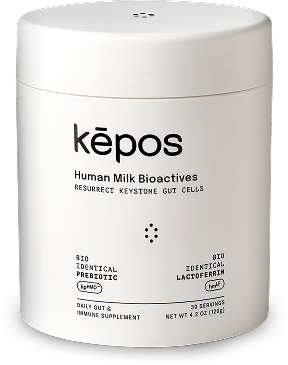
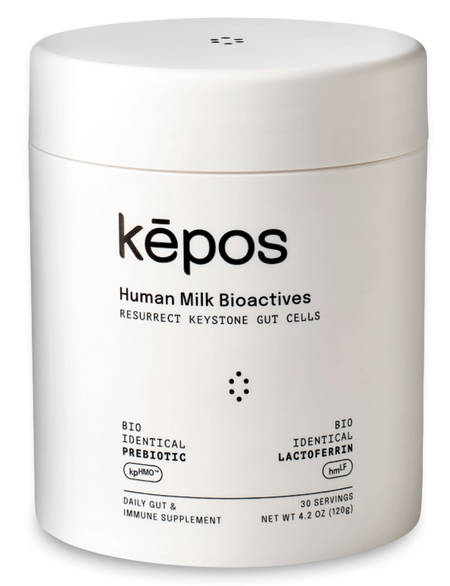
- kēpos delivers kpHMO™, a proprietary human milk bioactive ingredient designed and owned exclusively by kēpos, specifically formulated to mirror the complex oligosaccharide spectrum of real breast milk — and feed Bifidobacterium the way nature intended.
Why Your Gut's Most Valuable Bacterium Is Quietly Disappearing
You were born with a gut dominated by one bacterial genus above all others: Bifidobacterium. In breastfed infants, this remarkable microorganism can make up over 90% of the total gut microbiota. It's the founding organism of a healthy digestive system — the bacterium that helps train your immune cells, seal your gut lining, and crowd out harmful pathogens from day one.
But here's the problem: as you grow up, it disappears.
By adulthood, Bifidobacterium levels drop to just a small fraction of what they were in infancy. By middle age, they're lower still. And by old age, research shows they may vanish almost entirely from many people's gut microbiomes — unless something is done to sustain them.
That "something" turns out to be one of the most exciting areas in gut health science right now. Let's break down exactly what Bifidobacterium does, why it declines, and — crucially — what modern research shows can bring it back.
What Is Bifidobacterium, Exactly?
Bifidobacterium is a genus of gram-positive, anaerobic bacteria that live in the large intestine. They're among the most extensively studied beneficial bacteria in the world — and for good reason.
The genus includes dozens of species, and different species dominate at different stages of life. B. longum, B. breve, and B. bifidum are most abundant in infants; in adults, B. catenulatum, B. adolescentis, and B. longum tend to predominate — though at far lower levels overall [PMID 27594848].
What does Bifidobacterium actually do? Quite a lot. These bacteria:
- Ferment undigested carbohydrates into short-chain fatty acids (SCFAs) like acetate and butyrate, which fuel the cells lining your colon
- Produce B vitamins, including folate and B12 precursors
- Synthesize bacteriocins — natural compounds that suppress pathogenic bacteria
- Reinforce the gut barrier by supporting tight junction proteins that prevent harmful molecules from leaking into the bloodstream
- Modulate immune responses, helping train your immune system toward tolerance rather than inflammation
In other words, Bifidobacterium isn't just a passive resident. It actively maintains the environment that keeps your entire gut ecosystem healthy.
Why Does Bifidobacterium Decline As We Age?
The decline of Bifidobacterium over the course of a human life is one of the most consistent findings in microbiome science. And the reason is largely dietary.
In infancy, Bifidobacterium thrives because of one extraordinary food source: human milk oligosaccharides (HMOs). HMOs are complex carbohydrates found in breast milk that human digestive enzymes cannot break down. They pass through the stomach and small intestine intact and arrive in the colon as a direct, highly selective food for Bifidobacterium. No other bacteria can utilize them as efficiently.
When breastfeeding ends, that supply of HMOs stops — and Bifidobacterium loses its primary fuel. As the diet shifts to solid food, the gut microbiome diversifies dramatically, and Bifidobacterium's competitive edge fades. The modern Western diet, low in diverse fibers and high in processed foods, accelerates this decline further.
By the time we're adults, Bifidobacterium may represent just 3–5% of the total microbiome. By old age, some studies report it becoming essentially undetectable in significant portions of the population.
What the Longevity Research Tells Us
This trajectory becomes even more meaningful when you look at what happens in people who don't lose their Bifidobacterium.
A landmark 2016 study published in Current Biology analyzed the gut microbiomes of semi-supercentenarians — individuals aged 105 to 109 years — and compared them to adults, elderly individuals, and centenarians across the full aging spectrum. The findings were striking: the oldest and healthiest individuals showed a notable enrichment of Bifidobacterium, even relative to younger cohorts [PMID 27185560].
The researchers suggested this wasn't coincidence. Maintaining Bifidobacterium abundance may help counteract what scientists call "inflammaging" — the low-grade chronic inflammation that drives so many age-related diseases. Higher Bifidobacterium levels are associated with better gut barrier integrity, reduced intestinal permeability, and healthier immune regulation — all factors that matter enormously in long-term health.
The people who live longest, it seems, may be the ones who best preserve this foundational bacterium.
Bifidobacterium, Gut Health, and the IBS Connection
Adults with digestive disorders consistently show lower Bifidobacterium abundance than healthy controls. Irritable bowel syndrome (IBS) — which affects roughly 10–15% of adults globally — is a prime example.
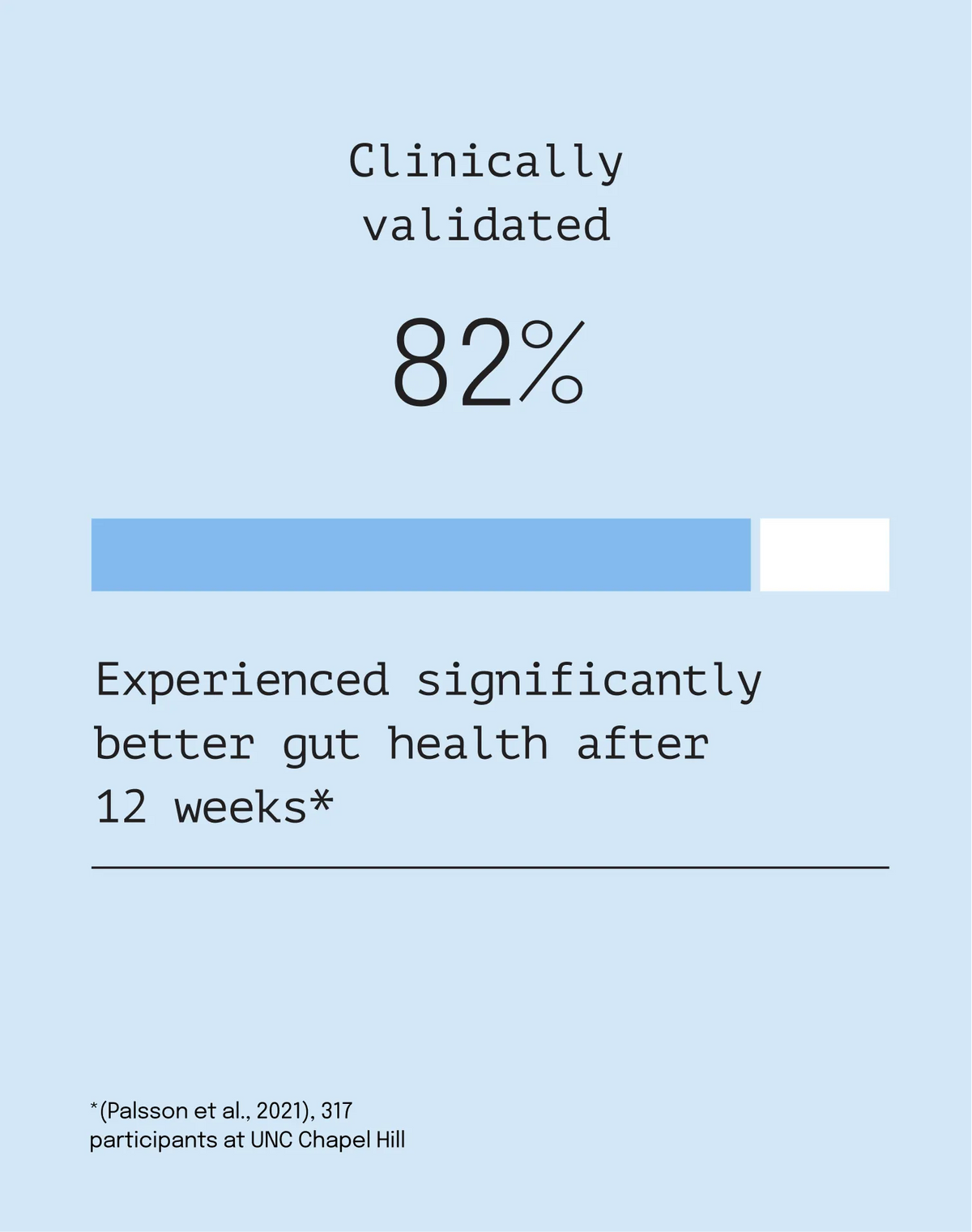
In a 2020 multicenter open-label trial spanning 17 sites across the United States, 317 IBS patients received daily supplementation with human milk oligosaccharides for 12 weeks. The results were compelling: IBS Symptom Severity Score dropped from 323 to 144 (P < 0.0001), and health-related quality of life improved from 50.4 to 74.6 — a clinically meaningful change. Abnormal stool consistency declined from 90.7% to 57.2% of bowel movements [PMID 33512807].
How? HMOs selectively feed and expand Bifidobacterium, which in turn produces SCFAs that calm intestinal inflammation, tighten the gut barrier, and support normal bowel motility. Replenishing Bifidobacterium appears to be a central mechanism through which HMOs support digestive health in adults.
How HMOs Bring Bifidobacterium Back in the Adult Gut
Until recently, the idea of significantly boosting Bifidobacterium in an adult gut was considered difficult. Adults don't have access to breast milk, and most conventional prebiotics — like inulin or FOS — feed a range of bacteria, not specifically Bifidobacterium.
HMOs change that equation.
A 2023 clinical study published in Scientific Reports gave 32 healthy adults HMO-Concentrate derived from pooled donor breast milk for 7 days and tracked their gut microbiomes using 16S rRNA sequencing and shotgun metagenomics. The result: HMO supplementation induced dose-dependent Bifidobacterium expansion in adult guts, along with broad shifts in microbial composition and increases in circulating anti-inflammatory markers TGFβ and IL-10 after cessation [PMID 37652940].
Critically, the study found that complex mixtures of HMOs — including low-abundance HMOs — produced effects that individual HMOs or simple defined mixtures could not replicate. This suggests that the full diversity of human milk oligosaccharides matters, not just the most abundant single compounds.
The gut doesn't just want one HMO. It wants the whole spectrum.
The Gut-Brain Connection: Bifidobacterium Beyond Digestion
Bifidobacterium's benefits don't stop at the gut wall. The gut-brain axis — the bidirectional communication network between the gastrointestinal tract and the central nervous system — means that what happens in your gut profoundly affects your mind.
A 2021 randomized, double-blind, placebo-controlled multicenter trial enrolled 63 healthy adults aged 65 and over and gave them a Bifidobacterium probiotic supplement for 12 weeks. The Bifidobacterium group showed significantly greater improvement in mental flexibility and stress scores compared to placebo (p < .05), along with a significant increase in serum brain-derived neurotrophic factor (BDNF) — a protein essential for neuronal health and cognitive function [PMID 32300799].
The mechanism: Bifidobacterium modulates the composition of the gut microbiota, reducing inflammation-associated species and increasing the production of SCFAs that influence the vagus nerve and neurotransmitter signaling. A healthier gut microbiome, anchored by Bifidobacterium, supports a healthier brain.
How kēpos Supports Bifidobacterium the Way Nature Intended
Human milk oligosaccharides are the single most powerful Bifidobacterium fuel source ever discovered. And that insight is the foundation of kēpos.
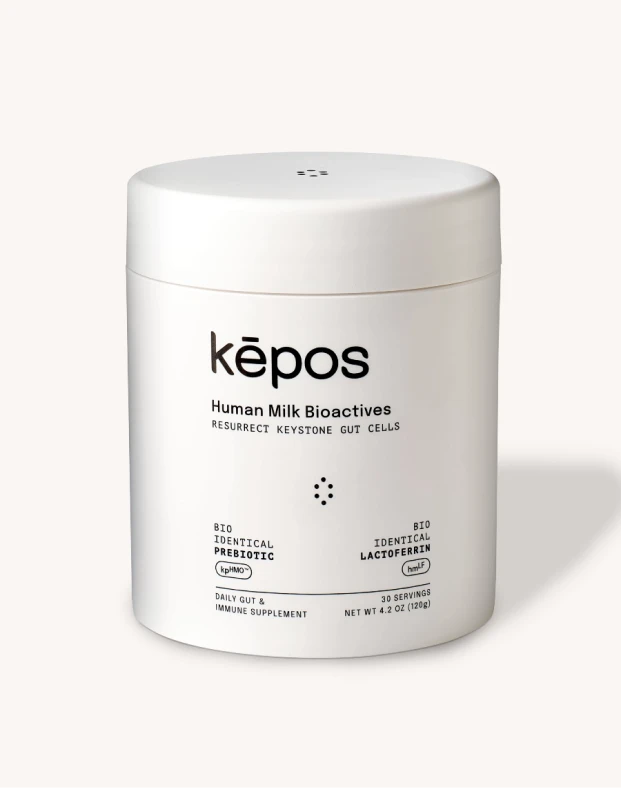
kēpos features kpHMO™, a proprietary human milk bioactive ingredient designed and owned exclusively by kēpos, formulated to best match the full oligosaccharide composition found in real breast milk. Unlike single-compound HMO supplements that deliver just one or two isolated oligosaccharides, kpHMO™ covers all neutral, fucosylated, and sialylated bases — mirroring the diversity of HMOs that the 2023 Jacobs et al. study showed is critical for maximum Bifidobacterium expansion.
kēpos also pairs kpHMO™ with effera™ recombinant human lactoferrin (rhLF) — the first and only bioidentical human lactoferrin available in supplement form. Lactoferrin works in concert with HMOs: it supports iron absorption and immune modulation, while kpHMO™ feeds and expands the Bifidobacterium populations that sustain long-term gut health. Together, they deliver what your gut hasn't had since infancy.
If Bifidobacterium is the keystone species of a healthy adult gut, kpHMO™ is the key that unlocks it. Learn more about kēpos and kpHMO™, or explore more HMO science on the kēpos blog.
Frequently Asked Questions
What does Bifidobacterium do in adults?
In adults, Bifidobacterium ferments dietary fibers into short-chain fatty acids, reinforces the gut barrier, produces B vitamins, and helps regulate immune responses. Low levels are associated with IBS, inflammation, and accelerated aging.
Why does Bifidobacterium decline with age?
Bifidobacterium's primary fuel source in infancy is human milk oligosaccharides (HMOs) from breast milk. Once breastfeeding ends, this fuel disappears. The modern Western diet provides few HMOs and limited selective prebiotics, causing Bifidobacterium to decline progressively throughout adulthood.
Can you increase Bifidobacterium as an adult?
Yes. Research shows that HMO supplementation may trigger dose-dependent Bifidobacterium expansion in adult guts. A 2023 clinical study in Scientific Reports found significant microbiome shifts after just 7 days of HMO-Concentrate in healthy adults, including notable Bifidobacterium growth (PMID 37652940).
Is Bifidobacterium connected to longevity?
Emerging evidence suggests yes. A 2016 study in Current Biology found that semi-supercentenarians (105–109 years old) had notably elevated levels of Bifidobacterium compared to younger elderly cohorts — potentially linked to its anti-inflammatory and gut-barrier-protective properties (PMID 27185560).
What is kpHMO™ and how is it different from regular HMO supplements?
kpHMO™ is a proprietary human milk bioactive ingredient designed and owned exclusively by kēpos, formulated to mirror the full diversity of oligosaccharides found in real breast milk — covering neutral, fucosylated, and sialylated types. Most HMO supplements contain only one or two isolated compounds. kpHMO™ is designed to match the complexity that clinical research shows is needed for maximum Bifidobacterium support.
Written by Oliver Drazsky. This article is for educational purposes only and does not constitute medical advice. These statements have not been evaluated by the Food and Drug Administration. This product is not intended to diagnose, treat, cure, or prevent any disease.