

Key Takeaways
- Prebiotics are food for your gut bacteria — fiber and oligosaccharides that feed beneficial microbes already living in your gut
- Probiotics are live bacteria — they introduce new beneficial organisms to your digestive system
- Research suggests prebiotics may be more effective at increasing Bifidobacteria long-term than probiotics alone
- Human milk oligosaccharides (HMOs) are nature's original prebiotics, supporting gut health from infancy through adulthood
- Combining both (synbiotics) may offer the most comprehensive support for gut microbiome health
Walk into any health food store and you'll find shelves lined with supplements promising to improve your gut health. But with so many options—probiotics, prebiotics, synbiotics—it's easy to get confused. What's the actual difference between these gut health supplements, and which one is right for you?
Let's cut through the marketing noise and look at what the science actually says about prebiotics versus probiotics.
What Are Probiotics?
Probiotics are live microorganisms—typically bacteria like Lactobacillus and Bifidobacterium—that you consume with the hope they'll take up residence in your gut and provide health benefits. Think of them as introducing new "tenants" to your digestive ecosystem.
You'll find probiotics in fermented foods like yogurt, kefir, sauerkraut, and kimchi, as well as in supplement form. The idea is that these beneficial bacteria will survive the journey through your stomach acid and establish themselves in your intestines.
However, there's a catch. According to a comprehensive review published in Clinical Gastroenterology and Hepatology, many probiotic products face fundamental challenges: ensuring the bacteria survive manufacturing, storage, and your digestive tract is no simple feat. The review notes that "for many products marketed as probiotics, some of the most fundamental issues relating to quality control... are scarcely addressed."
What Are Prebiotics?
Prebiotics take a completely different approach. Rather than adding new bacteria to your gut, prebiotics feed the beneficial bacteria that are already there. They're essentially fertilizer for your gut garden.
Prebiotics are non-digestible fibers and oligosaccharides—complex carbohydrates that pass through your upper digestive tract undigested and reach your colon, where they become food for your resident gut bacteria. When these bacteria ferment prebiotics, they produce short-chain fatty acids and other compounds that support gut health.
Common prebiotic compounds include fructooligosaccharides (FOS), galactooligosaccharides (GOS), and the gold standard: human milk oligosaccharides (HMOs). Research published in Beneficial Microbes describes HMOs as "the first prebiotics" that humans encounter, serving as the "bifidus factor" identified over 50 years ago as a selective growth substrate for intestinal Bifidobacteria.
What the Research Shows: A Head-to-Head Comparison
So which approach actually works better? The research offers some surprising insights.
A landmark 2023 randomized controlled trial directly compared a high-prebiotic diet against probiotic supplementation in 119 adults with moderate psychological distress. The results were striking:
- The prebiotic diet reduced total mood disturbance with a moderate-to-large effect size (Cohen's d = -0.60)
- The prebiotic group also showed improved anxiety, stress, and sleep
- The probiotic group showed no significant symptom improvement compared to placebo (d = -0.19)
Perhaps most interesting: when researchers combined both approaches (a synbiotic intervention), they found no additional benefit compared to prebiotics alone in this study.
A systematic review of 32 randomized controlled trials examining infant gut health found similar patterns. Fecal Bifidobacterium levels—a key marker of gut health—increased with prebiotic and synbiotic supplementation but not with probiotics alone.
Why Prebiotics May Have an Edge
Why might feeding your existing bacteria work better than introducing new ones? Several factors come into play:
Survival and colonization: Probiotic bacteria face significant hurdles—they must survive stomach acid, bile, and competition with your established microbiome. Many don't make it, and even those that do often don't permanently colonize.
Supporting native species: Your gut microbiome is a complex ecosystem that developed with you since birth. Prebiotics support the bacteria that are already adapted to your unique internal environment.
Consistent feeding: Unlike probiotics (which provide a one-time introduction of bacteria), prebiotics provide ongoing nourishment that supports sustained bacterial growth over time.
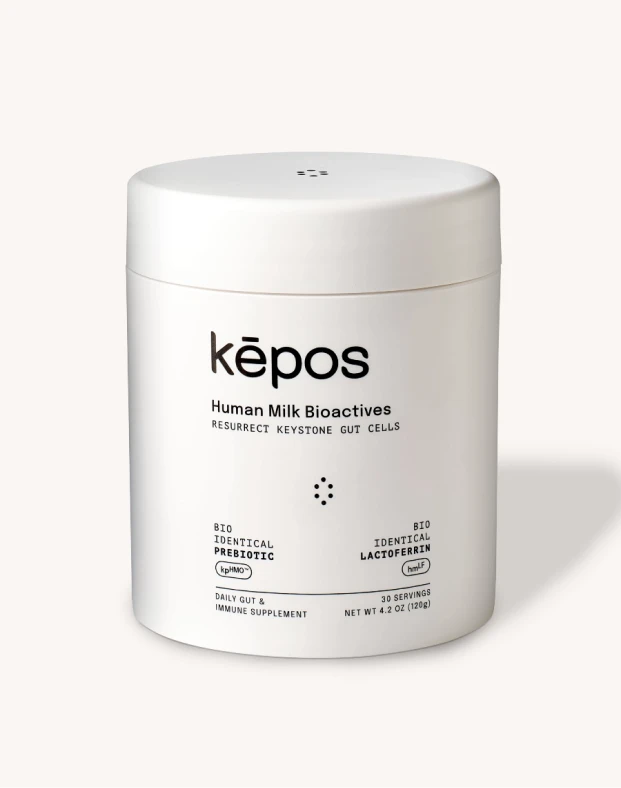
This is why kēpos focuses on human milk oligosaccharides—the same prebiotics that have been nourishing beneficial gut bacteria in humans for millions of years. HMOs don't just feed any bacteria; they selectively promote the growth of Bifidobacteria, which are associated with numerous health benefits.
When Combining Both Makes Sense
Despite the advantages of prebiotics, there are situations where probiotics—or the combination of both (synbiotics)—may be beneficial.
A meta-analysis of 38 randomized controlled trials examining inflammatory bowel disease found that synbiotics were more effective than either prebiotics or probiotics alone for inducing and maintaining remission. The analysis noted that probiotic supplements based on Lactobacillus and Bifidobacterium—or those containing multiple strains—were most likely to be beneficial.
The key insight? Context matters. For general gut health maintenance, prebiotics may be sufficient. For specific conditions or after antibiotic use, a synbiotic approach might offer additional benefits.
Frequently Asked Questions
Can I take prebiotics and probiotics together?
Yes, and this combination is called a synbiotic. Research suggests synbiotics can be effective, particularly for specific conditions like inflammatory bowel disease. However, for general gut health, some studies show prebiotics alone may be sufficient.
What are the best food sources of prebiotics?
Natural prebiotic foods include garlic, onions, leeks, asparagus, bananas, oats, and Jerusalem artichokes. However, the most research-backed prebiotics are human milk oligosaccharides (HMOs), which are now available in supplement form for adults.
How long does it take for prebiotics to work?
Most clinical studies show measurable changes in gut microbiome composition within 2-4 weeks of consistent prebiotic use. The RCT comparing prebiotics to probiotics used an 8-week intervention period to demonstrate significant effects on mood and stress.
Are HMOs better than other prebiotics?
Human milk oligosaccharides are unique in that they've co-evolved with humans and specifically promote the growth of beneficial Bifidobacteria. Unlike plant-based prebiotics, HMOs don't cause the gas and bloating sometimes associated with high-fiber prebiotic supplements.
Do I need prebiotics if I already eat a high-fiber diet?
While dietary fiber is beneficial, not all fiber is prebiotic. Specific prebiotic compounds like HMOs, FOS, and GOS have been shown in clinical trials to selectively promote beneficial bacteria in ways that general fiber may not.
The Bottom Line
Both prebiotics and probiotics can support gut health, but they work in fundamentally different ways. Probiotics introduce new bacteria, while prebiotics nurture the beneficial bacteria you already have.
The research increasingly suggests that feeding your existing microbiome—rather than trying to transplant new bacteria—may be a more effective long-term strategy for gut health. Human milk oligosaccharides represent the gold standard in prebiotics, having evolved specifically to support human gut health from infancy onward.
Ready to support your gut microbiome with nature's original prebiotic? Learn more about kēpos and how HMOs can help you cultivate a thriving gut garden.