

Key Takeaways
-
Many common prebiotics like inulin and FOS are non-selective, meaning they can feed both good and bad bacteria in your gut.
-
This non-selective feeding is a primary cause of bloating, gas, and discomfort, especially for those with sensitive digestive systems.
-
Human Milk Oligosaccharides (HMOs) and effera™ human lactoferrin are highly selective, nourishing beneficial bacteria like Bifidobacterium without fueling undesirable microbes.
-
This targeted approach, offered by kēpos, helps restore gut balance, strengthen the gut barrier, and reduce symptoms like bloating.
You’ve been told to take prebiotics for a healthier gut. It seems like simple advice, and billions of dollars are spent on these supplements every year. But what if the very thing you're taking to improve your gut health bad bacteria balance is also causing some of your problems? The uncomfortable truth is that many common prebiotics can't tell the difference between good and bad gut bacteria. This raises the critical question: do prebiotics feed bad bacteria too? For many popular supplements on the market, the answer is yes, which can lead to more bloating and discomfort.
This isn't a reason to give up on prebiotics. It’s a reason to get smarter about them. The solution lies in a more intelligent and selective approach, one that’s inspired by the most fundamental source of human nutrition: breast milk. By understanding how certain compounds selectively nourish beneficial microbes, we can finally get the gut health benefits we’re looking for without the unwanted side effects. At kēpos, we focus on these precision nutrients—specifically human milk oligosaccharides (HMOs) and bio-identical human milk lactoferrin—to offer a more effective path to a balanced microbiome.
The Unspoken Problem with Common Prebiotics
To understand why many prebiotics fall short, we first need to appreciate what they are designed to do. Your gut is home to trillions of microbes, a mix of beneficial and potentially harmful bacteria. The goal is to keep this community in balance.
What Are Prebiotics Supposed to Do?
Prebiotics are essentially food for the good bacteria (probiotics) living in your gut, as defined by health authorities. When these beneficial microbes are well-fed, they thrive and produce valuable compounds like short-chain fatty acids (SCFAs). As multiple studies have shown, these SCFAs help strengthen the lining of your gut, support your immune system, and can even influence your mood. A healthy gut barrier prevents harmful substances from leaking into your bloodstream, which helps reduce inflammation and protect you from illness. By feeding the good guys, prebiotics are supposed to help them multiply and outcompete the less desirable residents of your gut.
The Non-Selective Feeding Frenzy
Here’s the issue: most prebiotics available today are simple, fermentable fibers like inulin, Fructooligosaccharides (FOS), or Galactooligosaccharides (GOS). While they do feed beneficial bacteria, they aren't very picky. Their simple structure means that many different kinds of bacteria—including the ones you don't want—can use them for fuel.
Some research indicates that common prebiotics like inulin can be consumed by potentially harmful bacteria, such as certain species of Klebsiella and Clostridia. When these microbes feast on non-selective fibers, they ferment them and produce gas. This is a primary reason why so many people experience uncomfortable bloating, gas, and abdominal pain after taking a new prebiotic supplement, a fact highlighted by gut health experts. If you already have digestive issues or an imbalance like Small Intestinal Bacterial Overgrowth (SIBO), adding these kinds of prebiotics that feed bad bacteria can make your symptoms even worse.
Essentially, these prebiotics create a feeding frenzy where everyone is invited to the party, both the good guests and the troublemakers. This can disrupt the delicate balance of your gut microbiome, negating the very benefits you were hoping to achieve.
A Smarter Solution: Bio-Identical Human Milk Nutrients
Instead of casting a wide net, what if you could deliver nutrients that only the most beneficial bacteria can enjoy? That’s the principle behind the powerful components found in human milk. These compounds were designed by nature to build a healthy gut from scratch, and now, thanks to advancements in science, adults can access their benefits.
Human Milk Oligosaccharides (HMOs): The Highly Selective Prebiotic
Human Milk Oligosaccharides (HMOs) are complex prebiotic structures that are far more sophisticated than simple fibers like inulin. They are the third most abundant solid component of human milk, and their primary role is to shape a healthy infant microbiome. What makes them so special is their selective feeding capability.
Unlike simpler fibers, HMOs have a complex structure that most bacteria cannot break down. Only a few elite species of beneficial bacteria, most notably Bifidobacterium, have the specific genetic tools needed to consume them, a topic covered in a comprehensive 2024 scientific review. This means HMOs provide targeted nourishment to the good guys without fueling the bad guys, as explained in this in-depth analysis of HMOs.
The science backs this up for adults, too:
-
A 2025 study found that adults taking a combination of the HMOs 2'-Fucosyllactose (2'-FL) and Lacto-N-neotetraose (LNnT) saw an increase in beneficial Bifidobacterium and a decrease in less desirable Firmicutes and Proteobacteria.
-
For those with Irritable Bowel Syndrome (IBS), HMOs have shown remarkable promise. A 2020 study in Clinical and Translational Gastroenterology with 317 IBS patients found that a 12-week course of an HMO blend significantly improved bowel function, reduced overall symptom severity by more than 50%, and improved quality of life.
-
The same study also confirmed that a 10g daily dose of an HMO mix significantly increased fecal Bifidobacterium levels in IBS patients without worsening their symptoms, highlighting their targeted action and tolerability.
By selectively feeding beneficial microbes, HMOs help restore balance to the gut without the common side effects of gas and bloating associated with non-selective prebiotics.
Effera™ Human Lactoferrin: The Guardian of the Gut
Another key component is lactoferrin, a bioactive protein that does much more than just feed good bacteria. It acts as a guardian for your gut, helping to create a healthy and resilient environment. While lactoferrin is found in other sources like cow's milk, the human form is structurally distinct and communicates more effectively with our bodies.
This is where effera™ human lactoferrin comes in. It is a bio-identical human milk lactoferrin produced through precision fermentation, making it molecularly identical to the lactoferrin in human milk. This "self" recognition allows it to work in harmony with your body.
Effera™ human lactoferrin supports gut health in several ways:
-
Microbiome Balance: It has bifidogenic properties, meaning it encourages the growth of beneficial Bifidobacterium species, complementing the work of HMOs.
-
Strengthening the Gut Barrier: Lactoferrin helps reinforce the lining of your intestines by upregulating the proteins that form "tight junctions" between cells. This reduces gut permeability (or "leaky gut"), preventing toxins and pathogens from entering the bloodstream.
-
Immune Support: It has natural properties that help manage inflammation and support a balanced immune response within the gut, a key benefit for those with inflammatory gut conditions.
A recent study in Toxicology Reports highlighted that recombinant human lactoferrin, like effera™, is safe and well-tolerated, showing no signs of adverse immune reactions that can sometimes occur with animal-derived proteins. For those struggling with IBS, the anti-inflammatory and barrier-supporting functions of lactoferrin may help soothe the gut and reduce symptom severity.
Why Selectivity is the Key to Better Gut Health
So, can prebiotics feed bad bacteria? Yes, many of them can. When you take a non-selective prebiotic, you risk fueling the very microbes that contribute to your digestive distress. This is why some people feel bloated or uncomfortable after starting a generic fiber-based prebiotic—the temporary increase in gas is a sign that potentially pathogenic bacteria are fermenting the supplement along with the good ones.
This is where the precision of HMOs and effera™ human lactoferrin changes the game. Instead of causing a chaotic free-for-all, these compounds act as a VIP invitation for your best bacteria. By selectively nourishing Bifidobacterium and other beneficial microbes, they help these species thrive and naturally crowd out the troublemakers. This leads to a healthier, more balanced gut microbiome with a stronger intestinal wall and less uncomfortable fermentation.
The kēpos Difference: Precision Nutrition for Your Gut
At kēpos, we were founded by individuals who struggled with IBS and couldn't find a solution that worked without side effects. That personal journey led us to the science of human milk bioactives.
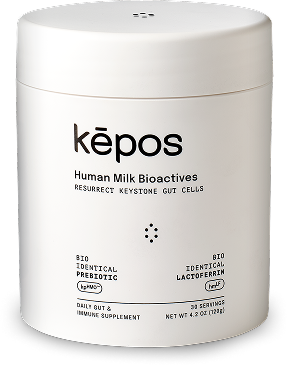
Our supplements are the first to combine bio-identical Human Milk Oligosaccharides (HMOs) with effera™ human lactoferrin to deliver targeted support for your gut.
This unique combination offers a multi-faceted approach:
-
Selective Nourishment: HMOs feed your beneficial bacteria without fueling the bad ones.
-
Barrier Protection: Effera™ human lactoferrin strengthens your gut lining to reduce permeability.
-
Microbiome Balance: Both ingredients work together to foster a healthy, diverse gut ecosystem.
Our products are lactose-free and have reduced allergenicity, making them suitable for most people, including those with lactose intolerance. However, because our ingredients are produced using advanced fermentation techniques that may involve dairy-derived materials, trace amounts of dairy proteins may remain. Therefore, individuals with a true dairy allergy should exercise caution.
If you’re tired of the bloating and discomfort that comes with generic prebiotics and are looking for a smarter, more effective way to support your gut health, it’s time to look beyond simple fibers. The future of gut wellness lies in the precision nutrition found in our Human Milk Prebiotic Superfood.
Frequently Asked Questions
Can prebiotics make my bloating worse?
Yes, some prebiotics, especially non-selective fibers like inulin and FOS, can be fermented by both good and bad gut bacteria.
This fermentation, particularly by undesirable microbes, produces excess gas that leads to bloating, gas, and abdominal discomfort.
Selective prebiotics like the Human Milk Oligosaccharides (HMOs) used by kēpos are much less likely to cause these side effects because they specifically target beneficial bacteria.
What is the difference between prebiotics and probiotics?
Probiotics are live, beneficial bacteria that are introduced into your gut to add to your existing microbial population.
Prebiotics are special types of fiber that act as food for your beneficial bacteria, helping them grow, multiply, and thrive. Think of probiotics as the new seeds for your garden and prebiotics as the fertilizer.
How long does it take for prebiotics to work?
Some clinical studies on Human Milk Oligosaccharides (HMOs) have shown positive shifts in the gut microbiota and improvements in symptoms in as little as two to four weeks.
Are all prebiotics the same?
No, not at all. Most prebiotics are simple, non-selective fibers, but advanced prebiotics like HMOs have complex structures that allow them to selectively nourish only the most beneficial gut bacteria.
Is effera™ human lactoferrin safe?
Yes, clinical studies have demonstrated that recombinant human lactoferrin, like effera™, is safe, well-tolerated, and does not cause significant adverse effects or problematic immune responses in adults.