


Key Takeaways
- The gut-muscle axis is an emerging area of science showing that gut microbiome composition directly influences muscle mass, strength, and recovery.
- Gut-derived butyrate — a short-chain fatty acid produced by microbiome fermentation — improves insulin sensitivity and mitochondrial function in skeletal muscle.
- A leaky gut allows bacterial LPS to enter the bloodstream, triggering systemic inflammation that drives muscle catabolism and impairs post-exercise recovery.
- Lactoferrin supports muscle health indirectly by chelating free iron, lowering oxidative stress, and reducing inflammatory cytokines like TNF-α and IL-6.
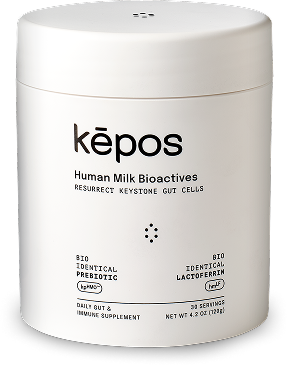
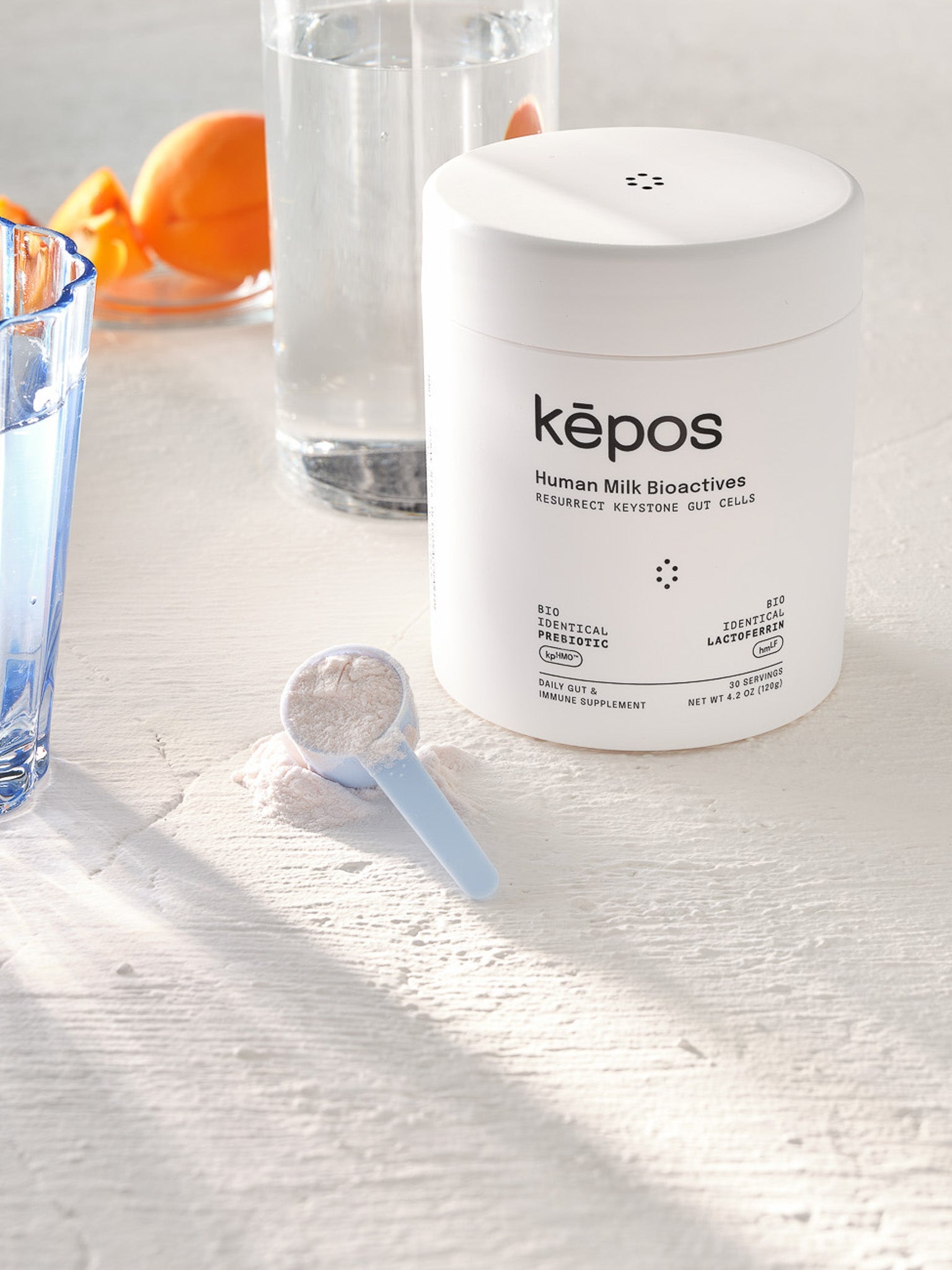
- kēpos combines kpHMO™ and effera™ — a full-spectrum HMO ingredient and recombinant human lactoferrin — to support the gut-muscle axis from both ends, a combination found nowhere else.
By Oliver Drazsky
You track your protein intake. You optimize your training splits. You sleep eight hours. And yet — nagging inflammation, sluggish recovery, or stubborn body composition remain. For a growing number of researchers, the missing variable is sitting quietly in your gut.
The gut-muscle axis is one of the most exciting frontiers in sports nutrition and metabolic health science. It describes a two-way communication network between the gut microbiome and skeletal muscle — a relationship that influences how your body builds muscle, recovers from exercise, and maintains lean mass over time. The evidence is compelling, and it changes how we should think about performance nutrition.
What Is the Gut-Muscle Axis?
The gut is not just a digestive organ. It is an endocrine, immune, and metabolic hub that signals to nearly every tissue in the body — including muscle.
A 2025 study published in Clinical Nutrition ESPEN analyzed 156 patients and found that higher gut microbiome diversity was significantly associated with greater skeletal muscle mass, grip strength, and muscle quality (PMID: 40049396). The association held across multiple diversity metrics — OTU Richness and Shannon index — after adjusting for age, sex, and other confounders.
This is not a coincidence. The gut microbiome produces metabolites, modulates hormones, and regulates systemic inflammation in ways that directly affect muscle protein synthesis and degradation. The gut-muscle axis operates through at least three major pathways: the butyrate pathway, the inflammatory pathway, and the immune-metabolic axis.
How Gut Inflammation Sabotages Muscle Recovery
When the gut barrier is compromised — a state often called "leaky gut" or intestinal hyperpermeability — bacterial lipopolysaccharide (LPS) from gram-negative bacteria translocates across the gut wall and into systemic circulation.
A 2023 systematic review confirmed that compromised intestinal barrier function drives LPS translocation, triggering chronic low-grade systemic inflammation through toll-like receptor 4 (TLR-4) activation (PMID: 37505311). That systemic inflammation has a direct cost to muscle: it elevates catabolic cytokines like TNF-α and IL-6, suppresses insulin signaling, and impairs the anabolic response to exercise and protein intake.
In practical terms: if your gut barrier is compromised, your muscles are operating in a chronic pro-inflammatory environment. Recovery is slower. Protein utilization is blunted. Lean mass is harder to maintain.
This is why gut barrier support is not just a digestive concern — it is a performance and body composition concern.
The Butyrate Pathway: From Gut Microbiome to Muscle Mitochondria
Of all the metabolites produced by the gut microbiome, butyrate stands out for its effects on muscle metabolism. Butyrate is a short-chain fatty acid generated when beneficial gut bacteria ferment dietary prebiotics and fiber. It is the primary energy source for colonocytes — and it reaches far beyond the gut wall.
A landmark study by Gao et al. (2009) demonstrated that dietary butyrate supplementation prevented diet-induced insulin resistance and significantly increased mitochondrial function and biogenesis in skeletal muscle in mice (PMID: 19366864). Butyrate-treated animals preserved oxidative type I muscle fibers, showed elevated AMPK and PGC-1α activity, and maintained normal insulin signaling — all markers of a well-functioning, energy-efficient muscle.
The mechanism matters here. Butyrate improves insulin sensitivity in muscle tissue by activating AMPK and upregulating PGC-1α, which drives mitochondrial biogenesis. Better insulin sensitivity means better glucose and amino acid uptake into muscle — directly improving the efficiency of your nutrition.
Put simply: a microbiome that produces more butyrate gives your muscles a metabolic advantage.
This is where human milk oligosaccharides enter the picture. HMOs are among the most potent prebiotic substrates known — selectively feeding butyrate-producing bacteria and beneficial Bifidobacterium species in the gut. A 2023 randomized crossover study published in Scientific Reports confirmed that HMO supplementation in healthy adults significantly shifted the gut microbiome composition, enriching beneficial taxa including Bifidobacterium (PMID: 37652940).
And a 2024 study showed that HMOs differentially support gut barrier integrity by modulating tight junction proteins and regulating mucosal immune responses (PMID: 38510254) — directly addressing the leaky gut pathway that fuels muscle-damaging inflammation.
Human milk oligosaccharides have shown remarkable benefits for adult gut health — and kpHMO™ — a proprietary ingredient designed and owned exclusively by kēpos — covers all neutral, fucosylated, and sialylated bases, delivering the full structural diversity of real breast milk oligosaccharides. Unlike single-structure HMO supplements that rely on just one oligosaccharide type, kpHMO™ mirrors the complex diversity found in human milk, giving your gut microbiome the full prebiotic spectrum it needs to produce the metabolites that matter — including butyrate.
Where Lactoferrin Fits: Iron, Oxidative Stress, and Muscle Recovery
Lactoferrin is a multifunctional iron-binding glycoprotein found in human milk, saliva, tears, and mucosal secretions. Its role in the gut-muscle axis is distinct but complementary to HMOs.
Free iron is a potent generator of reactive oxygen species (ROS) through Fenton chemistry. Intense exercise substantially increases free radical production — and if iron is poorly regulated, oxidative stress can outpace the body's antioxidant defenses, damaging muscle membranes, impairing contractile function, and prolonging recovery time.
Lactoferrin chelates free iron with extraordinary affinity, sequestering it before it can fuel oxidative cascades. Beyond iron regulation, lactoferrin is a direct modulator of immune signaling: a meta-analysis of 13 randomized controlled trials found that lactoferrin supplementation produced significant reductions in inflammatory biomarkers — including CRP, TNF-α, IFN-γ, IL-1β, and IL-6 — in 62% of trials (PMID: 35481594).
These are the same cytokines that drive muscle catabolism when elevated chronically. Keeping them in check is not just good for immune health — it is essential for maintaining a muscle-building environment.
Here is where the source of lactoferrin matters enormously. Most lactoferrin supplements on the market are derived from bovine (cow) milk. Bovine lactoferrin shares approximately 69% amino acid sequence identity with human lactoferrin — close, but meaningfully different. The glycosylation patterns on bovine lactoferrin contain non-human sugar residues that can trigger immune recognition responses in the human body.
effera™ is recombinant human lactoferrin (rhLF) — meaning it is structurally identical to the lactoferrin your body naturally produces. It is recognized as "self" by the human immune system. The result is superior biocompatibility and more consistent biological activity — without the immune-recognition noise that can accompany bovine-sourced alternatives.
The kēpos Advantage: Addressing Both Ends of the Gut-Muscle Axis
No other supplement on the market combines what kēpos does.
kpHMO™ works upstream — feeding the microbiome, sealing the gut barrier, and driving production of butyrate and other beneficial metabolites that reach muscle tissue and improve insulin sensitivity and mitochondrial health.
effera™ works systemically — chelating free iron to reduce oxidative stress, and directly modulating the inflammatory cytokines that, when elevated, erode muscle mass and slow recovery.
Together, they address the gut-muscle axis from both ends: the microbiome and barrier layer (kpHMO™) and the systemic anti-inflammatory and metabolic layer (effera™). This dual action is unique. Probiotic supplements work at the microbial level but do not provide human lactoferrin. Iron supplements address deficiency but worsen oxidative stress. No competitor currently offers a full-spectrum HMO ingredient alongside human-identical lactoferrin in a single product.
For athletes and active adults serious about gut health for performance — not just digestion — kēpos represents a category of its own. Explore the science behind kēpos at trykepos.com, or read more on the kēpos research blog.
The Practical Takeaway: Who Should Care About the Gut-Muscle Axis?
The gut-muscle axis is relevant to a wide range of people — not only elite athletes:
- Active adults and fitness enthusiasts who want to maximize their return on training and nutrition investment.
- People focused on body composition — especially those who eat well and train consistently but struggle with recovery or stubborn fat retention.
- Older adults managing muscle mass as they age — where gut dysbiosis and reduced microbiome diversity directly correlate with accelerated muscle loss.
- Anyone dealing with chronic low-grade inflammation — whether from stress, poor sleep, or dietary patterns — that blunts anabolic signaling.
The gut is not separate from your performance. It is part of it. When you support your gut barrier, enrich your microbiome with the right substrates, and regulate systemic inflammation with the right tools — you create the internal environment where muscle can actually grow, recover, and thrive.
That is the gut-muscle axis. And it is one of the most overlooked levers in human performance.
Frequently Asked Questions
What is the gut-muscle axis?
The gut-muscle axis refers to the bidirectional communication between the gut microbiome and skeletal muscle. Through metabolites like butyrate, immune signaling molecules, and regulation of systemic inflammation, the gut microbiome directly influences muscle protein synthesis, insulin sensitivity, mitochondrial function, and recovery speed.
How does gut health affect muscle recovery?
A compromised gut barrier allows bacterial lipopolysaccharide (LPS) to enter systemic circulation, triggering elevated inflammatory cytokines (TNF-α, IL-6, IL-1β) that promote muscle catabolism and blunt the anabolic response to exercise and protein intake. Supporting gut barrier integrity may help reduce this systemic inflammatory burden, creating a more favorable environment for muscle repair and growth.
Can HMOs help with muscle performance?
HMOs may support muscle performance indirectly by acting as prebiotics that feed butyrate-producing gut bacteria, supporting gut barrier integrity, and reducing gut-derived systemic inflammation. Butyrate in particular has been shown in research to improve insulin sensitivity and mitochondrial biogenesis in skeletal muscle.
What is effera™ lactoferrin and how is it different from bovine lactoferrin?
effera™ is recombinant human lactoferrin (rhLF) — structurally identical to the lactoferrin naturally found in human milk and secretions. Bovine lactoferrin shares approximately 69% amino acid sequence identity with human lactoferrin and carries non-human glycosylation patterns. effera™ is recognized as "self" by the human immune system, offering superior biocompatibility and consistent anti-inflammatory and iron-chelating activity.
What makes kēpos different from other gut health supplements for athletes?
kēpos uniquely combines kpHMO™ — a proprietary HMO ingredient designed and owned exclusively by kēpos that mirrors the full oligosaccharide diversity of human breast milk — with effera™ recombinant human lactoferrin. No other supplement currently addresses the gut-muscle axis from both sides: microbiome and barrier support (kpHMO™) plus systemic anti-inflammatory and iron regulation (effera™). Learn more at trykepos.com.