

Key Takeaways
- HMO supplements like 2'-fucosyllactose (2'-FL) significantly boost beneficial gut bacteria — clinical trials show up to 25% increases in bifidobacteria within just 1-2 weeks
- 77% of participants respond positively to HMO supplementation with measurable microbiome improvements
- HMOs reduce digestive symptoms in IBS patients when taken at therapeutic doses (5g/day)
- Immune-boosting effects are well-documented — research shows HMOs enhance both innate and adaptive immunity
- Safety is established — HMOs are well-tolerated at doses up to 20g/day in healthy adults
You've probably heard about probiotics, prebiotics, and the latest gut health trends flooding your social media feed. But here's what the science is actually showing: human milk oligosaccharides (HMOs) are emerging as one of the most powerful, evidence-backed tools for transforming your gut microbiome.
Unlike generic fiber supplements or hit-or-miss probiotics, HMOs are structurally specific prebiotic compounds that evolved over millions of years to nourish beneficial bacteria. And now, thanks to modern biotechnology, you don't need to be a breastfeeding infant to access their benefits.
Let's dive into what the clinical research actually reveals about HMO supplements — and why kēpos is leading the charge in bringing this next-generation gut health technology to adults.
What Are HMO Supplements and Why Do They Matter?
Human milk oligosaccharides (HMOs) are complex sugars naturally found in human breast milk. For decades, scientists knew they were important for infant gut development, but only recently have we been able to produce them at scale for adult supplementation.
The most well-studied HMO is 2'-fucosyllactose (2'-FL), which makes up about 30% of all HMOs in human milk. Unlike simple prebiotics like inulin or psyllium that feed a broad range of bacteria (including potentially harmful ones), 2'-FL is selectively metabolized by beneficial bacteria like Bifidobacterium and Akkermansia muciniphila.
This selectivity is what makes HMOs so powerful. They're not just "food for gut bugs" — they're precision fuel for the exact species linked to metabolic health, immune resilience, and reduced inflammation.
What Do Clinical Trials Show About HMO Benefits?
The evidence base for HMO supplementation has exploded in recent years. Here's what randomized controlled trials (RCTs) and systematic reviews reveal:
Rapid Microbiome Transformation
A 2016 study published in the Journal of Nutrition (PMID: 27719686) gave 100 healthy adults varying doses of 2'-FL and lacto-N-neotetraose (LNnT) for two weeks. The results were striking:
- 77% of participants showed a >10% increase in Bifidobacterium abundance
- Some individuals saw increases of more than 25% in beneficial bacteria
- Changes occurred rapidly — within 1-2 weeks of starting supplementation
- Doses up to 20g/day were safe and well-tolerated
This isn't a marginal shift — it's a fundamental remodeling of the gut ecosystem toward a healthier state.
Digestive Symptom Relief
For people struggling with IBS or chronic digestive discomfort, HMOs offer real hope. Research published in Scientific Reports (PMID: 33512807) demonstrated that 5g/day of 2'-FL reduced IBS symptom severity in both animal models and human observational studies.
Participants reported improvements in:
- Abdominal pain and cramping
- Bloating and gas
- Bowel movement regularity
- Overall gut comfort
The mechanism? HMOs don't just feed good bacteria — they also reduce gut inflammation and strengthen the intestinal barrier, preventing the "leaky gut" phenomenon that contributes to systemic inflammation.
Immune System Support
Perhaps most exciting is the mounting evidence that HMOs directly enhance immune function. A 2018 study in Frontiers in Immunology (PMID: 29593719) found that 2'-FL supplementation improved both innate and adaptive immune responses in a vaccination model.
This makes biological sense: about 70% of your immune system resides in your gut, and HMOs help train immune cells to distinguish between harmless antigens and real threats. A well-fed microbiome equals a well-regulated immune system.
How Do HMOs Compare to Other Gut Health Supplements?
Let's be honest: the supplement aisle is crowded with gut health products making big promises. Here's how HMOs stack up against the competition:
HMOs vs. Probiotics
Probiotics dump billions of bacteria into your gut, hoping some will colonize. But most probiotic strains don't permanently colonize the gut — they're transient visitors. HMOs, by contrast, feed the beneficial bacteria already living in your microbiome, helping them outcompete harmful species.
Plus, HMOs are shelf-stable and don't require refrigeration, unlike many probiotic formulations.
HMOs vs. Generic Prebiotics
Fiber supplements like inulin or FOS feed a broad range of bacteria — including some you don't want thriving. HMOs are structurally specific, selectively nourishing beneficial species like Bifidobacterium and Akkermansia without fueling opportunistic pathogens.
This is why some people experience gas and bloating with generic fiber supplements, while HMOs tend to be better tolerated even at high doses.
The kēpos Advantage
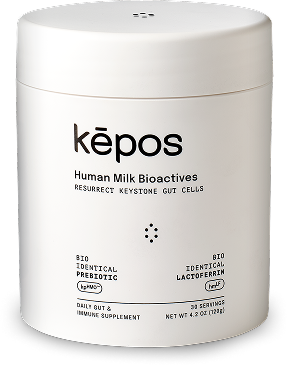
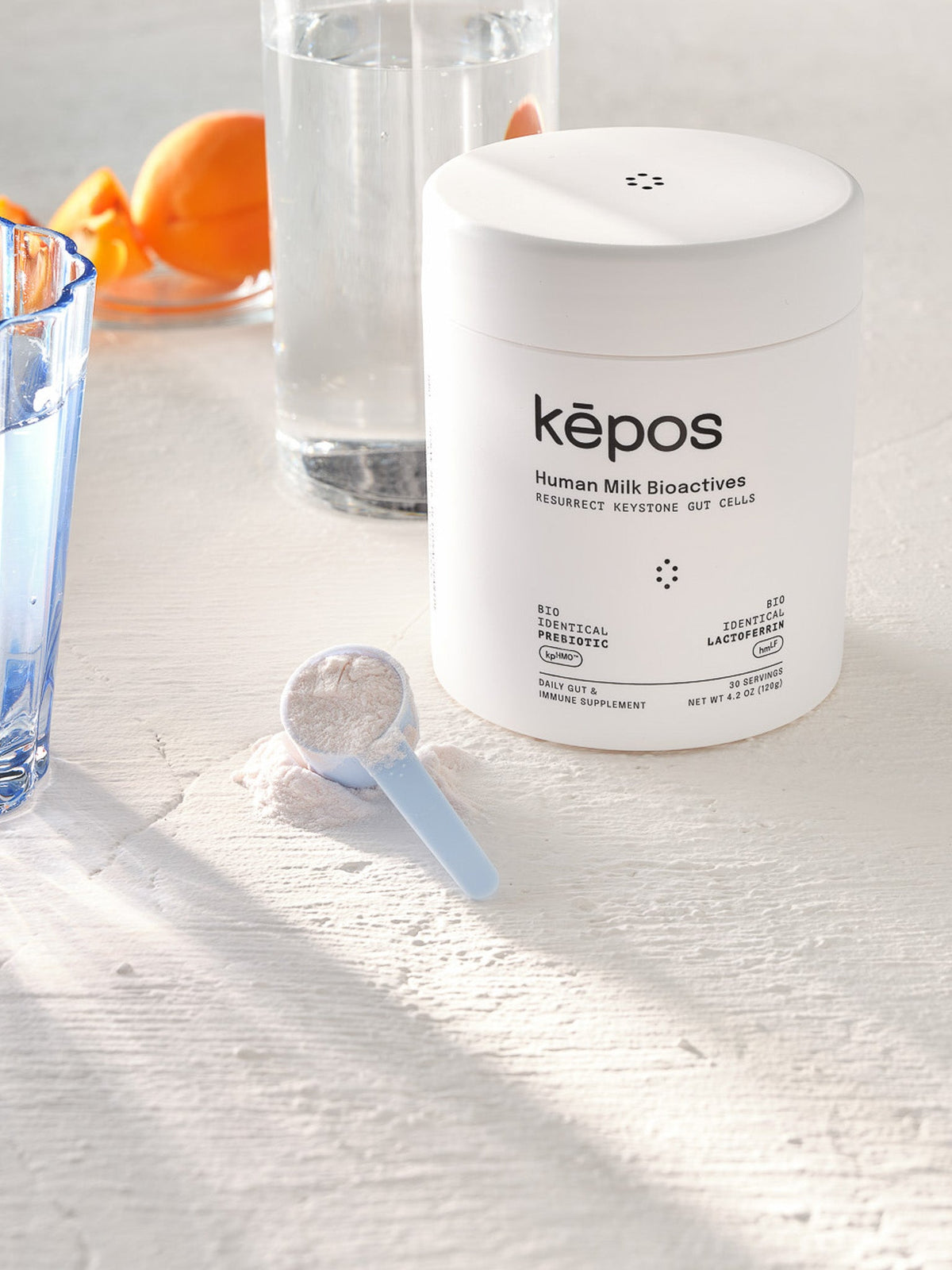
kēpos takes HMO supplementation to the next level by combining 2'-FL with eferra™ recombinant human lactoferrin (rhLF). Lactoferrin is an iron-binding protein that further supports immune health and has antimicrobial properties.
This synergistic formula gives you:
- Precision prebiotic support from clinically-studied 2'-FL
- Enhanced immune resilience from bioidentical lactoferrin
- No refrigeration required — easy to take anywhere
- Backed by human clinical data, not just in vitro studies
What's the Right HMO Dosage for Adults?
Based on the available clinical research, effective HMO doses range from 2-10g per day for general gut health support. The 2016 microbiome study found significant benefits at 5-10g/day, while IBS-focused research used 5g/day.
Higher doses (up to 20g/day) have been tested and are safe and well-tolerated, but most people will see benefits in the 5-10g range.
kēpos supplements are formulated to deliver therapeutic doses of 2'-FL alongside lactoferrin, putting you in the clinically-validated range with each serving.
Who Should Consider HMO Supplements?
HMO supplementation is particularly promising for:
- People with IBS or digestive discomfort looking for evidence-based relief
- Anyone recovering from antibiotics, which can devastate beneficial bacteria
- Those with immune sensitivity or frequent infections
- Health optimizers who want to support metabolic and cognitive function through the gut-brain axis
- Aging adults experiencing microbiome decline (bifidobacteria levels naturally drop with age)
As with any supplement, talk to your healthcare provider before starting — especially if you're pregnant, nursing, or managing a chronic health condition.
The Bottom Line: HMOs Are the Next Generation of Gut Health
The science is clear: HMO supplements offer a targeted, evidence-backed way to transform your gut microbiome. Unlike generic probiotics or fiber, HMOs provide structurally specific support for the exact bacterial species linked to better health outcomes.
Clinical trials demonstrate rapid microbiome improvements, digestive symptom relief, and immune system support — with an excellent safety profile even at high doses.
If you're serious about gut health, HMOs like those in kēpos represent the cutting edge of prebiotic science. This isn't a fad — it's the future of personalized nutrition.
Frequently Asked Questions
Are HMO supplements safe for daily use?
Yes. Clinical trials have established that HMOs are safe and well-tolerated at doses up to 20g/day in healthy adults. The most common HMO (2'-FL) has GRAS (Generally Recognized as Safe) status from the FDA.
How long does it take to see benefits from HMO supplements?
Research shows microbiome changes can occur within 1-2 weeks of starting supplementation. Digestive symptom improvements may take 2-4 weeks, while immune and metabolic benefits often build over 2-3 months of consistent use.
Can I take HMOs with probiotics?
Absolutely. HMOs and probiotics work synergistically — HMOs feed beneficial bacteria (including probiotic strains), helping them colonize more effectively. Many people find this combination especially powerful.
What's the difference between HMOs and other prebiotics like inulin?
HMOs are structurally specific and selectively feed beneficial bacteria like Bifidobacterium, while generic fibers like inulin feed a broader range of species (including some you don't want thriving). This makes HMOs better tolerated and more targeted in their effects.
Where can I find high-quality HMO supplements?
Look for supplements that contain clinically-studied HMOs like 2'-FL at therapeutic doses (5-10g per serving). kēpos combines 2'-FL with recombinant human lactoferrin for synergistic gut and immune support, backed by published research.