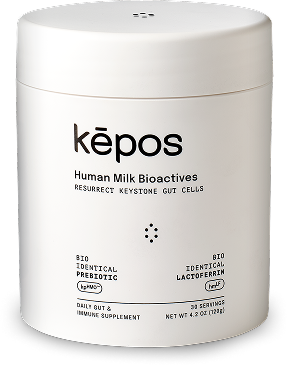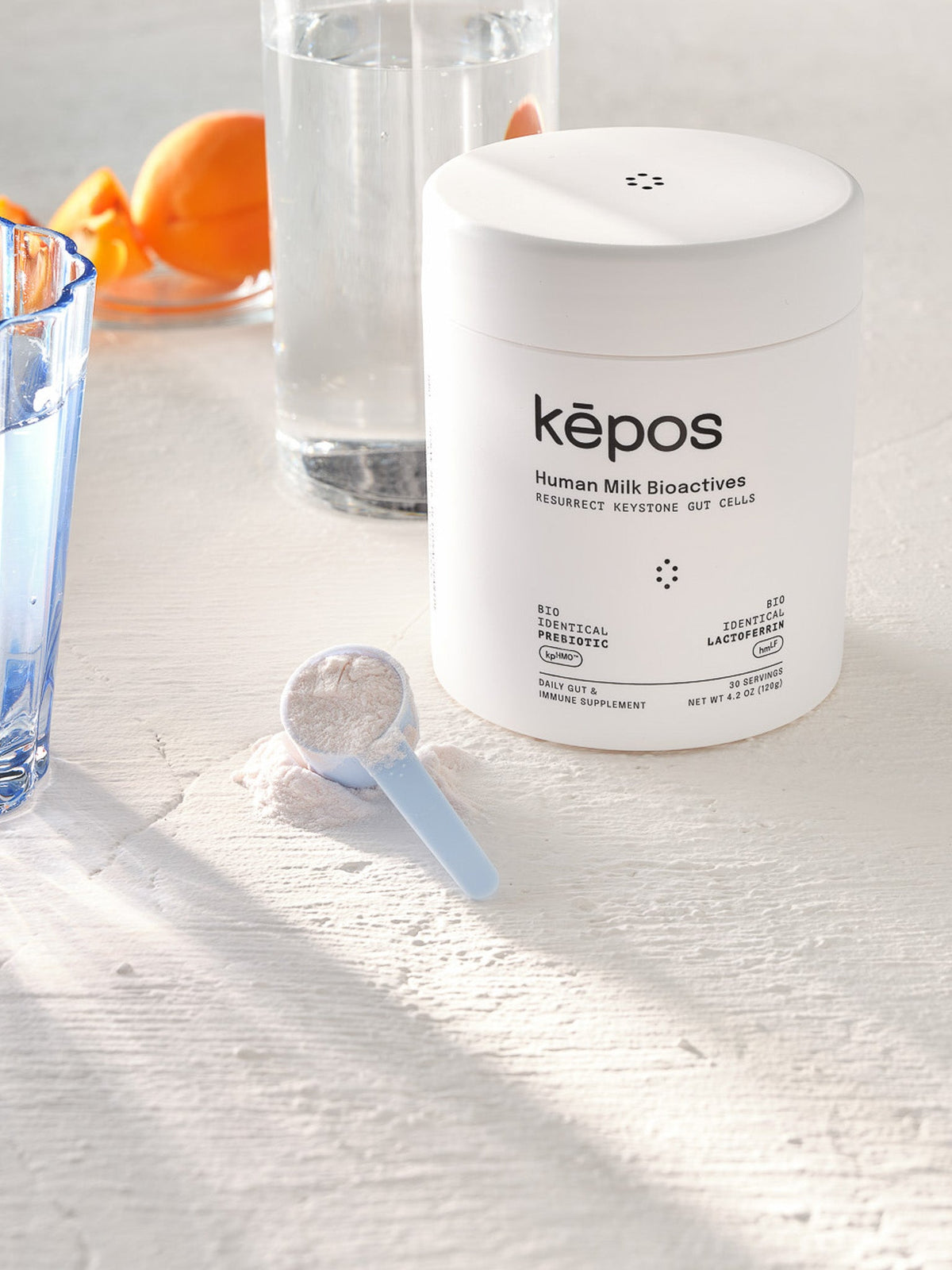


HMOs are specialized fibers native to human milk. In adults, specific HMOs can nourish beneficial bacteria, support the gut barrier, and promote digestive comfort—a modern, dairy-free way to bring “humanized” nutrition into your daily routine. Explore kēpos.
Why HMOs for digestion?
Human milk oligosaccharides (HMOs) are complex, selective carbohydrates that beneficial microbes—especially Bifidobacterium—love to consume. By feeding the “right” microbes, HMOs help tilt your microbiome toward a composition associated with less gas and bloating, better barrier integrity, and overall digestive ease. Reviews describe HMOs as shaping a bifidobacteria-rich microbiome and strengthening the epithelial barrier through metabolites and pH effects.1
What the research says
-
Adults tolerate HMO blends and see bifidobacteria increases. In a placebo-controlled trial, healthy adults supplemented with 2′-fucosyllactose (2′-FL) and lacto-N-neotetraose (LNnT) showed increases in Bifidobacterium and favorable microbiota shifts.2
-
Reviews support microbiome and barrier benefits. Contemporary reviews summarize HMOs’ roles in promoting a protective, bifidobacteria-rich community and supporting barrier function—both relevant to digestive comfort.1, 3
-
Emerging clinical and mechanistic data continue to grow. Additional syntheses and pilot work explore 2′-FL effects on GI quality-of-life measures and short-chain fatty acids in adult populations.4
How kēpos works
1) HMOs for digestive comfort
kēpos uses specific, fermentation-derived HMOs (like 2′-FL) that selectively feed beneficial microbes and help create a friendlier gut environment. This supports comfortable digestion by promoting a microbiome that resists opportunists and fosters a healthy gut lining.2, 1
2) hmLF effera™ Lactoferrin for gut environment support
Lactoferrin, an iron-binding glycoprotein also native to human milk, contributes antimicrobial and immune-modulating activities that support the GI mucosa and overall gut environment—complementary to HMOs.5, 6, 7
How this compares with bovine colostrum
Bovine colostrum research in adults is mixed: some athlete studies suggest permeability benefits, while broader outcomes vary. kēpos focuses on defined human-milk bioactives (HMOs + lactoferrin), with consistent identity and dosing.8
Is it dairy-free and safe?
The HMOs used today in foods and supplements (e.g., 2′-FL, LNnT, LNT, 3-FL) are typically produced by microbial fermentation and purified to be chemically identical to those found in human milk. Regulatory opinions and assessments have evaluated their safety for intended uses.9, 10, 11 As with any supplement, individuals with medical conditions or who are pregnant/breastfeeding should consult their clinician.
FAQ
Will HMOs help with bloating?
By selectively feeding Bifidobacterium and supporting a healthier gut environment, HMOs are associated with improved digestive comfort in adults. One trial in healthy adults showed favorable microbiota changes with an HMO blend; individual results vary.2, 1
Are the HMOs in kēpos dairy-free?
Yes. The HMOs we use are produced by fermentation—not extracted from dairy proteins—and are purified to be chemically identical to HMOs found in human milk. EFSA has issued multiple favorable safety opinions on fermentation-derived HMOs.9, 10, 11
Why include hmLF effera™ lactoferrin?
Lactoferrin supports the gut environment via antimicrobial and immune-modulating actions—complementary to HMO-driven microbiome shaping.5, 6, 7
How does this compare to bovine colostrum?
Adult data on bovine colostrum show mixed results. Some studies note improved gut permeability in athletes, while conclusions outside that context are less consistent. We prioritize targeted, well-characterized human-milk bioactives with clear mechanisms.8
References
- Dinleyici M, et al. Functional effects of human milk oligosaccharides (HMOs). Nutrients. 2023. PMC: PMC10026937
- Elison E, et al. Oral supplementation of healthy adults with 2′-FL and LNnT: microbiota & GI outcomes. Benef Microbes. 2016. PMC: PMC5082288
- Šuligoj T, et al. Effects of HMOs on the adult gut microbiota. Nutrients. 2020. PubMed: 32933181 / PMC: PMC7551690
- Ryan JJ, et al. Impact of 2′-FL on gut microbiota & GI quality-of-life (pilot). Nutrients. 2021. PMC: PMC7998190
- Donovan SM. Role of lactoferrin in GI and immune development. Nutr Rev. 2016. PubMed: 27234407
- Conesa C, et al. The role of lactoferrin in intestinal health. Foods. 2023. PMC: PMC10304194
- Liu N, et al. Functional role of lactoferrin in intestine mucosal immunity. Front Nutr. 2021. PMC: PMC8655231
- Dziewiecka H, et al. Colostrum & gut permeability in athletes (systematic review). Nutrients. 2022. PMC: PMC9227274 / PubMed: 35745242
- EFSA NDA Panel. Safety of 2′-fucosyllactose produced by fermentation as a novel food. 2023. EFSA Journal: EFSA 2023
- EFSA NDA Panel. Safety of 3-fucosyllactose (fermentation-derived). 2022. PMC: PMC9131588
- EFSA NDA Panel. Safety of lacto-N-tetraose (LNT) produced by microbial fermentation. 2022. EFSA Journal: 10.2903/j.efsa.2022.7242