


- GLP-1 drugs like semaglutide slow gastric emptying and reduce appetite, and that same mechanism cuts the fiber and food volume your gut bacteria depend on to thrive.
- A 12-week observational study in adults with type 2 diabetes found semaglutide shifted gut microbiota composition, including a rise in beneficial Bifidobacterium (PMID 41132642).
- In the landmark STEP 1 trial, nausea and diarrhea were the most common side effects of semaglutide, and 4.5% of participants discontinued treatment due to gastrointestinal events (PMID 33567185).
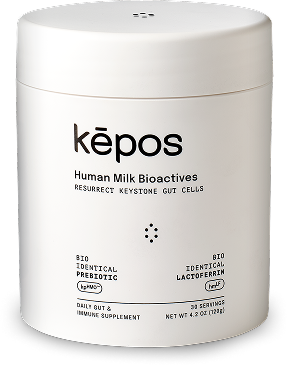
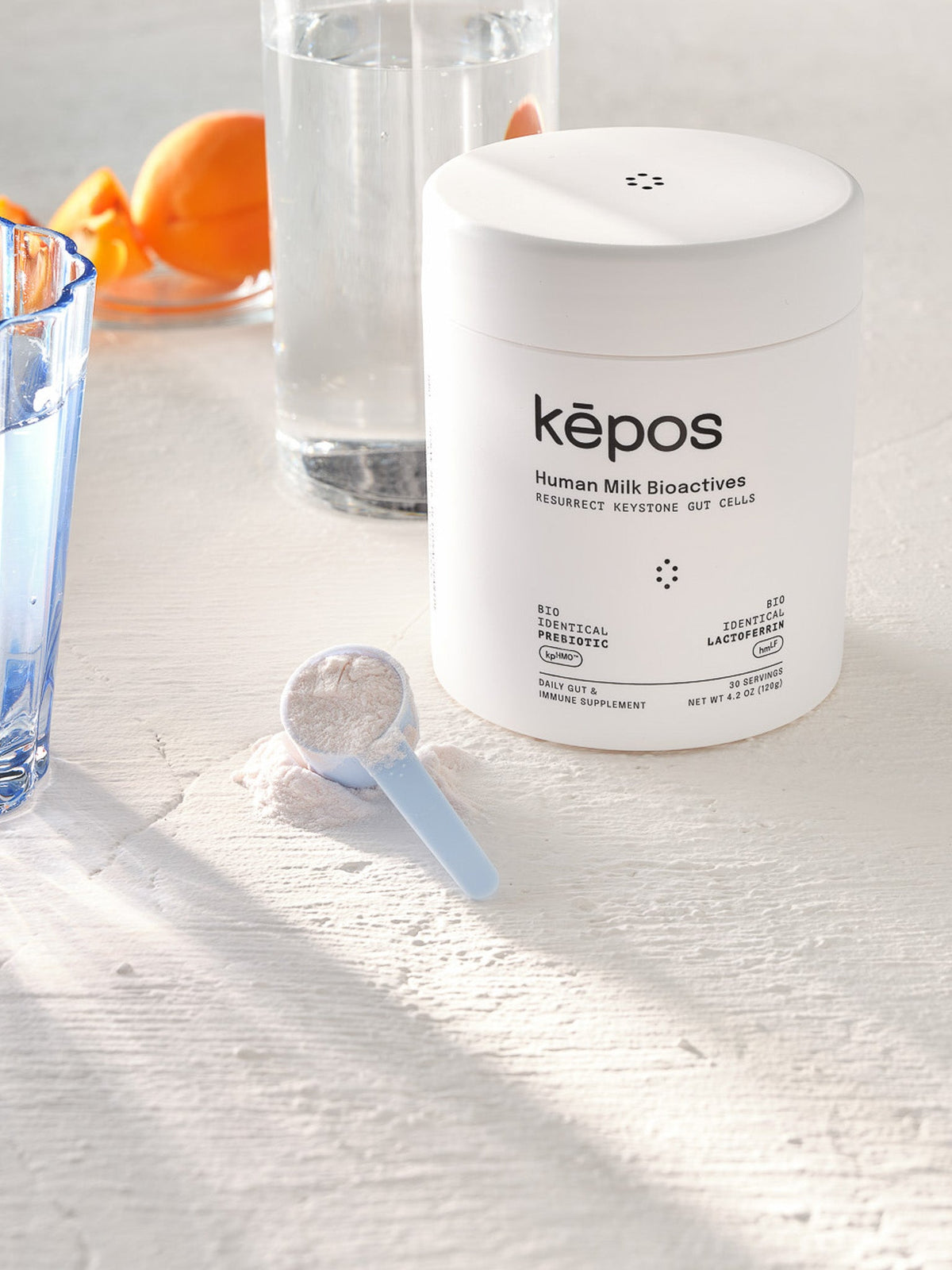
- kpHMO™, a prebiotic originally discovered in human milk and recreated through Japanese fermentation, is a proprietary ingredient designed and owned exclusively by kēpos to help feed the microbiome when eating volume drops.
- kēpos pairs kpHMO™ with effera™, our proprietary human lactoferrin, to support both gut health and iron absorption at a time when reduced food intake can strain both.
If you are on a GLP-1 medication like semaglutide, you already know the drill: smaller meals, less appetite, and a stomach that empties much more slowly than it used to. What gets far less attention is what that same mechanism does to your gut microbiome. Eating less does not just mean fewer calories. It means less fiber, less microbial fuel, and a very different environment for the trillions of bacteria living in your colon. Here is what the research actually shows, and what you can do about it.
What Is Actually Happening to Your Gut on a GLP-1 Drug?
GLP-1 receptor agonists work in part by slowing gastric emptying and relaxing the stomach so it holds food longer, which is exactly what produces that early, lasting sense of fullness. The tradeoff is that food and nutrients move through the digestive tract on a much slower, lighter schedule than before. In the STEP 1 trial, the largest randomized controlled trial of semaglutide for weight management, nausea and diarrhea were the most common adverse events, and gastrointestinal issues were common enough that 4.5% of participants stopped treatment entirely because of them (PMID 33567185). A large population-based cohort study comparing dulaglutide, semaglutide, and tirzepatide found broadly similar gastrointestinal safety profiles across the drug class, confirming this is a category-wide effect rather than a quirk of one medication (PMID 41183330).
None of that is a flaw in the medication. It is the mechanism working as intended. But your gut bacteria do not know that. They only know that less food, and specifically less fiber, is arriving.
Does Semaglutide Actually Change Your Gut Microbiome?
Yes, and the research is starting to map exactly how. A 12-week observational study following adults with type 2 diabetes on semaglutide found measurable shifts in gut microbiota composition. Firmicutes decreased while Bacteroidota and Actinobacteriota increased, and beneficial Bifidobacterium rose alongside a drop in potentially harmful Klebsiella (PMID 41132642). A broader review of GLP-1 analogues found a more complicated picture: semaglutide increased Akkermansia muciniphila, a bacterium linked to metabolic health, but was also associated with a decrease in overall microbial diversity (PMID 40284168).
That combination, some favorable shifts alongside reduced diversity, lines up with what you would expect from a drug that dramatically cuts food intake. Diversity is one of the strongest markers of a resilient microbiome, and diversity is largely built by variety and volume of fermentable fiber reaching the colon. When intake drops as sharply as it does on a GLP-1 drug, the bacterial ecosystem has less to work with.
Why This Matters Even If You Feel Fine
Gut symptoms on a GLP-1 drug often get chalked up entirely to the slowed motility itself, and that is part of the story. But a microbiome losing diversity and fiber input can independently contribute to bloating, irregularity, and that vague sense of digestive sluggishness many people report months into treatment, well after the initial nausea has faded. This is a distinct problem from delayed gastric emptying, and it needs a distinct solution: feeding the bacteria that are still there, even when total food volume is down.
Reduced intake can also affect iron status, since eating less overall often means eating less iron-rich food. Combined with any GI symptoms, this makes iron absorption a second, related concern worth addressing alongside microbiome support.
The Missing Piece: Feeding Your Microbiome When You Are Eating Less
This is where human milk oligosaccharides (HMOs) offer something genuinely useful. HMOs are not digested for calories. They travel straight to the colon and act as a highly concentrated, selective food source for beneficial bacteria, meaning you do not need large meal volumes for them to do their job (PMID 36929926). A randomized, placebo-controlled trial in 100 healthy adults found HMO supplementation well tolerated and associated with meaningful increases in beneficial Bifidobacterium, the same genus researchers have observed rising in early semaglutide microbiome data (PMID 27719686).
kēpos built kpHMO™ specifically for this kind of gap. kpHMO™ is a prebiotic originally discovered in human milk and recreated through Japanese fermentation, and it is a proprietary ingredient designed and owned exclusively by kēpos. Unlike a fiber supplement that depends on volume to be effective, kpHMO™ delivers a concentrated, full-spectrum prebiotic signal covering all three HMO structural bases: neutral, fucosylated, and sialylated, in a small daily serving. That matters enormously for anyone whose overall food intake has dropped.
Why Lactoferrin Belongs in This Conversation Too
kēpos does not stop at kpHMO™. It is formulated alongside effera™, our proprietary human lactoferrin, a bioactive protein studied for its role in supporting healthy iron absorption. In a controlled trial, healthy young women absorbed iron from recombinant human lactoferrin just as well as from standard ferrous sulfate, without the digestive discomfort iron supplements often cause (PMID 16469988). For someone eating less overall on a GLP-1 medication, and who may be more sensitive to anything that adds GI discomfort, that distinction is worth paying attention to.
Pairing a full-spectrum prebiotic with a gentle, human-identical lactoferrin protein means kēpos is addressing two separate consequences of reduced food intake at once: a hungrier microbiome and a lower nutrient margin.
What This Means for Your GLP-1 Routine
None of this is about replacing your medication or your medical care. It is about recognizing that a smaller plate changes more than your weight. It changes what reaches your colon, and your gut bacteria may help you feel your best while you are on that plan. Talk to your healthcare provider about your overall nutrition while on a GLP-1 medication, and consider whether your routine is feeding your microbiome as deliberately as it is managing your appetite.
Explore the kēpos human milk bioactives formula to see how kpHMO™ and effera™ work together, or visit the kēpos blog for more on the science connecting GLP-1 medications and gut health.
Frequently Asked Questions
Does semaglutide hurt your gut microbiome?
The research shows a mixed picture. Semaglutide has been associated with some favorable bacterial shifts, including increases in beneficial Bifidobacterium and Akkermansia muciniphila, but also with reduced overall microbial diversity, likely tied to significantly reduced food intake (PMID 41132642, PMID 40284168).
Why do GLP-1 drugs cause so many digestive side effects?
GLP-1 receptor agonists slow gastric emptying and intestinal motility as part of how they work, which is why nausea, diarrhea, and constipation are common. In the STEP 1 trial, these were the most frequently reported adverse events (PMID 33567185).
Can HMOs help support gut health while on a GLP-1 medication?
HMOs may help because they act directly in the colon as a concentrated food source for beneficial bacteria, without requiring large meal volumes. A randomized trial in healthy adults found HMO supplementation well tolerated and associated with increases in beneficial Bifidobacterium (PMID 27719686). As always, talk to your healthcare provider before adding any new supplement to a GLP-1 protocol.
What is kpHMO™ and how is it different from fiber supplements?
kpHMO™ is a prebiotic originally discovered in human milk and recreated through Japanese fermentation, and it is a proprietary ingredient designed and owned exclusively by kēpos. It covers all three HMO structural bases (neutral, fucosylated, and sialylated) in a concentrated daily serving, rather than depending on the large food volumes that fiber alone typically requires to be effective.
Should I worry about iron while eating less on a GLP-1 drug?
Eating less overall can mean less dietary iron, so it is worth discussing with your provider. effera™, kēpos's proprietary human lactoferrin, has been studied for its role in supporting healthy iron absorption without the digestive discomfort common to standard iron supplements (PMID 16469988).
Written by Oliver Drazsky for kēpos. Every study cited above includes a verified PMID linking to PubMed.