

Key Takeaways
- Your gut and brain communicate constantly through the gut-brain axis, affecting mood, stress response, and mental clarity
- Beneficial gut bacteria like Bifidobacterium produce compounds that directly influence brain function and emotional well-being
- Human milk oligosaccharides (HMOs) significantly increase beneficial Bifidobacterium populations in adults
- Prebiotics have been shown in clinical trials to reduce anxiety and improve mood markers
- Supporting your gut microbiome may be one of the most effective ways to support your mental wellness
Ever had a "gut feeling" about something? Or felt butterflies in your stomach before a big moment? These aren't just figures of speech—they're real signals traveling along one of your body's most fascinating communication highways: the gut-brain axis.
What scientists are discovering about this connection is remarkable. Your gut isn't just digesting your lunch—it's actually playing a significant role in how you think, feel, and handle stress. And the key players in this story? The trillions of bacteria living in your digestive system.
What Is the Gut-Brain Axis?
The gut-brain axis is a bidirectional communication network linking your gastrointestinal tract with your central nervous system. This connection happens through multiple pathways: the vagus nerve (a direct neural highway), immune signaling, and chemical messengers produced by gut bacteria.
Your gut actually contains more than 500 million neurons—earning it the nickname "the second brain." These neurons communicate with your brain constantly, sending signals that can influence everything from appetite to anxiety.
Here's where it gets interesting: the bacteria in your gut don't just sit there passively. They actively produce neurotransmitters like serotonin (about 95% of your body's serotonin is made in the gut!), GABA, and dopamine. These are the same chemicals your brain uses to regulate mood, sleep, and cognitive function.
The Bifidobacterium-Mood Connection
Among the many bacterial species in your gut, Bifidobacterium stands out for its connection to mental wellness. Research has shown that Bifidobacterium adolescentis supplementation can improve mood and reduce perceived stress in adults.
How does this work? Bifidobacteria ferment dietary fibers and prebiotics to produce short-chain fatty acids (SCFAs) like butyrate, acetate, and propionate. Research published in nutritional neuroscience journals has demonstrated that these SCFAs can cross the blood-brain barrier and directly influence brain function, affecting everything from inflammation to neurotransmitter production.
The challenge? As we age, Bifidobacterium populations naturally decline. Factors like stress, antibiotics, poor diet, and even normal aging can deplete these beneficial bacteria—potentially affecting our mental wellness along the way.
How HMOs Support the Gut-Brain Connection
Human milk oligosaccharides (HMOs) have emerged as one of the most effective ways to selectively boost Bifidobacterium populations in the adult gut. In a landmark randomized controlled trial published in the British Journal of Nutrition, researchers gave 100 healthy adults HMOs (2'-fucosyllactose and lacto-N-neotetraose) for two weeks.
The results were striking: HMO supplementation significantly increased Bifidobacterium abundance while reducing potentially harmful bacteria like Proteobacteria. Participants at higher doses showed the most pronounced shifts in their microbiome composition—all without any adverse effects.
Unlike broad-spectrum prebiotics, HMOs act as precision tools. They're specifically fermented by beneficial bacteria like Bifidobacterium, which have evolved the enzymatic machinery to break them down. This selective feeding helps establish a gut environment that supports the gut-brain axis.
What the Research Says About Prebiotics and Mood
A comprehensive systematic review examining 34 randomized controlled trials found that prebiotic supplementation showed beneficial effects on anxiety and depression markers. The researchers noted that prebiotics that successfully increased Bifidobacterium populations showed the most consistent positive effects on psychological outcomes.
This makes sense when you consider the mechanisms involved:
- Reduced inflammation: Beneficial gut bacteria help maintain the intestinal barrier, preventing inflammatory compounds from entering the bloodstream and affecting the brain
- Neurotransmitter production: Gut bacteria produce precursors to mood-regulating neurotransmitters
- Vagus nerve stimulation: SCFAs produced by gut bacteria can stimulate the vagus nerve, sending calming signals to the brain
- Stress hormone regulation: A healthy gut microbiome has been linked to better regulation of cortisol, the stress hormone
The Role of Lactoferrin in Gut-Brain Health
While HMOs feed your beneficial bacteria, lactoferrin—another key component found in human milk—plays a complementary role. Research published in Pharmaceutics has demonstrated that lactoferrin supports intestinal health through multiple mechanisms:
- Strengthening the intestinal barrier (crucial for preventing "leaky gut")
- Modulating inflammation in the gut
- Supporting the growth of beneficial bacteria while inhibiting pathogens
- Enhancing immune function in the gut-associated lymphoid tissue
A healthy intestinal barrier is essential for gut-brain communication. When the gut barrier is compromised, inflammatory molecules can enter circulation and potentially affect brain function—a process increasingly linked to mood disorders and cognitive decline.
How kēpos Supports Your Gut-Brain Connection
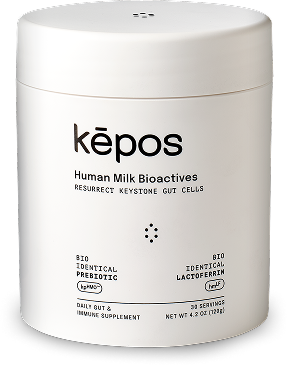
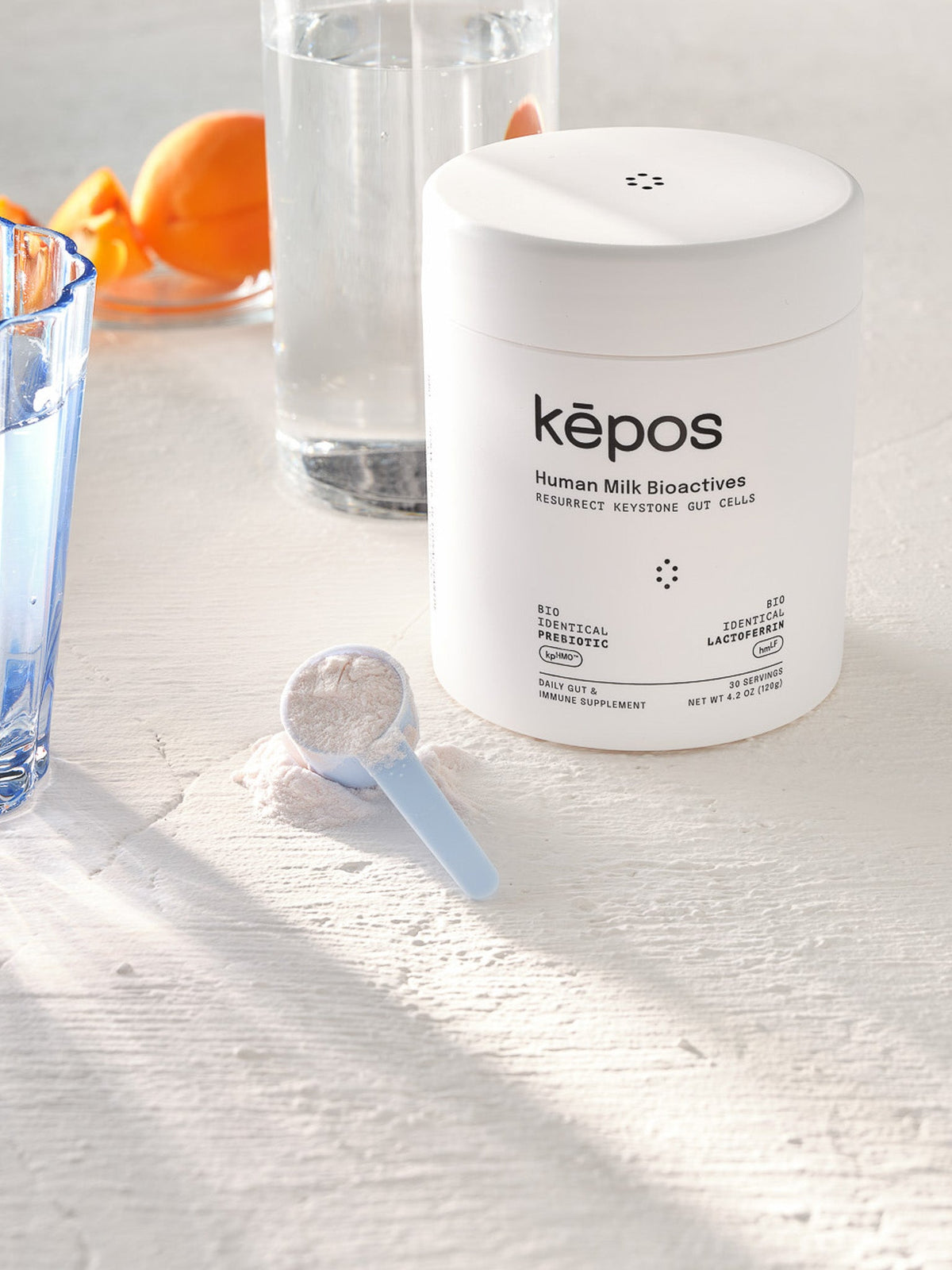
At kēpos, we've formulated our supplements with the gut-brain axis in mind. Our products contain clinically studied human milk oligosaccharides (HMOs) and lactoferrin—the same bioactive compounds that support infant development—now available to help adults optimize their gut health.
Our HMO blend specifically targets Bifidobacterium growth, while effera™ (our recombinant human lactoferrin) supports intestinal barrier integrity and immune balance. Together, these ingredients work synergistically to create an gut environment that supports not just digestive wellness, but mental clarity and emotional balance too.
Explore our gut health supplements to learn more about how we're bringing the science of human milk bioactives to adult wellness.
Frequently Asked Questions
Can gut health really affect my mood?
Yes! The gut-brain axis is a well-established bidirectional communication system. Your gut bacteria produce neurotransmitters like serotonin and GABA, and can influence brain function through the vagus nerve, immune signaling, and the production of short-chain fatty acids. Multiple clinical trials have shown connections between gut microbiome composition and mood.
What makes HMOs different from other prebiotics?
Human milk oligosaccharides are structurally unique prebiotics that selectively feed beneficial bacteria like Bifidobacterium. Unlike broad-spectrum prebiotics such as inulin, HMOs are precision tools that promote specific beneficial species. Research shows they can increase Bifidobacterium populations without causing the gas and bloating sometimes associated with other prebiotic fibers.
How long does it take to notice changes in mood from improving gut health?
Individual responses vary, but research shows that microbiome changes can begin within days of starting HMO supplementation. However, downstream effects on mood and mental clarity may take several weeks as your gut ecosystem rebalances and the gut-brain communication pathways strengthen. Consistency is key—most studies showing mood benefits involved at least 4-8 weeks of supplementation.
Is there a connection between gut health and brain fog?
Emerging research suggests yes. Inflammation originating in the gut can potentially affect brain function, and an imbalanced microbiome has been associated with cognitive symptoms including poor concentration and mental fatigue. By supporting a healthy gut barrier and beneficial bacterial populations, you may help reduce systemic inflammation that could contribute to brain fog.
Can I take HMOs and lactoferrin together?
Absolutely—in fact, they work synergistically. This combination mirrors what's naturally found in human milk, where HMOs and lactoferrin work together to support gut health. HMOs feed beneficial bacteria while lactoferrin supports the intestinal barrier and provides antimicrobial protection. kēpos supplements are designed with this synergy in mind.
References
- Elison E, et al. Oral supplementation of healthy adults with 2'-O-fucosyllactose and lacto-N-neotetraose is well tolerated and shifts the intestinal microbiota. Br J Nutr. 2016;116(8):1356-1368. PMID: 27719686
- Liu RT, et al. Prebiotics and probiotics for depression and anxiety: A systematic review and meta-analysis of controlled clinical trials. Neurosci Biobehav Rev. 2019;102:13-23. PMID: 31004628
- Conesa C, et al. The Role of Lactoferrin in Intestinal Health. Pharmaceutics. 2023;15(6):1569. PMID: 37376017
- Bifidobacterium adolescentis supplementation and mood outcomes. PMID: 36815026
- Short-chain fatty acids and brain function. Nutr Neurosci. PMID: 25550456