

🌱 Key Takeaways
- Your gut produces the building blocks of sleep. Up to 95% of the body's serotonin — a direct precursor to melatonin — is made in the gut, not the brain.
- A disrupted microbiome is linked to disrupted sleep. People with insomnia consistently show lower levels of SCFA-producing bacteria like Faecalibacterium and Prevotella (PMID 39064702).
- The gut-brain axis runs both ways. Poor sleep further damages your microbiome, creating a vicious cycle that is hard to break without addressing gut health.
- Human milk oligosaccharides (HMOs) may support this pathway by nurturing the beneficial bacteria responsible for serotonin and GABA production.
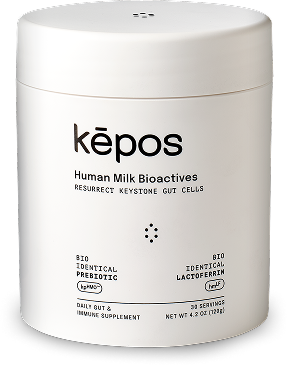
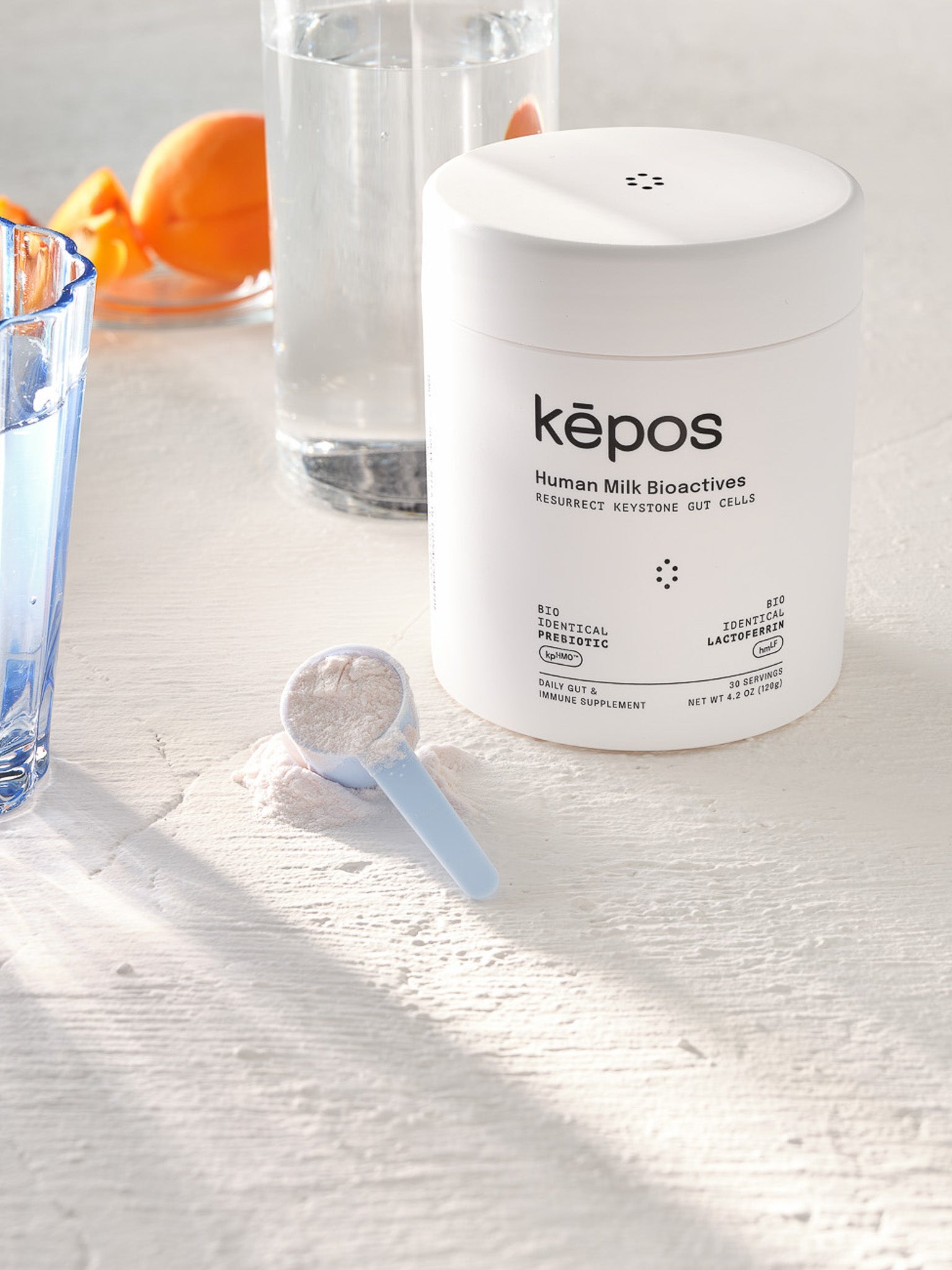
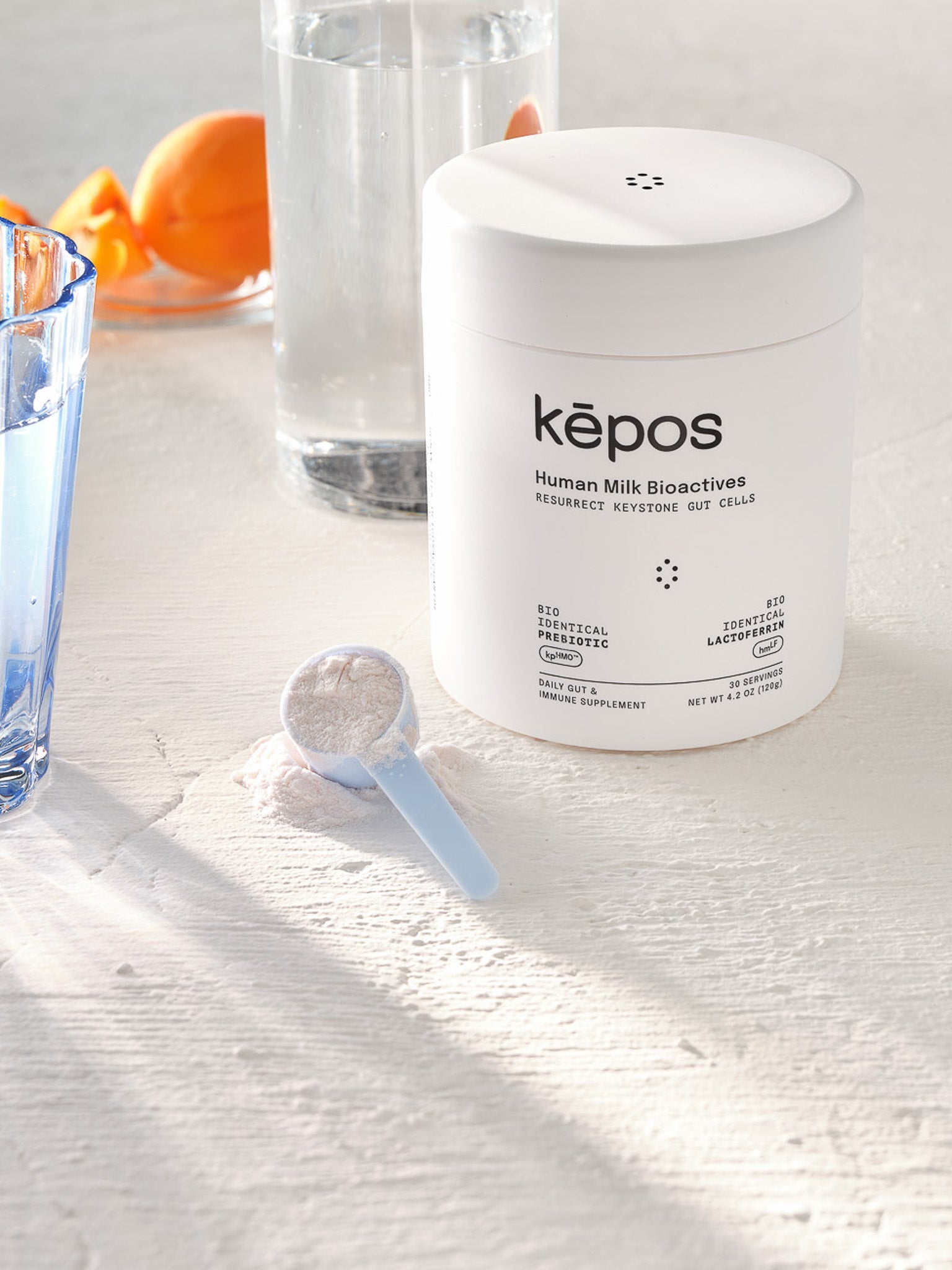
- kēpos features kpHMO™ — the proprietary HMO ingredient designed and owned exclusively by kēpos — to support the full spectrum of gut microbiome activity.
Why Are You Tired Even When You Sleep Enough?
You hit the pillow after eight hours and still wake up groggy. Your sleep tracker says you barely touched deep sleep. Sound familiar?
Most people look upward for the answer — to their brain, their stress levels, their screen time. But a growing body of research is pointing downward: to your gut.
The science of the gut-sleep connection has moved far beyond the notion that a heavy dinner disrupts your rest. Researchers now understand that the trillions of microbes living in your intestines directly regulate the chemicals your body needs to sleep well — including serotonin, melatonin, and GABA. Disturb those microbes, and you disturb your sleep. Nourish them, and you may finally understand what it feels like to wake up restored.
How Does Your Gut Control Your Sleep? The Science Explained
The answer starts with the gut-brain axis: a bidirectional communication highway linking your intestinal tract to your central nervous system via the vagus nerve, immune signaling, and neuroendocrine hormones.
Your gut microbiota — the diverse ecosystem of bacteria, fungi, and other microorganisms in your intestines — does not just help you digest food. It manufactures a remarkable range of neuroactive compounds that travel this axis and shape brain function, mood, and sleep architecture. A 2024 review in Nutrients mapped three main pathways through which the microbiome communicates with the brain: immunoregulatory, neuroendocrine, and autonomic (vagal) (PMID 39064702).
Disrupt that ecosystem, and the signals go haywire. Restore it, and the research suggests your sleep architecture can improve measurably.
The Four Sleep Chemicals Your Gut Produces
Understanding the gut-sleep link means understanding a handful of key metabolites. These are not abstract biochemistry — they are the molecules standing between you and a good night's rest.
1. Serotonin: The Overlooked Sleep Architect
Approximately 90–95% of the body's serotonin is produced in the gut — not the brain. Gut bacteria directly modulate enterochromaffin cells in your intestinal lining, which manufacture serotonin from the amino acid tryptophan. Short-chain fatty acids (SCFAs), produced when gut bacteria ferment dietary fiber, stimulate this process by upregulating tryptophan hydroxylase (TPH1), the rate-limiting enzyme in serotonin synthesis (PMID 39064702).
Why does this matter for sleep? Because serotonin is the direct precursor to melatonin — the hormone that governs your sleep-wake cycle. No healthy serotonin production, no healthy melatonin rhythm.
2. Melatonin: More Than a Pineal Hormone
Most people associate melatonin with the pineal gland in the brain. Here is what most people do not know: the intestinal tract produces approximately 400 times more melatonin than the pineal gland (PMID 39064702). This gut-derived melatonin appears to be regulated by eating frequency and intestinal microbiome activity — not just light exposure.
When gut dysbiosis disrupts the enterochromaffin cells that feed serotonin (and therefore melatonin) production, the downstream result is a blunted melatonin signal at night. You feel wired when you should feel drowsy.
3. GABA: Your Brain's Natural Off Switch
Gamma-aminobutyric acid (GABA) is the primary inhibitory neurotransmitter in the brain — it literally tells arousal pathways to quiet down. Lactobacillus and Bifidobacterium species in your gut can produce GABA directly, communicating with the central nervous system via the vagus nerve (PMID 39035457). Studies in insomnia patients consistently find abnormal GABA expression, and research shows that clinical supplementation with 300 mg of GABA daily for four weeks increased sleep efficiency and reduced sleep latency (PMID 39064702).
4. Short-Chain Fatty Acids: The Quiet Orchestrators
SCFAs — primarily acetate, propionate, and butyrate — are produced when beneficial bacteria ferment prebiotic fibers. They support gut barrier integrity, stimulate serotonin production, and appear to influence sleep duration directly. In a preclinical study, butyrate administration to mice increased non-rapid eye movement (NREM) sleep by nearly 50% for four hours (PMID 39064702). In human insomnia patients, researchers consistently find reduced populations of butyrate-producing species including Faecalibacterium, Prevotella, and Roseburia.
What Happens When Your Microbiome Is Out of Balance
The gut-sleep relationship is bidirectional and self-reinforcing — which is what makes it so challenging for people stuck in a poor-sleep cycle (PMID 39035457).
Gut dysbiosis reduces serotonin, GABA, and SCFA production → poor sleep. Poor sleep then further disrupts circadian rhythms and microbial diversity → worsening dysbiosis. Left unaddressed, this cycle compounds. Research links chronic sleep disruption to increased inflammatory markers (CRP, IL-6), impaired glucose metabolism, and a higher risk of anxiety and depression — all of which track closely with microbiome health.
Modern lifestyle factors that harm both gut health and sleep simultaneously include: a Western diet high in sugar and saturated fat, irregular meal timing, antibiotic use, chronic stress, and shift work. If any of these describe your life, the gut-sleep axis deserves your attention.
HMOs and the Gut-Sleep Axis: An Emerging Frontier
Human milk oligosaccharides are the third most abundant solid component in breast milk — and for good reason. They preferentially feed beneficial Bifidobacterium and Lactobacillus species — the very same bacteria responsible for GABA production and serotonin pathway support.
A 2024 narrative review confirmed that HMOs serve as crucial modulators of the gut-brain axis, influencing neurological function through microbiome-immune modulation, metabolic pathway signaling, and direct epithelial interactions (PMID 39275324). While most HMO research has historically focused on infants, adult microbiome science is revealing that these oligosaccharides are equally relevant to grown-up gut health — including the pathways that govern sleep.
Human milk oligosaccharides are also prebiotic substrates that drive SCFA production. More SCFAs → better serotonin signaling → stronger melatonin rhythm → deeper sleep. The mechanism is not speculative; it is increasingly well-characterized in peer-reviewed literature.
That is why kpHMO™, the proprietary human milk bioactive ingredient designed and owned exclusively by kēpos, is formulated to best match the oligosaccharide composition found in real breast milk. Unlike single-HMO supplements that deliver only one isolated oligosaccharide, kpHMO™ covers all neutral, fucosylated, and sialylated bases — supporting the full spectrum of beneficial bacteria that make the gut-sleep axis work. You can learn more at trykepos.com.
What the Clinical Evidence Says About Targeting the Gut for Better Sleep
Can you actually improve sleep by intervening at the gut level? The clinical evidence is building.
A 2024 randomized, double-blind, placebo-controlled trial found that supplementation with Bifidobacterium longum 1714 produced a faster improvement in sleep quality at week 4 versus placebo in healthy adults — with improvements in overall well-being (PMID 38355674). This is the same bacterial genus that HMOs preferentially nourish.
Prebiotic interventions that increase SCFA production have been associated with measurable changes in sleep architecture. The logic is straightforward: feed the bacteria that produce sleep-supporting metabolites, and the metabolites follow.
This is precisely the gap that kēpos addresses. By combining kpHMO™ with effera™ — recombinant human lactoferrin that supports gut barrier integrity and immune homeostasis — kēpos targets the full gut health ecosystem from which sleep support naturally flows.
Practical Steps to Support Your Gut-Sleep Axis
Beyond supplementation, research points to several dietary and lifestyle factors that influence the gut-sleep connection:
- Eat earlier in the day. Late-night eating disrupts peripheral circadian clocks in the gut and alters microbiome composition. Even delaying dinner by one hour has been shown to raise CRP and glucose the following morning (PMID 39064702).
- Prioritize prebiotic fiber. Vegetables, legumes, and whole grains feed SCFA-producing bacteria. Aim for diverse plant-based sources rather than a single fiber type.
- Limit ultra-processed foods and excess sugar. A Western diet high in sucrose and fructose impairs gut barrier integrity and reduces butyrate-producing species within days.
- Support your gut with HMOs. As a next-generation prebiotic, HMOs go beyond fiber — they selectively nourish the species most directly linked to serotonin, GABA, and SCFA production.
- Mind your meal regularity. Irregular eating disrupts the circadian rhythm of the microbiome itself, which in turn disrupts your host circadian clock.
Frequently Asked Questions
Can improving my gut health actually help me sleep better?
The evidence strongly suggests yes. The gut microbiome produces serotonin, melatonin precursors, GABA, and short-chain fatty acids — all of which are directly involved in sleep regulation. Multiple studies now link gut dysbiosis with insomnia and reduced sleep quality, while microbiome-targeted interventions show measurable sleep improvements (PMID 39064702).
What is the gut-brain axis and how does it affect sleep?
The gut-brain axis is a bidirectional communication network connecting your intestines and brain via the vagus nerve, immune signals, and neuroendocrine hormones. Your gut microbiota influences this axis by producing neurotransmitters and metabolites that regulate brain function, mood, and sleep cycles (PMID 39035457).
Do HMOs support sleep?
HMOs act as selective prebiotics that nourish Bifidobacterium and Lactobacillus — the bacteria most associated with GABA and serotonin pathway support. Research confirms HMOs are significant modulators of the gut-brain axis (PMID 39275324). While direct RCT data on HMOs and sleep is still emerging, the mechanistic pathway from HMO → SCFA → serotonin → melatonin is well-established.
How much of my serotonin is made in the gut?
Research estimates that 90–95% of the body's serotonin is produced in the gut by enterochromaffin cells, with gut bacteria playing a crucial regulatory role in this production via SCFA signaling and tryptophan metabolism (PMID 39064702).
What makes kēpos different from a standard probiotic for sleep support?
Probiotics add specific bacterial strains — useful, but incomplete. kēpos takes a different approach: kpHMO™ is a proprietary human milk bioactive ingredient that nourishes and sustains the beneficial bacterial ecosystem responsible for sleep-supporting metabolite production — including serotonin pathway bacteria, GABA producers, and SCFA-generating species. Combined with effera™ recombinant human lactoferrin, it supports the gut environment from multiple angles. Learn more at trykepos.com.
Written by Oliver Drazsky. This article is for informational purposes only and is not intended as medical advice. Always consult a qualified healthcare professional before starting any new supplement.