

Key Takeaways
- Vitamin C and zinc have real, verified effects on cold duration and severity, but the evidence for reducing how often you get sick in the first place is much weaker.
- Chronic susceptibility to illness is better explained by the state of your gut ecosystem than by any single micronutrient.
- A randomized controlled trial in older adults found that a human milk oligosaccharide (2'-FL) increased protective Bifidobacterium and drove measurable systemic immune-relevant changes.
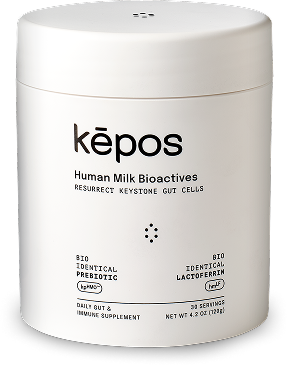
- kpHMO™, a prebiotic originally discovered in human milk and recreated through Japanese fermentation, is designed and owned exclusively by kēpos to feed the full spectrum of these gut bacteria, not just one strain.
- Lactoferrin adds a second layer: a meta-analysis of 25 human studies found it lowered inflammatory IL-6 and improved immune function markers in the majority of adult trials reviewed.
You take your vitamin C. You take your zinc. You still catch every cold that goes around the office, every bug your kids bring home, every seasonal wave that seems to skip your coworkers entirely. If this sounds familiar, the problem probably isn't dosing. It's that vitamin C and zinc were never designed to fix the thing that's actually making you susceptible.
Both nutrients have genuine, well-documented benefits. Neither one addresses the ecosystem that determines how well your immune system responds in the first place: your gut.
What Vitamin C and Zinc Actually Do (and Don't Do)
A 2023 meta-analysis found that vitamin C measurably reduces the severity and duration of common colds once you're already sick (Ran et al., 2023). That's a real, useful effect. But the same body of research has consistently struggled to show that vitamin C meaningfully reduces how often the general population catches colds to begin with.
Zinc tells a similar story. The Cochrane review on zinc for the common cold found that zinc lozenges can shorten a cold's duration, but only when started within 24 hours of the first symptom (Singh & Das, 2013). Evidence for zinc actually preventing infections in the first place is far less consistent.
In other words: both of these popular interventions are reactive. They may shave a day or two off a cold you already have. Neither one explains why some people catch three colds a winter and others catch none, which is the question most people are actually asking when they reach for a supplement.
Why Does Susceptibility Vary So Much Between People?
Susceptibility to frequent illness isn't primarily a vitamin math problem. It's an ecosystem problem. Your gut lining hosts the largest concentration of immune tissue in your body, and the bacteria living there are in constant conversation with that tissue, shaping how quickly and appropriately your immune system responds to a threat.
When that ecosystem is thin, undiverse, or missing key protective species, immune signaling becomes less efficient. This is one reason chronic "catch everything" susceptibility tends to cluster with other markers of gut imbalance: bloating, irregularity, and low resilience to dietary changes. The gut isn't a bystander in immune health. It's a control panel.
The Research Behind Feeding the Right Bacteria
This is where human milk oligosaccharides (HMOs) enter the picture. HMOs are prebiotic sugars that selectively feed beneficial bacteria, most notably Bifidobacterium species associated with a well-regulated immune response.
A randomized controlled trial published in Cell Reports Medicine gave 89 healthy older adults (mean age 67.3) the HMO 2'-fucosyllactose (2'-FL) for six weeks (Carter et al., 2025). The supplementation measurably increased gut Bifidobacterium levels and produced detectable systemic changes in hormones and metabolites. Adults who responded with the biggest Bifidobacterium increases also showed additional benefits, including better performance on a cognitive memory test. This is Tier 1 adult human RCT evidence, not an inference borrowed from infant research.
This is exactly the mechanism kpHMO™ was built around. kpHMO™ is a prebiotic originally discovered in human milk and recreated through Japanese fermentation, and it is a proprietary ingredient designed and owned exclusively by kēpos. Unlike single-HMO supplements that isolate one well-studied molecule, kpHMO™ covers all three HMO bases: neutral, fucosylated, and sialylated. Single-HMO research is real and valuable, but one class represents only a fraction of the oligosaccharide spectrum your gut ecosystem was designed to receive.
If you want the deeper mechanism, we've broken down exactly what HMOs actually feed and why the bifidogenic effect matters, and how this ties into why some people seem to stay healthy while everyone around them gets sick.
The Overlooked Second Layer: Lactoferrin and Nutritional Immunity
Feeding the right bacteria is half the picture. The other half is a protein most people have never heard of: lactoferrin.
Lactoferrin binds free iron in the gut, which serves two purposes at once. It supports healthy iron regulation, and it withholds a resource that many opportunistic pathogens depend on to multiply, a concept researchers call nutritional immunity. A systematic review and meta-analysis of 25 human studies (20 conducted in adults) found that lactoferrin supplementation reduced circulating IL-6, a key inflammatory marker, and improved immune function measures in 75% of the adult studies reviewed (Berthon et al., 2022).
This is why effera™, kēpos's recombinant human lactoferrin, matters. Human-identical lactoferrin is structurally the form your own gut lining evolved to recognize, distinct from lactoferrin sourced from bovine milk. Pairing lactoferrin's iron-immune signaling with a full-spectrum HMO prebiotic is a synergy most single-ingredient gut products simply aren't built to offer.
How kēpos Brings These Two Layers Together
Vitamin C and zinc still have a place for shortening a cold once it hits. But if you're trying to explain (and change) why you get sick more often than the people around you, the gut ecosystem is the more useful lever to pull.
kēpos combines kpHMO™, the full-spectrum prebiotic ingredient designed and owned exclusively by kēpos, with effera™ human lactoferrin, in a single daily formula built around that ecosystem, not around chasing symptoms after the fact. If you want to see how the full formulation works, our human milk bioactives product page breaks down the complete ingredient profile. You can also browse more of the underlying science on our blog hub, including our deeper look at why your immune system was never designed to run without these bioactives.
Frequently Asked Questions
Do vitamin C and zinc actually help with colds?
Yes, but mainly with duration and severity once you're already sick, not with how often you catch something in the first place. Zinc appears to work best when started within 24 hours of the first symptom.
Why do some people get sick so much more often than others?
Susceptibility is influenced by many factors, but the state of your gut ecosystem, including bacterial diversity and the presence of protective species like Bifidobacterium, plays a major role in how efficiently your immune system responds to everyday exposure.
What is kpHMO™?
kpHMO™ is a prebiotic originally discovered in human milk and recreated through Japanese fermentation. It is a proprietary ingredient designed and owned exclusively by kēpos, formulated to cover all three HMO bases (neutral, fucosylated, and sialylated) rather than a single isolated molecule.
How is lactoferrin different from taking an iron supplement?
Lactoferrin supports healthy iron regulation while also withholding free iron from opportunistic pathogens, a mechanism known as nutritional immunity. This is a distinct role from standard iron supplementation, which simply adds iron without this immune-related binding function.
Can HMOs and lactoferrin replace vitamin C or zinc?
They serve different purposes. Vitamin C and zinc may still help shorten an active cold. HMOs and lactoferrin are designed to support the underlying gut ecosystem associated with fewer, less frequent immune challenges over time.