


- Butyrate is the gut's primary fuel source — a short-chain fatty acid produced by your gut bacteria that powers the cells lining your colon.
- Low butyrate is linked to a leaky gut, chronic inflammation, and a range of digestive conditions including IBS and IBD.
- You can't eat butyrate directly — you have to grow it. The key is feeding the right gut bacteria the right prebiotic fibers.
- Human milk oligosaccharides (HMOs) are among the most effective compounds for stimulating butyrate production, with research showing measurable increases from surprisingly low doses.
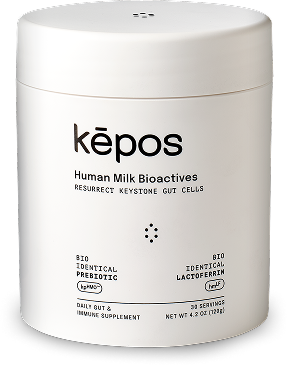
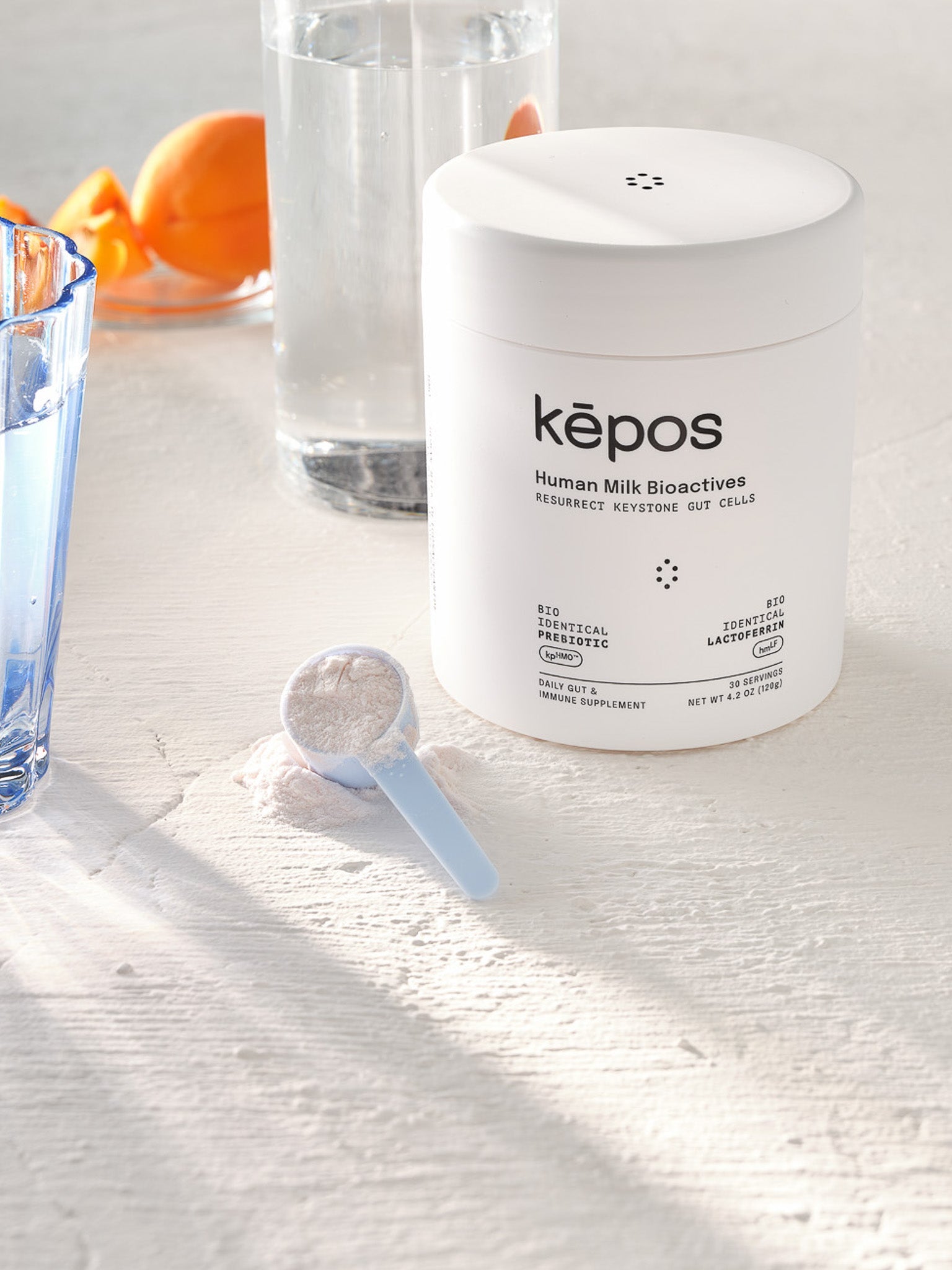
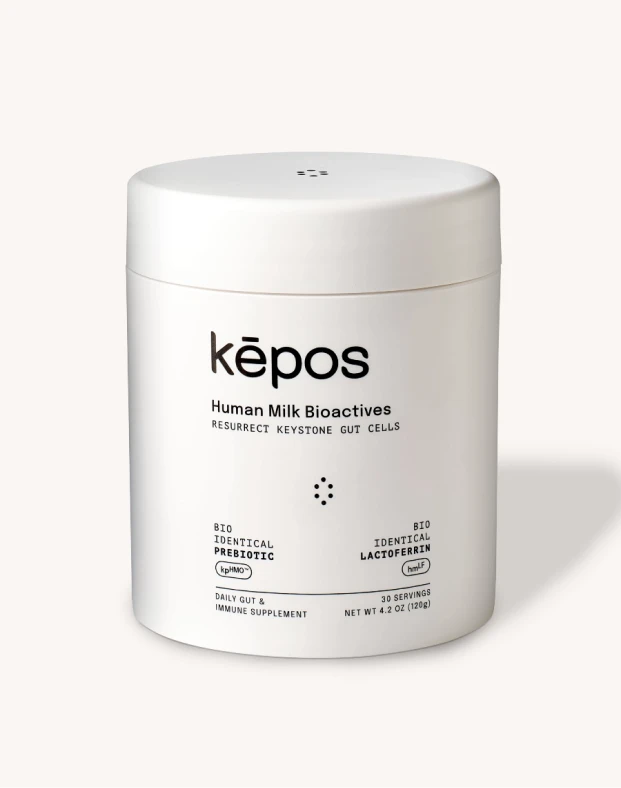
- kēpos features kpHMO™, a proprietary HMO ingredient designed and owned exclusively by kēpos, formulated to mirror the oligosaccharide complexity of real breast milk — supporting the butyrate-producing bacteria your gut depends on.
If you've spent any time in gut health circles lately, you've almost certainly heard the word "butyrate." It's showing up in microbiome research, functional medicine clinics, and nutrition podcasts with increasing frequency — and for good reason.
Butyrate is not a trendy supplement or a wellness buzzword. It is a fundamental molecule your gut manufactures — or should manufacture — every single day. When butyrate is abundant, your gut lining stays strong, inflammation stays quiet, and the entire digestive ecosystem runs smoothly. When it's low, things start to break down in ways that can affect far more than just your digestion.
Here's what the science actually says — and why your butyrate levels are something worth paying attention to.
What Is Butyrate, Exactly?
Butyrate (also called butyric acid or n-butyrate) is a short-chain fatty acid (SCFA) — one of three produced when gut bacteria ferment dietary fiber and certain prebiotic compounds in the colon. The other two SCFAs are acetate and propionate, but butyrate stands apart for its outsized role in gut health specifically.
Your colon cells — called colonocytes — use butyrate as their preferred energy source. Roughly 70% of a colonocyte's energy needs are met by butyrate. Without it, these cells can't function properly, and the entire intestinal lining begins to suffer. Think of butyrate as the fuel that keeps your gut's front-line defense infrastructure powered up and running.
Beyond being an energy source, butyrate acts as a signaling molecule. It communicates with immune cells, influences gene expression through a process called histone deacetylase (HDAC) inhibition, and helps regulate inflammation throughout the body. A 2023 review in Current Nutrition Reports described butyrate as a "potent pro-resolution molecule" with significant roles in gut immunity, barrier maintenance, and systemic health — not just a metabolic byproduct, but an active participant in keeping you well (Mohamed Elfadil O et al., 2023, PMID 36763294).
How Does Butyrate Get Made in Your Gut?
This is where things get genuinely interesting — and where a lot of people's strategy for gut health falls short.
You can't simply take butyrate as a supplement and reliably restore healthy gut levels. Oral butyrate supplements are largely absorbed in the small intestine before reaching the colon where they're actually needed. The only reliable way to raise colonic butyrate is to feed the bacteria that produce it.
The primary butyrate-producing species in the human gut belong to a group called Clostridiales — specifically Roseburia spp. and Eubacterium rectale, along with Faecalibacterium prausnitzii. These beneficial bacteria ferment specific substrates — mainly indigestible carbohydrates and prebiotic compounds — and produce butyrate as a metabolic output.
A 2024 review in Archives of Microbiology confirmed that the two dominant butyrate-producing groups in human colon are the Eubacterium rectale/Roseburia cluster and Faecalibacterium prausnitzii — both of which require specific prebiotic substrates to thrive (PMID 38436734).
This means the conversation about butyrate is really a conversation about what you're feeding your microbiome.
What Happens When Butyrate Is Low?
Chronic butyrate deficiency is associated with some of the most common gut complaints people experience today. When colonocytes don't have enough fuel, the tight junctions between cells in the gut wall begin to loosen — a condition known as intestinal permeability, or "leaky gut."
From there, the cascade can be significant:
- Inflammatory compounds and undigested particles enter the bloodstream more easily
- Immune cells in the gut become chronically activated
- Mucus production decreases, leaving the gut lining less protected
- Microbial diversity drops, creating conditions for dysbiosis
A landmark review in Beneficial Microbes synthesized the evidence across multiple studies, concluding that increasing SCFA production — particularly butyrate — could be a valuable strategy for preventing gastrointestinal dysfunction, obesity, and type 2 diabetes (Blaak EE, Canfora EE et al., 2020, PMID 32865024). The review noted that butyrate specifically regulates gut pH, supports mucus production, fuels epithelial cells, and modulates mucosal immunity — four distinct mechanisms of action in one molecule.
Why Are So Many People Butyrate-Deficient?
Modern life isn't kind to butyrate-producing bacteria. Several factors erode the gut populations responsible for making butyrate:
- Low-fiber diets starve Roseburia and Faecalibacterium of the substrates they need
- Antibiotic use can wipe out butyrate-producing species, sometimes for months
- Chronic stress alters gut motility and microbial composition
- Ultra-processed foods displace the prebiotic-rich whole foods that feed SCFA producers
- Aging naturally reduces microbial diversity and colonization of butyrate-producing species
The result is a large portion of the adult population operating with chronically suboptimal butyrate levels — even people who consider themselves relatively healthy eaters. This matters because butyrate deficiency doesn't always produce dramatic symptoms. It can quietly underlie low-grade bloating, irregular digestion, sluggish immunity, and a gut lining that's more permeable than it should be.
Can Human Milk Oligosaccharides (HMOs) Boost Butyrate Production?
This is one of the most exciting developments in gut health science right now — and it directly connects HMOs to the butyrate conversation.
Human milk oligosaccharides are complex prebiotic sugars that, until recently, were studied almost exclusively in the context of infant nutrition. But research on adult microbiomes has revealed something remarkable: HMOs selectively feed the exact bacterial species — Roseburia and Eubacterium — that produce butyrate.
A 2020 study published in Nature Communications mapped out the precise catabolic pathways by which HMOs support the growth of these butyrate-producing Clostridiales. The researchers found that Roseburia and Eubacterium members possess specialized enzyme systems — including previously unknown structural folds — specifically adapted to break down HMO structures (Pichler MJ, Yamada C et al., 2020, PMID 32620774). In other words, HMOs aren't just generic prebiotics — they are purpose-built fuel for your body's butyrate factories.
More recently, a 2024 study in Metabolites tested multiple HMO types at various doses on adult gut microbiomes using validated ex vivo technology. The finding was striking: HMOs significantly increased butyrate production in adults starting from predicted daily doses as low as 0.3–0.5 g/day — a dose far below what most HMO supplements provide (Bajic D, Wiens F et al., 2024, PMID 38668367). The effects scaled with dose, and researchers also observed increases in immune-supportive metabolites beyond SCFAs alone.
This research positions HMOs as one of the most targeted tools available for supporting butyrate production — not through a broad-spectrum fiber approach, but through precise stimulation of the specific bacterial communities that do the job.
How kēpos Supports Your Butyrate Production
Human milk oligosaccharides have shown remarkable potential for adult gut health — and kpHMO™, the proprietary HMO ingredient designed and owned exclusively by kēpos, mirrors the full oligosaccharide spectrum found in breast milk. While single-HMO supplements target only one molecular species, kpHMO™ covers all neutral, fucosylated, and sialylated bases — providing a broader foundation for supporting the diverse microbial pathways involved in butyrate synthesis.
This matters because different HMO types activate different bacterial pathways. The Nature Communications study above identified distinct enzyme systems for different HMO structures — meaning that a more complete HMO profile can engage a wider network of butyrate-producing species simultaneously.
kēpos also features effera™, a recombinant human lactoferrin that supports a balanced gut environment — complementing the prebiotic action of kpHMO™ for comprehensive gut health support. Learn more about how kēpos works at trykepos.com.
If you're eating reasonably well but still dealing with persistent bloating, irregular digestion, or a sense that your gut just isn't quite right, it's worth asking whether butyrate production is part of the picture. The science increasingly points to what you feed your gut bacteria — not just what you eat yourself — as the lever that matters most.
Frequently Asked Questions
What foods increase butyrate production?
Foods that support butyrate production are those that feed butyrate-producing gut bacteria. These include resistant starch (found in cooked and cooled potatoes, green bananas, oats), pectin (apples, citrus), and specific prebiotic fibers. Human milk oligosaccharides (HMOs) have also been shown in recent research to selectively stimulate Roseburia and Eubacterium — the primary butyrate producers in the human colon.
Is butyrate the same as butyric acid?
Yes. Butyrate is the ionized (salt) form of butyric acid — the form that exists in the gut at physiological pH. The terms are often used interchangeably in the scientific literature.
Can you take butyrate as a supplement?
Oral butyrate supplements exist, but research suggests they are largely absorbed in the small intestine before reaching the colon, where they're needed. A more effective approach may be supporting the gut bacteria that naturally produce butyrate — through targeted prebiotic compounds like HMOs.
What are the signs of low butyrate?
Low butyrate isn't always obvious, but common signs include chronic bloating, loose or irregular stools, increased gut sensitivity, and sluggish immune function. These can reflect an underpowered gut lining and reduced barrier integrity — both downstream consequences of insufficient butyrate.
How do HMOs relate to butyrate?
HMOs (human milk oligosaccharides) are prebiotic sugars that selectively feed butyrate-producing bacteria including Roseburia and Eubacterium rectale. Research published in Nature Communications demonstrated that these bacteria have specialized enzymatic pathways for metabolizing HMOs — and produce butyrate as a result. More recently, adult microbiome studies have confirmed that HMO supplementation can measurably increase butyrate production at relatively low doses.
By Oliver Drazsky | kēpos Gut Health Research