

Key Takeaways
- Human milk oligosaccharides (HMOs) selectively feed beneficial Bifidobacterium species, while traditional prebiotics like FOS and inulin promote a broader—and less targeted—range of bacteria (PMID: 27719686).
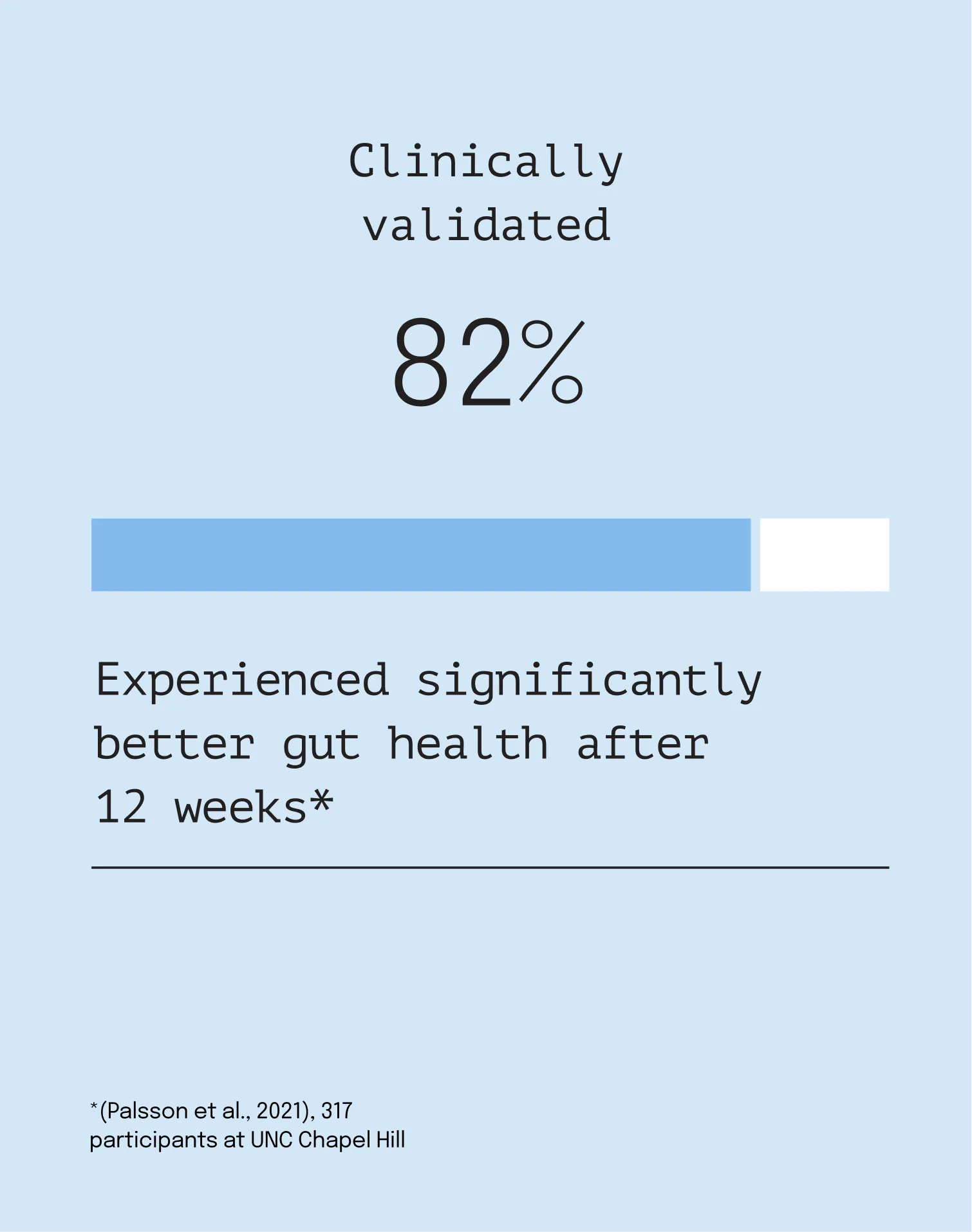
- In a clinical trial of 317 IBS patients, 69% reported symptom improvement after just 4 weeks of HMO supplementation (PMID: 33512807).
- HMOs go beyond the gut: a 2025 RCT found 2’-FL altered circulating hormones and metabolites in older adults (PMID: 40738103).
- When paired with recombinant human lactoferrin (effera™), HMOs offer a synergy that traditional prebiotics simply cannot match.
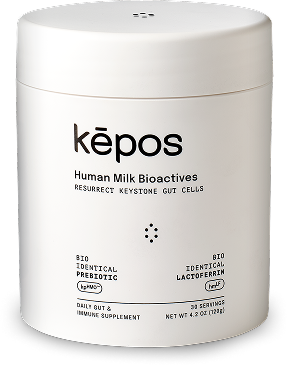
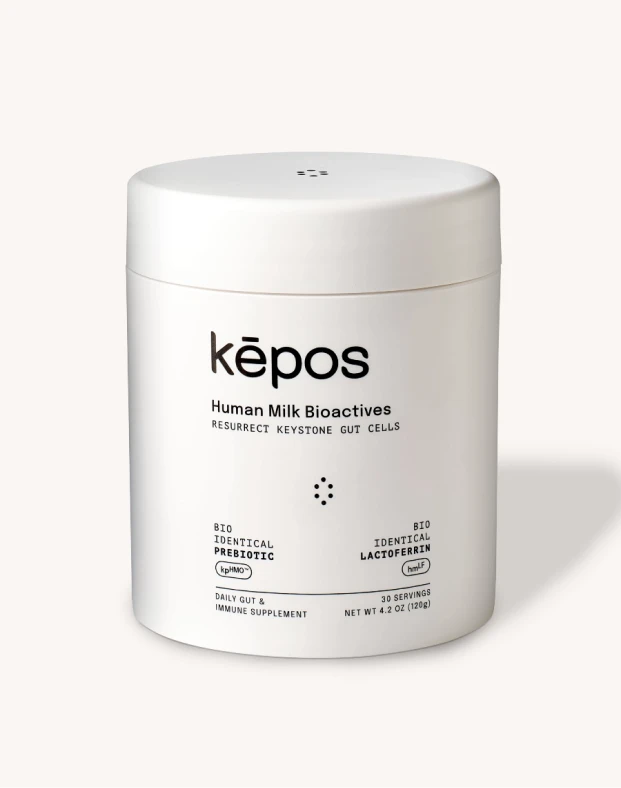
- kēpos is the only supplement combining HMOs with effera™ human lactoferrin for comprehensive, next-generation gut support.
If you’ve been relying on traditional prebiotics like FOS, GOS, or inulin to support your gut, you’re not wrong for trying. But you may be missing a far more precise tool. Human milk oligosaccharides (HMOs)—the same complex carbohydrates found in human breast milk—are rewriting the rules of prebiotic science. And the clinical data increasingly shows they outperform conventional options in several key areas.
Here are 7 evidence-based reasons to consider making the switch.
1. HMOs Are Precision Prebiotics—Not Broad-Spectrum
Traditional prebiotics like FOS and inulin are fermented by a wide range of gut bacteria, including species you may not want to encourage. HMOs are different. They are selectively utilized by Bifidobacterium species, the beneficial bacteria associated with a healthy gut barrier, reduced inflammation, and improved immune function.
A landmark randomized trial in 100 healthy adults demonstrated that supplementation with the HMO 2’-fucosyllactose (2’-FL) significantly and selectively increased Bifidobacterium abundance at doses as low as 5 grams per day (Elison et al., 2016; PMID: 27719686). This kind of targeted, precision prebiotic effect is something FOS and inulin simply cannot replicate with the same specificity.
2. Clinically Shown to Support IBS Symptom Relief
Many people turn to prebiotics hoping to ease digestive discomfort. But for IBS sufferers, traditional prebiotics can actually make symptoms worse—bloating, gas, and cramping are common side effects of high-FODMAP fibers like inulin and FOS.
HMOs tell a different story. In a multicenter, open-label trial involving 317 adults with IBS, supplementation with a 2’-FL/LNnT blend for just 4 weeks led to symptom improvement in 69% of participants and significant reductions in abdominal pain, bloating, and altered bowel habits (Palsson et al., 2021; PMID: 33512807).
A separate double-blind, placebo-controlled RCT confirmed that HMO supplementation significantly increased Bifidobacterium in IBS patients without the adverse GI effects commonly triggered by FOS or inulin (Iribarren et al., 2020; PMID: 32536023).
3. HMOs Modulate Both Microbiota and Metabolites
Most traditional prebiotics influence bacterial populations. HMOs go further—they reshape the entire gut metabolic environment.
Research published in Nutrients showed that 2’-FL/LNnT supplementation in IBS patients modulated not only the fecal microbiota but also fecal and plasma metabolite profiles, including shifts in amino acids like tryptophan and asparagine that are linked to gut barrier integrity and mood regulation (Iribarren et al., 2021; PMID: 34836092).
This dual action on both microbial composition and metabolic output is a key differentiator. Traditional prebiotics rarely demonstrate such broad metabolomic effects in clinical settings.
4. Safe at Higher Doses—Without the Bloat
One of the biggest complaints about traditional prebiotics is dose-dependent GI distress. Increase your inulin intake and you may spend the day dealing with gas and bloating. HMOs have a remarkably clean tolerability profile.
The Elison et al. RCT confirmed that 2’-FL and LNnT were safe and well tolerated at daily doses up to 20 grams in healthy adults, with no significant adverse gastrointestinal effects compared to placebo (PMID: 27719686).
That’s up to four times the typical dose of FOS supplements—without the side effects. For people who have tried and failed with traditional prebiotics, HMOs offer a genuinely better-tolerated alternative.
5. Benefits That Extend Beyond the Gut
Traditional prebiotics are primarily gut-focused. HMOs have systemic reach.
A 2025 randomized controlled trial published in Cell Host & Microbe found that 6 weeks of 2’-FL supplementation in adults aged 55–70 significantly altered the gut microbiome, circulating hormones, and blood metabolites (PMID: 40738103). This study provides compelling evidence that HMOs don’t just feed bacteria—they influence whole-body signaling pathways.
This is consistent with earlier findings that HMOs may support immune modulation, gut barrier protection, and anti-inflammatory signaling well beyond the intestinal lumen (PMID: 37652940).
6. The Lactoferrin Synergy That Only kēpos Offers
Here’s where things get really interesting. While HMOs are powerful on their own, pairing them with human lactoferrin amplifies the effect. Lactoferrin is a multifunctional glycoprotein found in human milk that supports iron absorption, immune defense, and antimicrobial activity.
A clinical study on lactoferrin supplementation demonstrated beneficial effects on both the gut microbiome and inflammatory markers in adults (PMID: 30126153). When combined with HMOs, you get a dual mechanism: HMOs feed beneficial bacteria while lactoferrin supports immune readiness and iron metabolism.
kēpos is the only supplement that combines HMOs with effera™ recombinant human lactoferrin (rhLF)—not the bovine-derived version found in most supplements. This human-identical lactoferrin is structurally optimized for human biology, offering a synergy that no traditional prebiotic—or any competitor—can match.
7. Backed by the Latest Clinical Science
Traditional prebiotics have decades of research behind them, but much of that evidence is observational or based on small, uncontrolled studies. The HMO evidence base is growing rapidly—and it’s built on rigorous clinical methodology.
Consider just the past few years of HMO research in adults:
- Double-blind, placebo-controlled RCT in IBS patients showing microbiota modulation (PMID: 32536023)
- 317-person open-label trial showing 69% IBS symptom improvement (PMID: 33512807)
- Metabolomic analysis revealing gut-wide biochemical shifts from HMO intake (PMID: 34836092)
- 2025 RCT in older adults confirming microbiome, hormone, and metabolite changes (PMID: 40738103)
This isn’t theoretical. The science is here, it’s peer-reviewed, and it favors HMOs.
Ready to Upgrade Your Gut Health?
If traditional prebiotics haven’t delivered the results you were hoping for, it may be time to try what the science is pointing toward. kēpos delivers clinical-grade HMOs combined with effera™ human lactoferrin—a combination designed to support your microbiome, your gut barrier, and your overall well-being.
Frequently Asked Questions
What are HMOs and how are they different from regular prebiotics?
Human milk oligosaccharides (HMOs) are complex sugars originally found in human breast milk. Unlike traditional prebiotics such as FOS, GOS, or inulin—which feed a broad range of gut bacteria—HMOs selectively nourish Bifidobacterium species. This targeted action promotes a healthier microbial balance without encouraging the growth of less desirable bacteria.
Can adults benefit from HMOs, or are they just for babies?
Absolutely. Multiple clinical trials have confirmed that HMO supplementation in adults increases beneficial Bifidobacterium, supports IBS symptom relief, and modulates gut metabolite profiles. A 2025 RCT even showed systemic benefits including changes in circulating hormones and blood metabolites in adults aged 55–70 (PMID: 40738103).
Why does kēpos use human lactoferrin instead of bovine?
kēpos uses effera™ recombinant human lactoferrin (rhLF), which is structurally identical to the lactoferrin found in human milk. Bovine lactoferrin, while beneficial, has structural differences that may limit its bioactivity in humans. Human lactoferrin supports optimal iron absorption, antimicrobial defense, and immune function.
Will HMOs cause bloating like inulin or FOS?
HMOs have been shown to be well tolerated at doses up to 20 grams per day without significant GI side effects (PMID: 27719686). Many people who experience bloating from traditional prebiotics find HMOs to be a comfortable, effective alternative.
How long does it take to see results from HMO supplementation?
Clinical studies have shown measurable changes in gut microbiota composition within 4 weeks of HMO supplementation. In the 317-patient IBS trial, significant symptom improvements were observed after just one month (PMID: 33512807).
This article is for informational purposes only and does not constitute medical advice. Always consult your healthcare provider before starting any new supplement.