

- A landmark Nature study (2025) found that a gut bacteria-derived metabolite called imidazole propionate (ImP) actively drives atherosclerosis — confirming the gut microbiome's role in heart disease.
- A 12-week prebiotic intervention improved cognitive performance linked to early Alzheimer's in adults over 60, according to the PROMOTe RCT published in Nature Communications (2024).
- A 2025 clinical trial found that human milk oligosaccharide (HMO) supplementation reshapes the gut microbiome, circulating hormones, AND metabolites in older adults — far beyond what was previously understood.
- HMO effects are now confirmed to be age-specific: adults require a different HMO approach than infants, validating adult-focused HMO supplementation.
- A 2025 systematic review confirms HMOs support gut health, immune function, cognition, and metabolic markers across multiple human clinical trials.
Science moves fast. In the past two years alone, microbiome researchers have published findings that are genuinely changing how we understand disease, aging, and the daily choices that shape our long-term health. The gut — once considered a simple digestive organ — is now understood to influence everything from your heart to your brain to your immune system.
This is not speculation. It is peer-reviewed science, and some of it is brand new. Here are five of the most important microbiome discoveries from 2024 and 2025, and what they mean for how you take care of your gut today.
1. Gut Bacteria Now Linked Directly to Heart Disease — Not Just Risk Factors
In one of the most significant gut-health discoveries in recent memory, a 2025 paper published in Nature identified a gut microbiome-derived metabolite called imidazole propionate (ImP) as both a driver and a potential therapeutic target in atherosclerosis.
ImP is produced when gut bacteria metabolize the amino acid histidine. In the study, elevated plasma ImP levels were found in two independent cohorts — Spanish and Swedish participants — with subclinical atherosclerosis, even after controlling for traditional cardiovascular risk factors like BMI, fasting glucose, and blood pressure. Mouse models showed that administering ImP directly caused plaque build-up in the aorta, while blocking the receptor ImP acts on (I1R) prevented plaque formation, even on a high-cholesterol diet.
In short: what lives in your gut can produce compounds that damage your arteries. Gut health is heart health.
2. Prebiotics Improved Cognition in 12 Weeks — at Any Age
The PROMOTe randomized controlled trial (PMID 38424099), published in Nature Communications in 2024, tested what happens when you modulate the gut microbiome in adults aged 60 and over. Using a prebiotic supplement for 12 weeks, researchers at King's College London found that participants in the prebiotic group outperformed the placebo group on cognitive tests associated with early Alzheimer's disease.
This is the gut-brain axis made real. The gut microbiome communicates with the brain through multiple pathways — including the vagus nerve, immune signaling, and short-chain fatty acid production. When researchers shifted the composition of the gut microbiome with a prebiotic, brain function measurably improved. In just three months.
The study used a twin cohort design, which controls tightly for genetics, making the results especially compelling. The finding was not marginal — it was statistically significant, and it points directly toward dietary interventions as a genuine tool for cognitive health as we age.
3. HMOs Do Far More in the Adult Body Than Anyone Expected
Human milk oligosaccharides have long been celebrated for their role in infant gut development. But a 2025 randomized controlled trial (PMID 40738103) showed that HMO supplementation in older adults reshaped not only the gut microbiome, but also circulating hormones and systemic metabolites.
That three-way effect — microbiome, hormones, metabolites — is significant. It means HMOs are not simply prebiotic fibers that feed beneficial bacteria. They are bioactive compounds that interact with the gut-endocrine axis, influencing systemic signals that regulate metabolism, appetite, inflammation, and more.
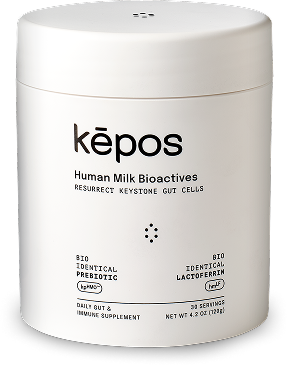
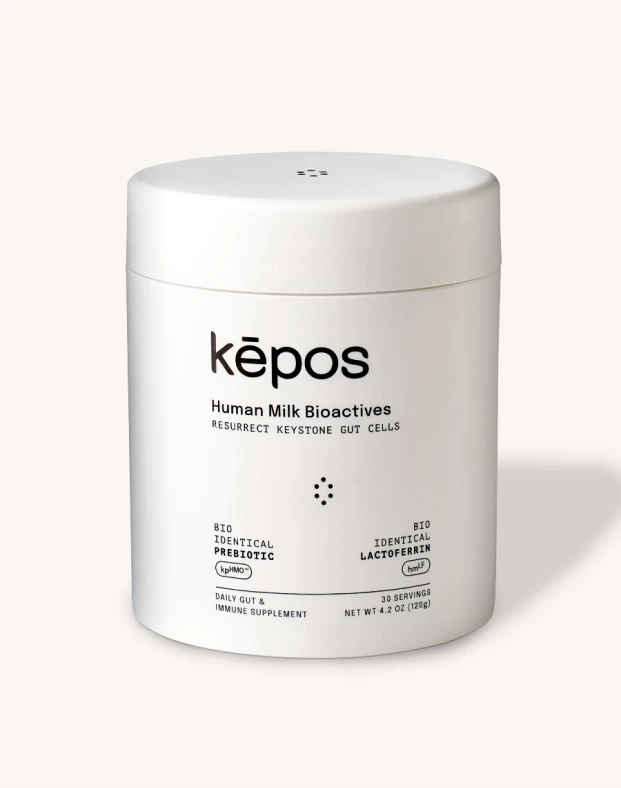
This is exactly why kēpos formulated its supplement around kpHMO™, a proprietary human milk bioactive ingredient designed and owned exclusively by kēpos, engineered to closely mirror the oligosaccharide composition found in real breast milk. Most supplement companies work with a single synthetic HMO. kpHMO™ covers all neutral, fucosylated, and sialylated bases — reflecting the full biological complexity that makes human milk oligosaccharides so powerful in clinical research.
4. HMO Effects Are Age-Specific — Adult Gut Science Has Arrived
One criticism of early HMO research was that it focused almost entirely on infant nutrition. A 2024 study (PMID 39796584) published by Firrman and colleagues tackled this head-on: the researchers examined how 2'-fucosyllactose (2'-FL), one of the most abundant HMOs, produces its bifidogenic effects across different age groups.
The finding was clear: the bifidogenic effect of 2'-FL is driven by age-specific Bifidobacterium species. In younger adults, B. longum dominates the response. But as people age, Bifidobacterium populations naturally decline — and the species composition shifts. This means that adults require a targeted HMO approach that accounts for the specific microbial landscape of the adult gut, not just a copy of infant formulas.
This research validates what forward-thinking gut health brands have argued for years: HMO supplementation for adults is a distinct science from infant nutrition, and it demands ingredients formulated accordingly.
5. Systematic Review: HMO Supplementation Supports Multiple Body Systems
Landmark individual studies matter. But systematic reviews — which pool the evidence from multiple trials — tell the most reliable story. A comprehensive 2025 review published in Frontiers in Nutrition (PMID 40693204) synthesized the latest clinical evidence on HMO supplementation across human trials.
The review confirmed that HMO supplementation is associated with benefits across multiple systems: gut barrier integrity, immune modulation, cognitive health, and metabolic markers. Crucially, the review highlighted mechanistic pathways — meaning it wasn't just cataloguing outcomes, but explaining how HMOs produce these effects at the cellular and molecular level.
Among the pathways identified: HMOs promote the growth of beneficial bifidobacteria, enhance the production of short-chain fatty acids like butyrate, modulate gut-immune crosstalk, and support the integrity of the intestinal epithelial barrier. Together, these mechanisms offer a plausible explanation for why HMOs appear to influence health outcomes well beyond the digestive tract.
What This Means for Your Gut Health Right Now
The picture emerging from 2024–2025 research is consistent: the gut microbiome is one of the most consequential variables in your long-term health, and it is modifiable through diet and supplementation.
Probiotics dominated the gut health conversation for the past decade. But the science increasingly points toward next-generation prebiotics — and specifically human milk oligosaccharides — as the more powerful lever. HMOs don't just feed a handful of probiotic strains. They reshape the entire microbial ecosystem, influence hormone signaling, support the gut barrier, and interact with systemic metabolic processes.
For adults seeking to act on this research, the challenge has been finding a product that reflects the full complexity of human milk oligosaccharides. That is precisely what kēpos was built to address. kpHMO™, the proprietary human milk bioactive ingredient designed and owned exclusively by kēpos, is formulated to match the oligosaccharide spectrum found in real breast milk — not a simplified, single-molecule approximation. Alongside effera™ recombinant human lactoferrin, kēpos brings the most current science in human milk bioactives into a single daily supplement.
The gut health frontier is no longer theory. It is clinical trial data, published in Nature, demonstrating that what happens in your gut today shapes your cardiovascular and cognitive health tomorrow.
Frequently Asked Questions
What is the microbiome and why does it matter for overall health?
The gut microbiome is the vast community of trillions of bacteria, fungi, and other microbes living in your digestive tract. Research now shows it communicates directly with the heart, brain, immune system, and endocrine system — making it one of the most influential factors in long-term health. Recent studies link microbiome composition to cardiovascular disease risk, cognitive performance, and metabolic health.
What are human milk oligosaccharides (HMOs) and how do they support gut health?
HMOs are complex carbohydrates found naturally in human breast milk. They act as prebiotics, selectively feeding beneficial gut bacteria like Bifidobacterium. Clinical research shows they also support gut barrier integrity, modulate immune responses, and influence circulating hormones and metabolites — effects that extend well beyond simple prebiotic feeding.
Can adults benefit from HMO supplementation?
Yes. Multiple clinical trials have now confirmed that HMO supplementation in adults meaningfully alters the gut microbiome, circulating metabolites, and hormone levels. Research also shows that HMO effects in adults are distinct from those in infants, and adult-specific HMO formulation matters. For a deeper look at the science, see our guide to HMO benefits for adult gut health.
What is the connection between the gut microbiome and cognitive health?
The gut-brain axis is a bidirectional communication network linking the gut microbiome to brain function via the vagus nerve, immune signaling, and short-chain fatty acid production. The PROMOTe randomized controlled trial (PMID 38424099) demonstrated that a 12-week prebiotic intervention improved performance on cognitive tests in adults over 60 — suggesting that modulating the gut microbiome may support healthy brain aging.
How does kēpos use the latest microbiome research in its formula?
kēpos is built around two bioactives validated by the latest clinical science: kpHMO™ — a proprietary HMO ingredient designed and owned exclusively by kēpos that mirrors the full oligosaccharide spectrum of real breast milk — and effera™ recombinant human lactoferrin. Together, they target the gut-immune-endocrine axis in ways that single-ingredient supplements cannot match. Learn more about kēpos.