

🌿 Key Takeaways
- HMOs selectively feed beneficial bacteria — they are precision prebiotics that nourish bifidobacteria without fueling harmful microbes.
- HMOs act as decoy receptors, physically blocking pathogens from adhering to the gut lining — a mechanism probiotics simply cannot replicate.
- HMOs strengthen the gut barrier at the cellular level by upregulating tight-junction proteins like claudin-8, reducing intestinal permeability.
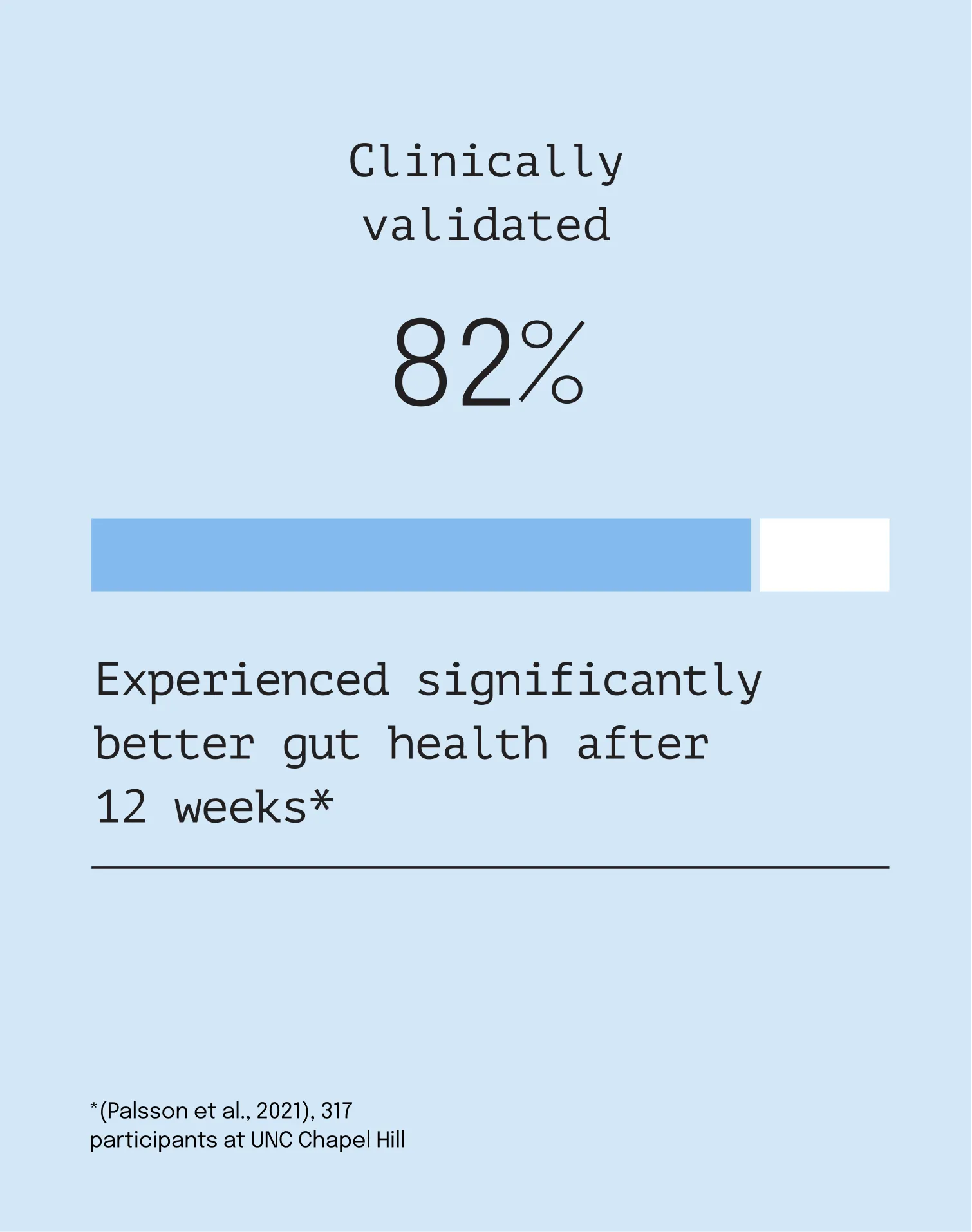
- In a multicenter study of 317 adults with IBS, HMO supplementation reduced IBS symptom severity scores by more than half (from 323 to 144, P<0.0001).
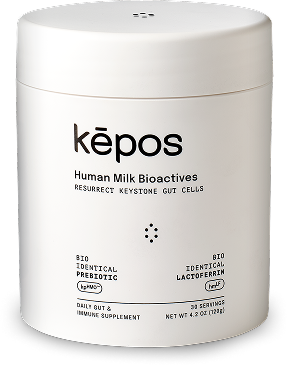
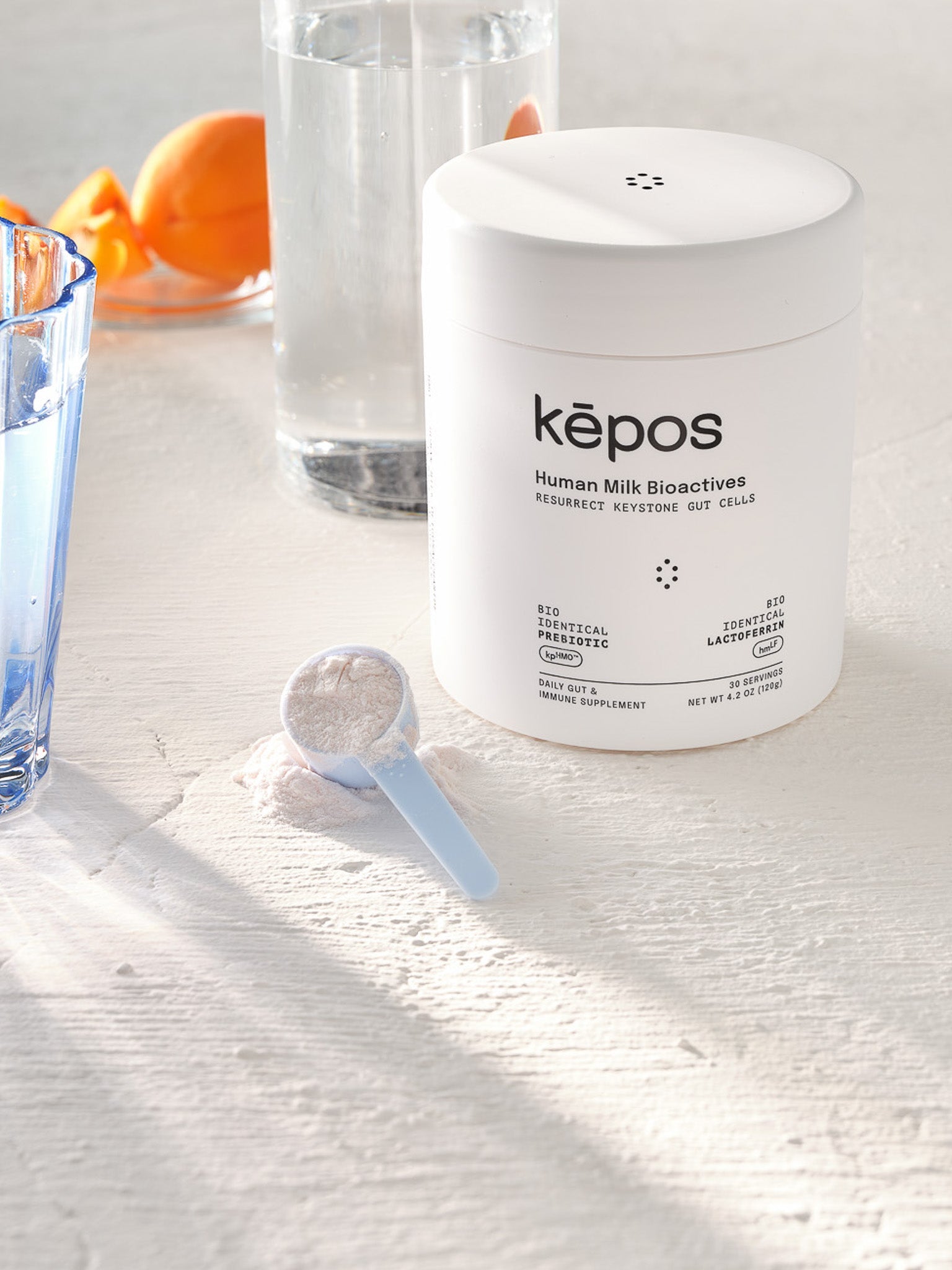
- kpHMO™ — the proprietary HMO ingredient designed and owned exclusively by kēpos — covers all neutral, fucosylated, and sialylated bases to mirror the full spectrum of human milk oligosaccharides.
Probiotics have had a good run. For decades, they were the go-to answer for gut health — pop a capsule of live bacteria and let them do the work. But here's the thing: probiotics are a delivery mechanism. They bring a few strains of bacteria to your gut and hope they survive long enough to matter.
Human milk oligosaccharides (HMOs) operate on a completely different level. Instead of adding organisms, they reshape the entire gut environment — building the terrain, blocking pathogens, reinforcing the gut lining, and calibrating immunity in ways probiotics simply cannot. They're not better bacteria. They're a different category of gut health science entirely.
Here are five ways HMOs support gut health that go far beyond what probiotics can offer.
1. HMOs Are Precision Prebiotics — They Feed the Right Bacteria, Not All Bacteria
Probiotics work by introducing specific strains of bacteria into your gut. But those bacteria need to eat. And in the complex, competitive ecosystem of the colon, there's no guarantee they'll thrive.
HMOs flip that equation. As precision prebiotics, they selectively nourish the beneficial bacteria already living in your gut — particularly bifidobacteria — while providing little or no fuel for harmful microbes.
A landmark study using the Simulator of the Human Intestinal Microbial Ecosystem (SHIME®) demonstrated that HMO fermentation led to significant increases in bifidobacteria along with a corresponding rise in short-chain fatty acids (SCFAs), especially butyrate — a key fuel for colon cells and a known anti-inflammatory metabolite. (PMID: 32933181)
Probiotics can introduce bifidobacteria, but they can't make them flourish the way HMOs do. The difference is between transplanting a tree and enriching the soil it grows in. HMOs enrich the soil.
2. HMOs Block Pathogens at the Gate — A Mechanism Probiotics Don't Have
One of the most fascinating and underappreciated mechanisms of HMOs is their ability to act as decoy receptors. Harmful bacteria and viruses need to bind to carbohydrates on the surface of your gut epithelial cells to take hold. HMOs are structurally similar to those surface carbohydrates — so pathogens bind to the HMOs floating free in the gut instead.
Those pathogen-HMO complexes are then swept out of the body before they can cause harm. It's a form of competitive exclusion that operates at the molecular level, and it's entirely distinct from anything probiotics can do. (PMID: 18183941)
Probiotics compete with pathogens for space. HMOs intercept them before they even reach the wall. That's a fundamentally more upstream form of gut protection.
3. HMOs Directly Strengthen the Gut Barrier — Probiotics Only Do This Indirectly
A leaky gut — increased intestinal permeability — is associated with a host of issues, from chronic inflammation to digestive discomfort to immune dysregulation. Sealing that barrier requires action at the tight-junction level: the protein "seals" between gut epithelial cells.
HMOs do exactly that. Research using Caco-2 cell monolayers and human gut-on-chip models found that HMO fermentation products significantly reduced paracellular permeability, accompanied by upregulation of the tight-junction protein claudin-8, and a measurable reduction in the inflammatory cytokine IL-6. Claudin-5 was also significantly upregulated across proximal, transverse, and distal gut-on-chip models. (PMID: 32933181)
Probiotics support gut barrier health too — but largely by influencing the microbiome, which then affects the epithelium. HMOs work both routes: through microbiome changes and through direct effects on the epithelial lining itself. That dual action is a distinct advantage. (PMID: 36929926)
4. HMOs Modulate the Immune System in Ways That Go Beyond Probiotic Effects
Your gut is home to roughly 70% of your immune system. The microbiome influences immunity, yes — but so do the molecules that shape and feed it. HMOs interact directly with immune-relevant pathways in ways that probiotics don't replicate.
A comprehensive review of HMO immunological effects found that HMOs modulate responses linked to infections, allergies, auto-immune activity, and inflammation. Much of this stems from their role in promoting bifidobacteria, which produce immunomodulatory SCFAs. But some HMO structures appear to interact with immune receptors directly, independent of their prebiotic effects. (PMID: 30013961)
Probiotics influence immunity through the bacteria they introduce. HMOs influence immunity through a broader set of mechanisms — reshaping the microbial ecosystem, feeding epithelial cells with butyrate, and directly interacting with immune-signaling pathways. The net effect is a more comprehensive immune calibration.
5. HMOs May Support IBS Symptom Management Across All Subtypes — Including the Ones Probiotics Miss
Irritable bowel syndrome affects an estimated 10–15% of adults worldwide, and treatment options remain frustratingly limited. Most probiotic research in IBS is strain-specific — what works for IBS-D may not work for IBS-C, and results vary significantly across studies.
HMOs tell a more consistent story. A multicenter, open-label clinical trial published in 2020 enrolled 317 adults with IBS across 17 sites in the United States. After 12 weeks of HMO supplementation, participants experienced:
- IBS Symptom Severity Score drop from 323 to 144 (P<0.0001)
- Abnormal stool consistency reduced from 90.7% to 57.2% of bowel movements (P<0.0001)
- Health-related quality of life improved from 50.4 to 74.6 (P<0.0001)
- Improvement was consistent across IBS-C, IBS-D, and IBS-M subtypes — not limited to one category
The cross-subtype effectiveness is particularly notable. HMOs appear to work on the underlying gut environment — microbiome imbalance, barrier dysfunction, immune calibration — rather than targeting a single symptom pathway. That systemic effect is something single-strain probiotics are rarely able to match.
Why kpHMO™ Represents the Next Generation of Gut Health Support
Most HMO supplements on the market offer one or two isolated oligosaccharide structures. That's a starting point — but human breast milk doesn't work with one or two HMOs. It contains over 200 structurally distinct oligosaccharides, working in concert across neutral, fucosylated, and sialylated categories.
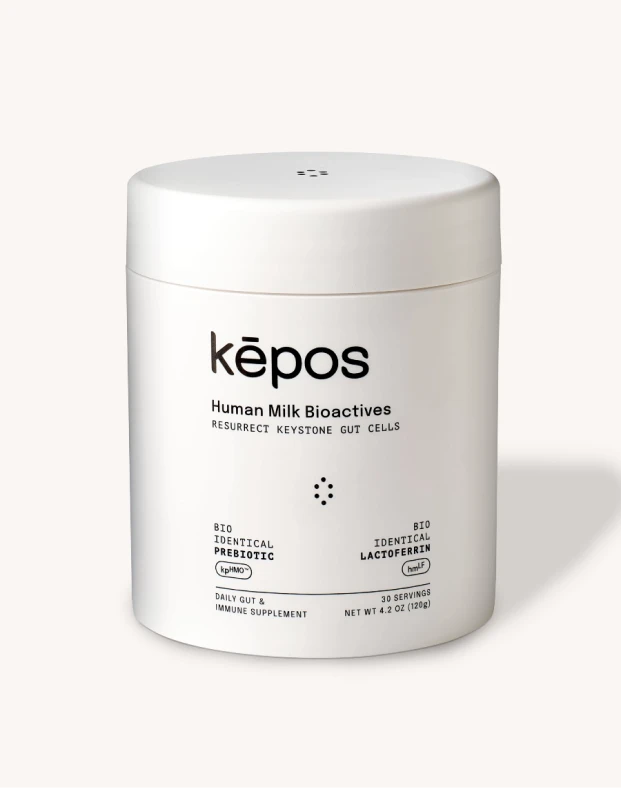
kpHMO™ is a proprietary HMO ingredient designed and owned exclusively by kēpos, formulated to mirror the full oligosaccharide spectrum found in real breast milk. It covers all neutral, fucosylated, and sialylated bases — the same breadth of HMO diversity that makes breast milk so biologically powerful for the gut.
Combined with effera™ recombinant human lactoferrin — a bioactive protein that supports iron absorption, gut barrier integrity, and immune defense — kēpos delivers a genuinely next-generation approach to adult gut health. Learn more about kēpos.
Probiotics will always have a role. But for gut health that operates at the level of the terrain itself — the barrier, the immune system, the microbial ecosystem — HMOs are in a different class. If you want to go deeper than probiotics allow, HMOs are where the science is pointing.
Explore more: Why HMOs Are a Prebiotic Game-Changer for Adult Gut Health
Frequently Asked Questions
Can HMOs replace probiotics?
HMOs and probiotics serve different roles and can be complementary. However, HMOs may support gut health through mechanisms probiotics cannot replicate — including pathogen blocking, direct gut barrier reinforcement, and broader immune modulation. For many people, HMOs address root-cause issues that probiotics don't fully reach.
Are HMOs only for babies?
No. While HMOs were first studied in infant nutrition, emerging research shows significant benefits for adult gut health. Clinical trials have demonstrated HMO effects on adult gut microbiota, gut barrier function, and IBS symptoms. Adults retain the gut biology that allows HMOs to work — including the beneficial bacteria that ferment and respond to them.
How do HMOs work differently from fiber-based prebiotics?
Fiber-based prebiotics (like inulin or FOS) are broadly fermentable and feed a wide range of bacteria — including some less desirable ones. HMOs are far more selective, primarily feeding specific bifidobacterial species. They also provide the additional benefits of pathogen blocking and direct gut barrier support that fiber-based prebiotics don't offer.
What is kpHMO™?
kpHMO™ is a proprietary HMO ingredient designed and owned exclusively by kēpos. It is formulated to best match the oligosaccharide composition found in real breast milk, covering all neutral, fucosylated, and sialylated HMO bases. It is not a single-structure HMO — it is engineered to mirror the full diversity of human milk oligosaccharides.
How quickly do HMOs show effects?
In the 317-person IBS trial (PMID: 33512807), symptoms improved most noticeably in the first 4 weeks of supplementation, with continued improvement through 12 weeks. Gut microbiome shifts from HMO supplementation have been observed within days to weeks, depending on the individual's baseline microbiome composition.
By Oliver Drazsky | kēpos | References: PMID 32933181, PMID 36929926, PMID 33512807, PMID 30013961, PMID 18183941