


Key Takeaways
- Lactoferrin is a multifunctional iron-binding glycoprotein found in human milk, saliva, tears, and throughout the immune system — far more than just an iron transporter.
- Clinical research shows lactoferrin supports iron absorption at rates comparable to ferrous sulfate, but with a dramatically better tolerability profile.
- A 2025 RCT found high-dose lactoferrin reduced plasma IL-6 and CRP while increasing T cell populations in healthy older adults.
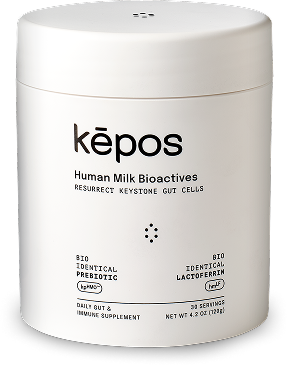
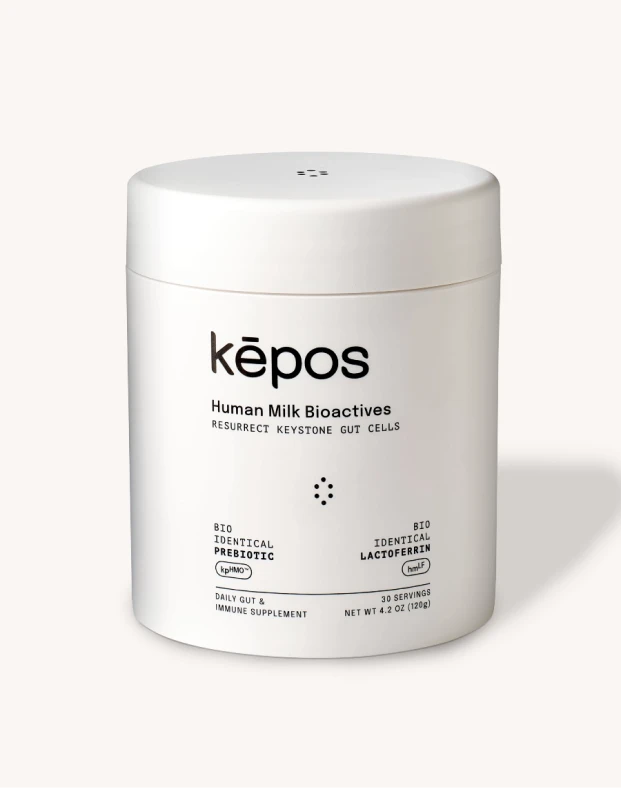
- Human lactoferrin (hLF) is structurally identical to what your body produces natively — kēpos features effera™, a recombinant human lactoferrin engineered to match your own biology.
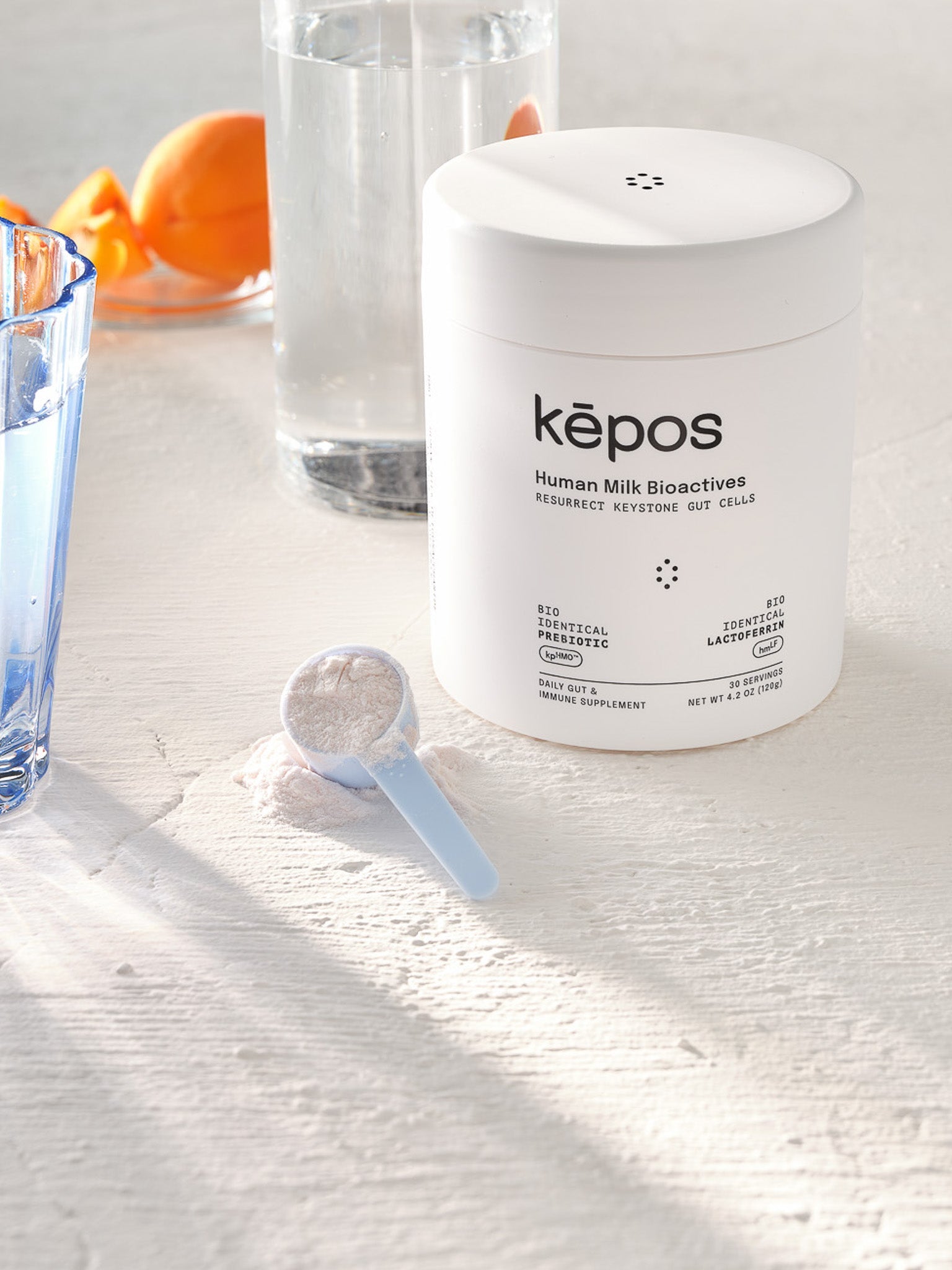
- kēpos uniquely pairs effera™ with kpHMO™, the proprietary human milk bioactive ingredient designed and owned exclusively by kēpos, for a synergistic approach to gut and immune health no other supplement offers.
If you've been researching gut health supplements lately, you've likely encountered the word "lactoferrin." It shows up in the scientific literature more and more — and for good reason. This protein, once studied almost exclusively in the context of breastfed infants, is now emerging as one of the most promising bioactives for adult health.
But what exactly is lactoferrin? How does it work? And why does the source of lactoferrin matter so much? This guide covers everything you need to know — from the basic biology to the clinical evidence, and why human lactoferrin is in a different league than bovine alternatives.
What Is Lactoferrin, Exactly?
Lactoferrin is a glycoprotein — a protein with sugar chains attached — that belongs to the transferrin family of iron-binding proteins. It is produced naturally throughout the human body: in human milk (especially colostrum), saliva, tears, mucus, and by white blood cells called neutrophils during immune responses.
Its defining characteristic is a remarkably high affinity for iron. Each lactoferrin molecule can bind up to two iron atoms. But calling it merely an "iron transporter" dramatically undersells its capabilities. Lactoferrin is, by any measure, a multifunctional defense molecule — one that bridges innate and adaptive immunity, shapes the gut microbiome, and helps protect mucosal surfaces throughout the body.
Researchers have identified three major structural forms of lactoferrin: apo-lactoferrin (iron-free), holo-lactoferrin (iron-saturated), and partially saturated forms in between. Each form has distinct biological activities, and together they help explain why lactoferrin can simultaneously support iron metabolism and serve as an antimicrobial agent.
How Does Lactoferrin Work in Your Body?
Lactoferrin operates across several interconnected pathways. Understanding even a few of them reveals why scientists are calling it one of the most versatile proteins in human physiology.
Iron Regulation and Absorption
Lactoferrin binds iron in the gut and facilitates its absorption through specific receptors in the intestinal lining (enterocytes) — a receptor-mediated route that bypasses many of the side effects associated with free-iron supplementation. Iron absorbed this way is more precisely regulated. The body takes what it needs.
A landmark randomized controlled trial published in the American Journal of Clinical Nutrition (PMID 16469988) confirmed this in practice: iron absorption from recombinant human lactoferrin (20.4%) was statistically equivalent to ferrous sulfate (18.8%) in healthy young women — but without the notorious GI side effects that make standard iron supplements so hard to tolerate.
A more recent meta-analysis of 19 randomized trials (PMID 38291525) found that oral lactoferrin produced a statistically significant increase in hemoglobin compared to ferrous sulfate (SMD −0.81, 95% CI: −1.21, −0.42, p < 0.0001), with patients reporting far better tolerability. These are meaningful findings for anyone who has struggled with standard iron supplements.
Immune Modulation
Lactoferrin is deeply embedded in immune function. It has direct antimicrobial effects — disrupting bacterial cell membranes and binding to viral surface proteins. But it also acts as an immunomodulator, calibrating immune responses rather than simply activating them.
A 2022 systematic review and meta-analysis in Advances in Nutrition (PMID 35481594) examined 25 human studies and found that 200mg lactoferrin per day reduced circulating IL-6 by a mean of 24.9 pg/mL in adults. Immune function improved in 75% of adult studies reviewed. The same analysis found that lactoferrin formulas may reduce respiratory tract infection rates in infants and children (OR: 0.78).
Even more recently, a 2025 randomized controlled trial in the British Journal of Nutrition (PMID 41634901) followed 103 healthy older adults (≥50 years) and found that high-dose lactoferrin (600mg/day) over four weeks significantly reduced plasma IL-6 (p = 0.004) and CRP (p = 0.03), and increased both total T cells and CD4+ T cells compared to placebo. These are concrete, measurable shifts in immune status from supplementation alone.
Gut Barrier and Microbiome Support
A 2023 comprehensive review published in Pharmaceutics (PMID 37376017) highlighted lactoferrin's increasingly recognized role in intestinal health. The review found evidence that lactoferrin promotes gut barrier integrity, positively modulates the gut microbiome composition, and exerts selective antimicrobial activity against pathogens — all without destabilizing beneficial microbes.
This makes lactoferrin especially interesting for adults managing gut permeability concerns or recovering from disruptions to their microbiome.
Human vs. Bovine Lactoferrin: Does the Source Matter?
Most lactoferrin supplements on the market are derived from bovine (cow) milk. Bovine lactoferrin (bLF) shares approximately 70% amino acid sequence homology with human lactoferrin (hLF) — which sounds high until you consider that a 30% structural difference translates to significant differences in receptor binding affinity, biological activity, and immune signaling.
Human lactoferrin receptors in the gut are optimized for human lactoferrin. When you supplement with bovine lactoferrin, you're working with a protein that is functionally similar but not structurally identical to what your body produces and expects. Human lactoferrin also has a higher iron-binding affinity and interacts more precisely with human immune receptors.
This is exactly why kēpos features effera™ — a recombinant human lactoferrin (rhLF) that is biologically identical to the lactoferrin your body naturally produces. effera™ is not derived from cow milk. It is produced through precision fermentation to mirror native human lactoferrin at the amino acid level.
The clinical data on recombinant human lactoferrin specifically — including the absorption trial cited above (PMID 16469988) — reinforces that human-identical lactoferrin is both effective and well-tolerated. It's a meaningful step up from bovine sources.
How effera™ and kpHMO™ Work Together
kēpos is built on a specific hypothesis: that the most powerful approach to adult gut health isn't a single ingredient, but a synergistic combination of bioactives that mirror what human milk provides in the early stages of life.
Human milk is the gold standard for gut and immune development. And its two most bioactive components — lactoferrin and human milk oligosaccharides (HMOs) — don't just coexist in breast milk. They work together. Lactoferrin shapes the immune environment; HMOs nourish the microbiome and train the gut's immune response. Together, they create conditions that neither can fully replicate alone.
That's the principle behind combining effera™ with kpHMO™, the proprietary human milk bioactive ingredient designed and owned exclusively by kēpos. Unlike single-HMO supplements, kpHMO™ is formulated to mirror the full oligosaccharide spectrum found in breast milk — covering all neutral, fucosylated, and sialylated bases. No other supplement pairs true human lactoferrin with a comprehensive HMO ingredient like this.
If you're looking to support your gut microbiome, iron status, and immune resilience simultaneously, kēpos offers a fundamentally different approach than any single-ingredient supplement on the market.
Learn more about how HMOs complement lactoferrin in our article on HMO benefits for gut health, and explore the research behind effera™ in our human vs. bovine lactoferrin comparison.
Frequently Asked Questions About Lactoferrin
What is lactoferrin found in naturally?
Lactoferrin is found in highest concentrations in human colostrum and breast milk. It is also present in saliva, tears, nasal secretions, bile, and in the granules of neutrophils (a type of white blood cell). Bovine milk contains lactoferrin in smaller quantities than human milk.
Can lactoferrin help with iron deficiency?
Research suggests lactoferrin may support healthy iron status. A meta-analysis of 19 clinical trials (PMID 38291525) found that oral lactoferrin produced significantly greater hemoglobin improvements compared to ferrous sulfate, while being better tolerated. A separate RCT (PMID 16469988) confirmed that iron absorption from recombinant human lactoferrin is comparable to ferrous sulfate. As always, consult a healthcare provider for personalized guidance.
Is human lactoferrin better than bovine lactoferrin?
Human and bovine lactoferrin share approximately 70% amino acid sequence homology, but the structural differences are biologically meaningful. Human lactoferrin interacts more precisely with human receptors, has higher iron-binding affinity, and may have greater activity in human immune pathways. kēpos uses effera™, a recombinant human lactoferrin, specifically to provide the human-identical form.
What does lactoferrin do for gut health?
Lactoferrin may support gut health in several ways: it promotes intestinal barrier integrity, positively modulates the gut microbiome, and exerts selective antimicrobial activity. A 2023 review (PMID 37376017) highlighted these roles comprehensively. When paired with human milk oligosaccharides like kpHMO™, the gut-supporting effects may be further amplified.
How much lactoferrin should I take per day?
Studies on adult supplementation have used doses ranging from 100–600mg per day, with 200mg/day being a commonly studied effective dose for reducing inflammation markers and supporting iron status. Consult a healthcare provider to determine what's appropriate for your individual needs.