


- Gut microbiome diversity — the richness and balance of bacterial species in your digestive tract — is one of the strongest predictors of long-term digestive and immune health.
- Human milk oligosaccharides (HMOs) are among the most powerful prebiotic compounds known to reshape the adult gut microbiome, selectively feeding beneficial bacteria while triggering a cascade of broader microbial changes.
- A 2023 Scientific Reports study found that a complex mixture of HMOs produced significantly greater microbiome shifts than any single HMO — underscoring why diversity of input matters as much as diversity of output. (PMID 37652940)
- HMO supplementation has been shown to increase butyrate production, strengthen the gut barrier, and reduce inflammatory markers like IL-6 in adult models. (PMID 32933181)
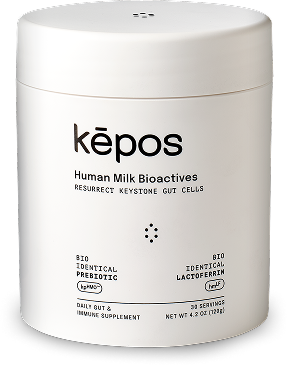
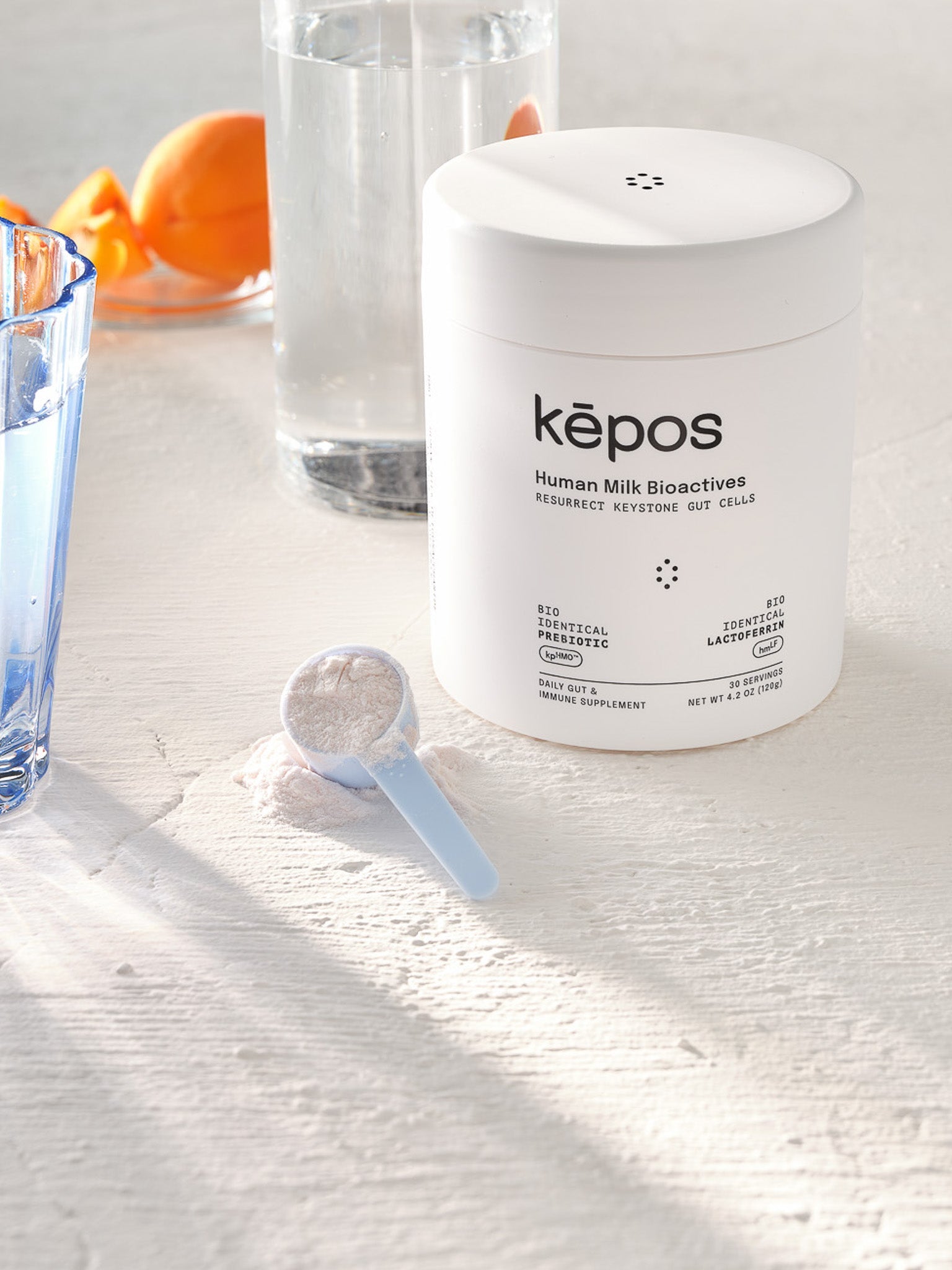
- kpHMO™, the proprietary human milk bioactive ingredient designed and owned exclusively by kēpos, mirrors the full oligosaccharide spectrum found in breast milk — delivering the breadth of HMOs your gut needs to build true diversity.
You've probably heard that a "diverse" gut microbiome is good for you. But what does that actually mean — and why does it matter so much? More importantly: if your diversity is low, can you do anything about it?
The answer, increasingly backed by clinical science, points toward human milk oligosaccharides (HMOs). These complex prebiotic compounds — once thought to be exclusively beneficial for infants — are proving to be powerful tools for reshaping the adult gut. And the science of how they work is more fascinating than most people realize.
What Does "Gut Diversity" Actually Mean?
Your gut is home to trillions of microorganisms — bacteria, fungi, viruses — collectively called the microbiome. Scientists measure microbiome diversity in two main ways:
- Species richness: How many different types of bacteria are present
- Species evenness: How evenly balanced they are in number (vs. one strain dominating)
A healthy gut typically has high richness and high evenness. Think of it like a thriving ecosystem — forests with dozens of plant species are far more resilient than monocultures. The same logic applies to your gut.
Researchers also track alpha diversity (diversity within a single sample) and beta diversity (how your microbiome differs from others). When clinicians talk about "low gut diversity," they're usually referring to alpha diversity — fewer distinct species, with one or two groups dominating while others disappear.
Why Does Low Gut Diversity Hurt Your Health?
Low microbiome diversity has been consistently linked to a range of health challenges in the scientific literature:
- Digestive disorders — including irritable bowel syndrome (IBS), inflammatory bowel disease, and chronic constipation
- Metabolic dysfunction — including insulin resistance and disrupted lipid metabolism
- Weakened immune responses — since roughly 70% of the immune system resides in the gut
- Reduced short-chain fatty acid (SCFA) production — particularly butyrate, which fuels colonocytes and supports a healthy gut lining
- Increased gut permeability — sometimes called "leaky gut," associated with low-grade systemic inflammation
The culprits behind low diversity are familiar: antibiotic use, highly processed diets, chronic stress, and aging. Western diets in particular — low in fiber and high in refined sugars — tend to flatten the microbiome landscape over time, leaving it dominated by a narrow range of less beneficial species.
How HMOs Actively Reshape the Adult Microbiome
Here's where HMOs enter the picture — and the science is genuinely exciting.
Human milk oligosaccharides are complex carbohydrates that reach the colon intact (they resist digestion in the small intestine) where they act as precision prebiotics, selectively feeding specific bacterial populations. The bifidogenic effect — meaning the promotion of Bifidobacterium species — is the most well-documented finding across studies.
But a landmark 2023 study published in Scientific Reports revealed something even more compelling. Researchers at UCLA administered a complex mixture of HMOs to 32 healthy adults for 7 days and then monitored their gut microbiomes for another 21 days. (PMID 37652940)
The results: the HMO mixture triggered dose-dependent Bifidobacterium expansion — but it didn't stop there. After the supplementation period ended, a remarkable microbial succession occurred. Bacteroides populations expanded, other taxa shifted, and these changes persisted through day 28 — three weeks after the last dose. The gut was fundamentally restructured.
Most crucially, the researchers found that complex HMO mixtures produced microbiome changes that could not be replicated by individual HMOs — not even a defined combination of the 10 most abundant HMOs in the mixture. The full diversity of the HMO profile appeared necessary for maximum effect. This is a key finding for anyone thinking about gut diversity: the breadth of HMOs you consume directly influences the breadth of microbial changes you achieve.
Beyond Bifidobacteria: The Whole Ecosystem Responds
The gut-reshaping effects of HMOs extend well beyond one bacterial genus. Research from the Quadram Institute, published in Nutrients (2020), examined HMOs' effects on adult gut microbiota using sophisticated gut simulation models and human gut organoids. (PMID 32933181)
The results showed that HMOs:
- Significantly increased butyrate production — the primary fuel for colon cells
- Reduced gut permeability (measured by FITC-dextran leakage assay)
- Upregulated tight junction proteins (claudin-8 and claudin-5) — the molecular "locks" that keep your gut barrier sealed
- Reduced IL-6 levels — a key marker of intestinal inflammation
This tells a broader story: HMOs don't just add microbial species to your gut — they rebuild the physical and immune architecture of the gut environment itself, creating conditions where diverse microbial communities can thrive.
And these benefits appear to extend into aging populations. A 2025 randomized controlled trial from Stanford University, published in Cell Reports Medicine, enrolled 89 healthy older adults (mean age 67.3 years) in a 6-week HMO intervention. (PMID 40738103) Beyond gut microbiome improvements, participants showed elevated HDL cholesterol and FGF21 hormone levels. In Bifidobacterium responders, researchers observed additional metabolic benefits and improved performance on a cognitive test of visual memory — suggesting the gut-diversity benefits of HMOs may ripple outward into systemic health.
Why a Full-Spectrum HMO Profile Makes All the Difference
Here's the practical takeaway from that UCLA 2023 finding: not all HMO supplements are created equal. Single-strain HMO products — those featuring only one type of oligosaccharide — may support one bacterial population but miss the broader microbial shift that a diverse HMO profile can achieve.
This is precisely why kēpos was formulated around kpHMO™, the proprietary human milk bioactive ingredient designed and owned exclusively by kēpos. Rather than isolating a single HMO compound, kpHMO™ is engineered to best match the oligosaccharide composition found in real breast milk — covering all neutral, fucosylated, and sialylated bases. This spectrum-matching approach isn't just a formulation preference; it's grounded in the emerging science showing that the complexity of the HMO input drives the complexity of the microbiome response.
You can learn more about how HMOs work in the gut in our deep-dive guide: How HMOs Actually Work in Your Gut.
HMOs, Gut Diversity, and IBS: A Compelling Connection
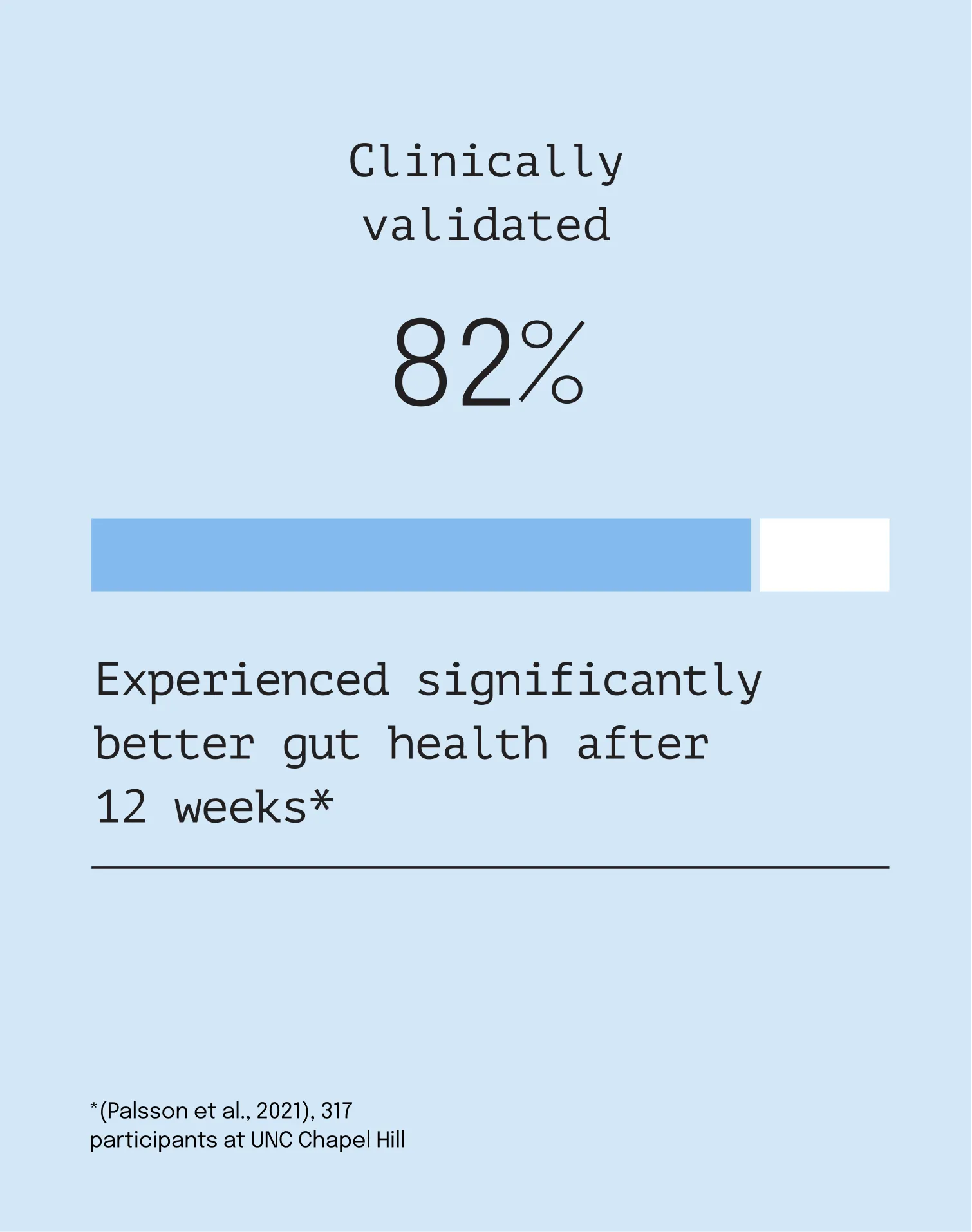
One of the clearest demonstrations of what better gut microbial balance can do comes from IBS research. A multicenter open-label trial across 17 U.S. sites enrolled 317 IBS patients in a 12-week HMO intervention. (PMID 33512807)
The results were striking:
- The proportion of bowel movements with abnormal stool consistency dropped from 90.7% to 57.2% (P<0.0001)
- IBS Symptom Severity Score fell from 323 to 144 — a reduction of more than half (P<0.0001)
- Quality of life scores improved from 50.4 to 74.6 (P<0.0001)
These improvements were consistent across all IBS subtypes — constipation-predominant, diarrhea-predominant, and mixed — suggesting the mechanism is broad rather than subtype-specific. That breadth is exactly what you'd expect from an intervention that works by rebuilding the overall gut ecosystem rather than targeting a single symptom pathway.
Looking for more on HMOs and digestive health? Read our related article: HMOs and Gut Barrier Function: What the Science Shows.
How to Build Gut Diversity Starting Today
Gut diversity doesn't rebuild overnight — but the good news is that the microbiome is remarkably responsive to the right inputs. Here's what the evidence supports:
- Feed the good bacteria with prebiotic compounds — HMOs are among the most researched and targeted options for adult gut health
- Eat a wide variety of plant foods — different fibers feed different bacterial species
- Minimize unnecessary antibiotic use — antibiotics are the most potent disruptors of microbiome diversity
- Manage stress actively — chronic stress alters gut motility and microbial composition
- Consider fermented foods alongside prebiotic supplementation to introduce live cultures
For targeted, evidence-backed HMO support, kēpos combines kpHMO™ with effera™ recombinant human lactoferrin (rhLF) — a synergistic pairing that supports both the microbial ecosystem and the gut-immune interface simultaneously. It's the kind of full-spectrum gut health approach the science is increasingly pointing toward.
Frequently Asked Questions
What causes low gut microbiome diversity?
The most common causes include diets high in processed foods and low in fiber, antibiotic use (which can dramatically reduce microbial richness), chronic stress, aging, and sedentary lifestyles. Western-style diets are particularly associated with reduced microbiome diversity compared to more plant-rich, traditional dietary patterns.
Do HMOs work for adults, or are they only for babies?
HMOs were originally studied for their role in infant gut development, but multiple clinical trials now confirm that HMOs also meaningfully modulate the adult gut microbiome. Studies in healthy adults, IBS patients, and older adults all demonstrate significant microbiome and health outcomes from HMO supplementation.
How quickly can HMOs change your gut microbiome?
Research suggests measurable microbiome shifts can begin within days of HMO supplementation. In the Jacobs et al. (2023) study, changes were evident after just 7 days of supplementation — and persisted for at least 3 weeks after stopping. However, sustained, lasting improvements typically require consistent supplementation over weeks to months.
Is it better to take one specific HMO or a complex mixture?
The emerging science strongly suggests that complex HMO mixtures produce broader and more robust microbiome changes than single HMOs. A 2023 UCLA study found that a full-spectrum HMO concentrate induced microbiome shifts that could not be replicated by individual HMOs or even a defined 10-HMO combination — highlighting the importance of HMO diversity in a supplement.
What makes kpHMO™ different from other HMO supplements?
kpHMO™ is a proprietary human milk bioactive ingredient designed and owned exclusively by kēpos, formulated to best match the full oligosaccharide composition found in real breast milk — including neutral, fucosylated, and sialylated structures. Most HMO supplements on the market feature only a single oligosaccharide type. kpHMO™ takes a full-spectrum approach grounded in what the science says drives maximum gut diversity benefits.
By Oliver Drazsky | kēpos
References: PMID 37652940 | PMID 40738103 | PMID 32933181 | PMID 33512807 | PMID 36929926