


Key Takeaways
- Your gut microbiome hosts the estrobolome — a collection of bacterial genes that directly regulate how much estrogen circulates in your bloodstream.
- Gut dysbiosis can lower active estrogen levels, and has been linked to conditions including PCOS, endometriosis, and metabolic syndrome.
- Your microbiome also regulates the HPA axis — the hormonal system that governs your cortisol response to stress.
- A 2025 Stanford RCT found that HMO supplementation altered circulating hormones in healthy older adults, including elevating FGF21 and HDL cholesterol.
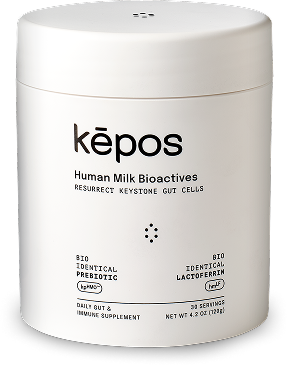
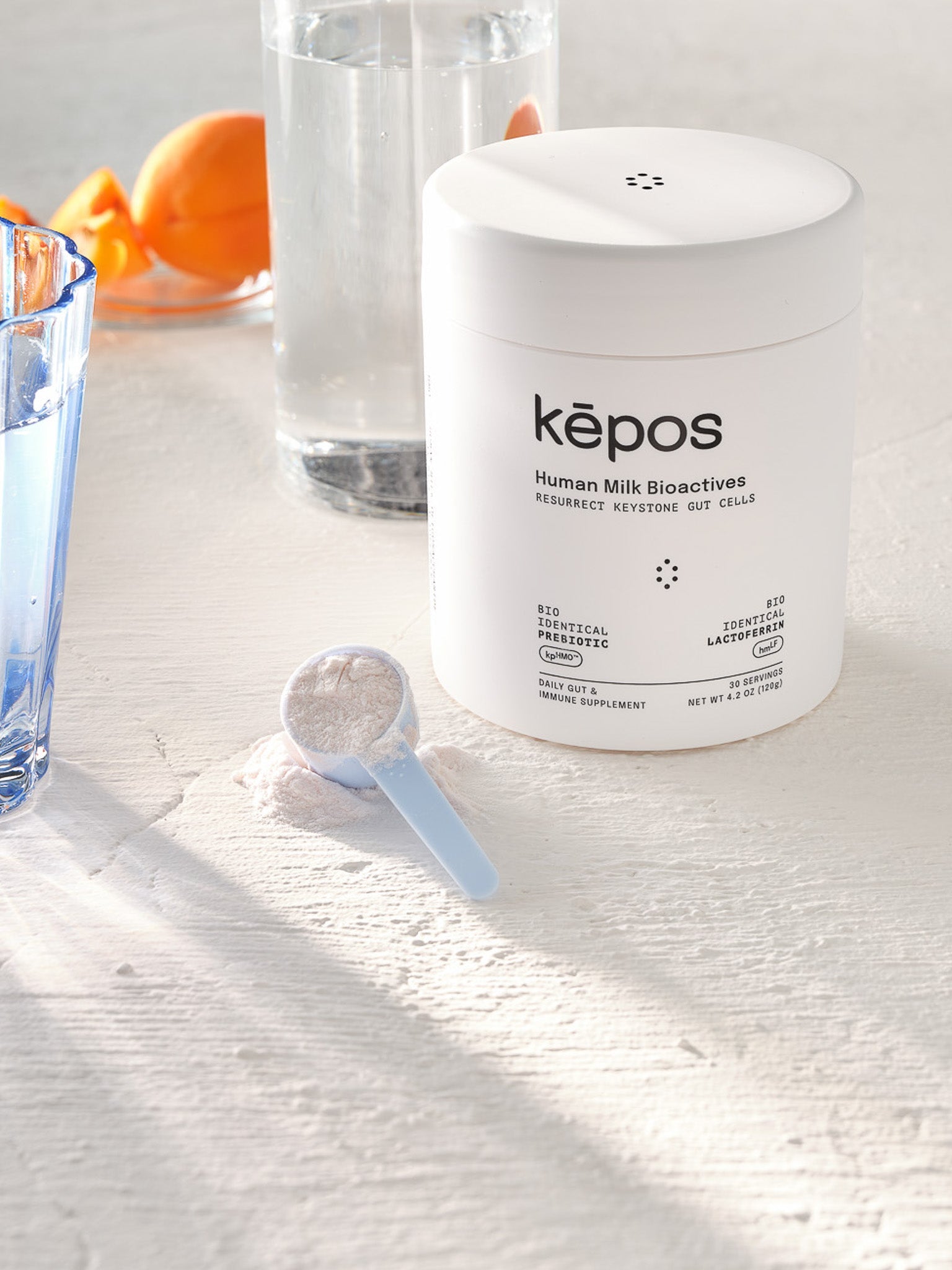
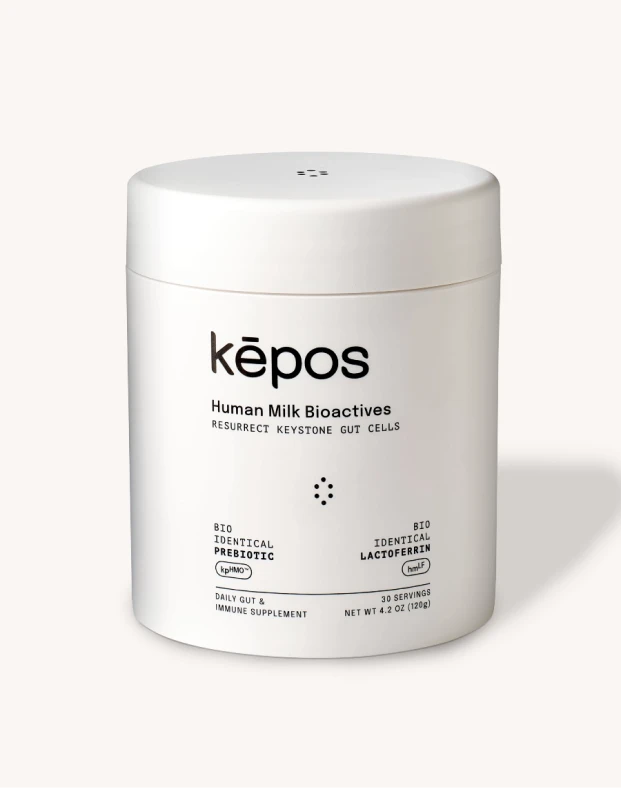
- Human milk oligosaccharides (HMOs) may support a diverse, hormone-friendly microbiome — and kēpos delivers kpHMO™, a proprietary HMO ingredient designed and owned exclusively by kēpos, formulated to match the full oligosaccharide spectrum found in breast milk.
When most people think about hormone balance, they think about the endocrine system — the ovaries, the adrenal glands, the thyroid. Rarely does anyone point to the gut.
But an expanding body of research makes one thing clear: your gut microbiome is a hormonal organ in its own right. It shapes how much estrogen circulates in your body. It regulates the very system that produces cortisol. And when it falls out of balance, the hormonal consequences can ripple through nearly every system in your body.
This is the gut-hormone connection — and understanding it may be the missing piece in how you approach energy, mood, metabolism, and long-term health.
What Is the Gut-Hormone Connection?
Your gut microbiome is home to trillions of bacteria, fungi, and other microorganisms that do far more than digest food. Through a dense network of neural, immune, and chemical signals — collectively called the gut-brain axis — your microbiome communicates directly with your endocrine system.
Two hormonal systems are particularly responsive to the state of your gut: the estrogen axis and the HPA (hypothalamic-pituitary-adrenal) axis, which governs cortisol. Disruptions in gut microbial diversity — a state called dysbiosis — don't just cause bloating or irregular digestion. They can meaningfully alter how estrogen and cortisol behave throughout your body.
The science here is no longer preliminary. Researchers at Stanford, the University of Arizona, and the National Cancer Institute have all published data linking gut microbial composition to hormone levels. Here's what the evidence shows.
The Estrobolome: How Your Gut Microbiome Controls Estrogen
The term "estrobolome" refers to the aggregate of gut bacterial genes that encode enzymes capable of metabolizing estrogens. Think of it as a dedicated hormonal processing unit living inside your digestive tract.
Here's how it works: the liver conjugates (inactivates) estrogens and sends them to the gut for excretion. But bacteria in the colon — particularly those producing an enzyme called β-glucuronidase — can deconjugate those estrogens back into their active forms, allowing them to be reabsorbed into circulation.
A landmark review published in Maturitas by Baker JM et al. explained this mechanism in detail: when the gut microbiota is diverse and healthy, this recycling process is well-regulated. But when dysbiosis reduces microbial diversity, β-glucuronidase activity drops, less estrogen is reactivated, and circulating estrogen levels fall (PMID 28778332).
The downstream effects of this imbalance are significant. According to the same review, low microbial diversity and impaired estrogen recycling have been associated with obesity, metabolic syndrome, endometriosis, polycystic ovary syndrome (PCOS), cardiovascular disease, and changes in cognitive function.
A 2024 review in Molecular Nutrition & Food Research reinforced these findings, confirming that the estrobolome encodes specific β-glucuronidase and β-glucosidase enzymes that are central to phytoestrogen and endogenous estrogen metabolism — and that restoring gut microbial diversity may support healthier estrogen balance (PMID 38342595).
Perhaps most strikingly, a study published in the Journal of Clinical Endocrinology and Metabolism examined 60 healthy postmenopausal women and found that those with a more diverse gut microbiome had a significantly higher ratio of beneficial hydroxylated estrogen metabolites to parent estrogen — a ratio previously linked to reduced postmenopausal cancer risk (PMID 25211668).
In short: the diversity of your gut microbiome directly influences what estrogen looks like — and how much of it — your body has available.
The Gut-Cortisol Link: How Stress Lives in Your Microbiome
The HPA axis is your body's central stress-response system. When you perceive a threat — physical, emotional, or psychological — the hypothalamus signals the pituitary, which signals the adrenal glands to release cortisol. In short bursts, cortisol is adaptive. When it stays elevated, it contributes to fatigue, immune suppression, sleep disruption, and metabolic dysregulation.
What's less well known is that your gut microbiome directly influences HPA axis activity.
A comprehensive review published in Frontiers in Endocrinology by Rusch JA, Layden BT, and Dugas LR detailed how the microbiota-gut-brain (MGB) axis — a bidirectional signaling pathway operating through neural, endocrine, immune, and metabolic channels — modulates cortisol production and HPA axis reactivity throughout life (PMID 37404311).
The review notes that appropriate cortisol concentrations are essential for normal cognitive function, learning, and memory — and that disruptions in gut microbial composition are associated with altered HPA axis responses. Animal models with germ-free gut conditions show dysregulated cortisol stress responses that can be partially restored by microbial recolonization.
The takeaway: a healthy, diverse gut microbiome appears to act as a natural buffer for the stress response. When the microbiome is disrupted, the HPA axis may become overactive or dysregulated — contributing to the chronic low-grade stress response that underlies so many modern health complaints.
What Happens When the Gut-Hormone Axis Falls Out of Balance?
Both the estrogen and cortisol pathways depend on a healthy, diverse gut microbiome to function properly. When dysbiosis sets in — driven by antibiotics, ultra-processed diets, chronic stress, or aging — the effects can be wide-ranging:
- Estrogen imbalance: Lower microbial diversity reduces estrogen recycling, potentially contributing to hormonal irregularities, low energy, mood changes, and metabolic shifts.
- Elevated cortisol reactivity: A dysbiotic gut may amplify HPA axis responses, making it harder to recover from stressors and more difficult to sleep deeply.
- Inflammation feedback loops: Both estrogen and cortisol have immunomodulatory roles. Dysbiosis-driven inflammation can interfere with hormone signaling, creating cycles that are difficult to break through lifestyle changes alone.
- Metabolic effects: Changes in estrogen metabolism and cortisol dysregulation are both independently associated with increased visceral fat, insulin resistance, and disrupted metabolic signaling.
This is why gut health is increasingly being viewed not just as a digestive concern but as a foundational hormonal concern. You cannot fully address estrogen balance or cortisol dysregulation without also addressing the gut.
How HMOs May Support the Gut-Hormone Axis
This is where human milk oligosaccharides (HMOs) enter the picture — and the science here is genuinely exciting.
HMOs are complex prebiotic carbohydrates found in human breast milk. For decades, they were studied primarily in the context of infant health. But the research has caught up with adults, and the implications for hormonal health are significant.
A 2023 study in Scientific Reports confirmed that HMO supplementation in healthy adults meaningfully modulated gut microbiota composition — selectively supporting beneficial microbial populations and promoting microbiome diversity (PMID 37652940).
Most remarkably, a 2025 randomized controlled trial from Stanford University — published in Cell Reports Medicine — took this a step further. In 89 healthy older adults (mean age 67.3 years), HMO supplementation with 2'-fucosyllactose over 6 weeks increased gut Bifidobacterium levels and elevated circulating FGF21 hormone and HDL cholesterol. Participants whose Bifidobacterium populations responded to HMO supplementation also showed additional metabolic and proteomic changes — and performed significantly better on a test of visual memory (PMID 40738103).
This is a landmark finding: a gut-targeted HMO intervention produced detectable changes in circulating hormones in adults. The gut-hormone connection, in this case, was activated and measurably improved through HMO supplementation.
For anyone focused on hormonal health, microbiome diversity, or the long-term implications of the gut-hormone axis, this is the kind of evidence that changes the conversation.
This is precisely why kpHMO™, the proprietary HMO ingredient designed and owned exclusively by kēpos, is formulated to deliver the full oligosaccharide spectrum found in human breast milk — covering all neutral, fucosylated, and sialylated bases. Unlike single-HMO supplements, kpHMO™ mirrors the diversity that your gut microbiome is evolutionarily calibrated to use. And unlike probiotics or generic fiber, it works upstream — reshaping the microbial ecosystem that governs hormone metabolism.
Learn how HMOs compare to probiotics for gut health →
kēpos also features effera™ recombinant human lactoferrin (rhLF) — the only lactoferrin that matches the structure of the protein found naturally in the human body, providing a second layer of microbiome and immune support that amplifies what kpHMO™ initiates.
If you're serious about hormonal health, the gut is where the work begins. Explore kēpos →
Frequently Asked Questions
What is the estrobolome?
The estrobolome is the collection of gut bacterial genes that encode enzymes — primarily β-glucuronidase — capable of deconjugating estrogens back into their active, circulating forms. A healthy, diverse microbiome supports optimal estrobolome function; dysbiosis can impair estrogen recycling and reduce circulating estrogen levels.
Can gut health affect cortisol levels?
Research suggests yes. The gut microbiota communicates with the HPA axis — the system responsible for cortisol production — through neural, endocrine, and immune pathways. A disrupted gut microbiome may contribute to an overactive or dysregulated stress response. Supporting gut microbial diversity may help promote more balanced cortisol responses over time.
Do HMOs help with hormonal balance?
HMOs support a diverse gut microbiome, and a diverse gut microbiome is associated with healthier hormone metabolism — particularly for estrogen. A 2025 Stanford RCT found that HMO supplementation elevated circulating FGF21 hormone and HDL cholesterol in healthy older adults, suggesting a measurable gut-to-hormone effect. HMOs are not a hormone replacement; they work by nurturing the microbial ecosystem that regulates hormone metabolism.
What is kpHMO™?
kpHMO™ is a proprietary human milk bioactive ingredient designed and owned exclusively by kēpos. It is formulated to mirror the full oligosaccharide composition found in human breast milk — covering all neutral, fucosylated, and sialylated bases — to provide the most complete prebiotic support for the adult gut microbiome.
How does the gut microbiome affect estrogen?
Your gut microbiota produces enzymes that reactivate conjugated (inactivated) estrogens that the liver sends to the gut for excretion. When microbial diversity is high, more estrogen is deconjugated and reabsorbed into circulation. When dysbiosis reduces microbial diversity, this recycling process slows, circulating estrogen drops, and hormonal imbalance may follow. Supporting gut microbiome diversity — through diet, prebiotics, and HMOs — may support healthier estrogen metabolism.
Article by Oliver Drazsky. All studies cited are verified and indexed on PubMed/NIH.